

It’s not easy being grain
Israelis gear up for Passover, Grass controversy grows, and Migron move will be expensive.
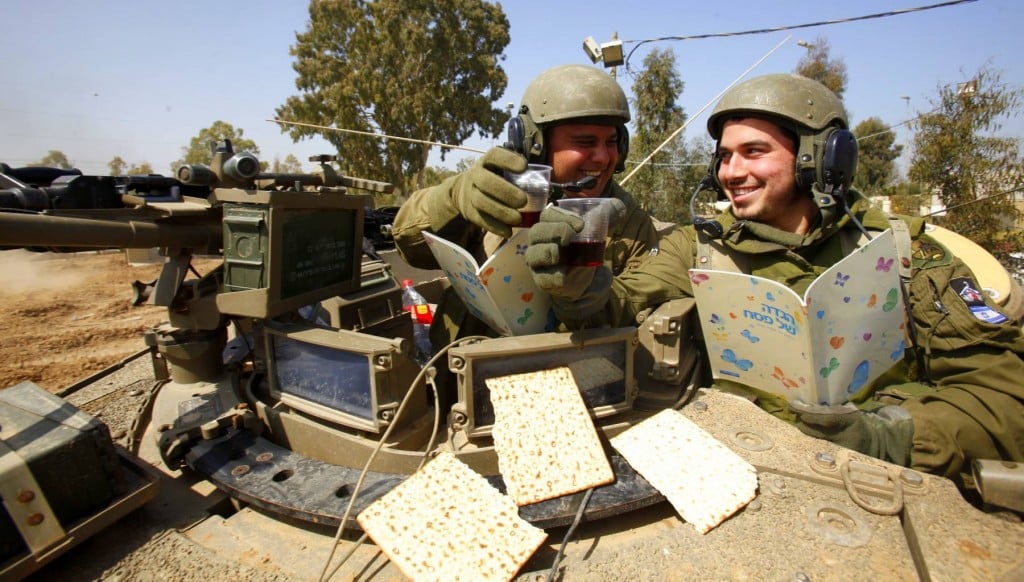
Passover begins tonight and the Israeli newspapers all dedicated front-page space to the holiday, one way or another.
Yedioth Ahronoth led with a story celebrating Gilad Shalit’s first Passover at home. “Holiday of Freedom for Gilad Shalit,” the headline proclaims and the page two story tells how this will be the first time in six years that Shalit has celebrated the Passover holiday with his family. Shalit has also signed up to help convince American authorities to release the Jewish American spy, Jonathan Pollard. Opposite the page is all the info you need for the seder, including where traffic jams are expected, weather report, and a buzz-killing graphic showing how many calories all the delicious Passover food contains (matzo contains 140).
Israel Hayom has a similar spread on pages two and three, albeit with a more military focus. Their page three article, “Matza Delegates” tells the stories of far-flung IDF officers and their plans for their plans for the seder.
Maariv’s coverage of the Passover holiday is similar to the other papers with a front-page picture of four toddlers holding matza and flowers. The Passover coverage begins on page seven with a story about Gilad Shalit and the page eight coverage of the holiday focuses on unique seder meals, including one for lone soldiers in the IDF. At the bottom of the page is small article about Obama’s Passover greeting, whose headline quotes the president, “I’m looking forward to a good bowl of matzo ball soup.”
Haaretz differs in its Passover coverage and focuses on the creation of a huge database of the Hebrew language. The page three story, “3,000 years Hebrew online,” tells how the Hebrew Language Academy is creating an electronic database of Hebrew by scanning and poring over ancient texts to analyze the language word by word. Even after 58 years and 20 million entries, academy president Professor Moshe Bar-Asher expects it will take “a half of generation to generation” to completely map the language.
Out of Sinai
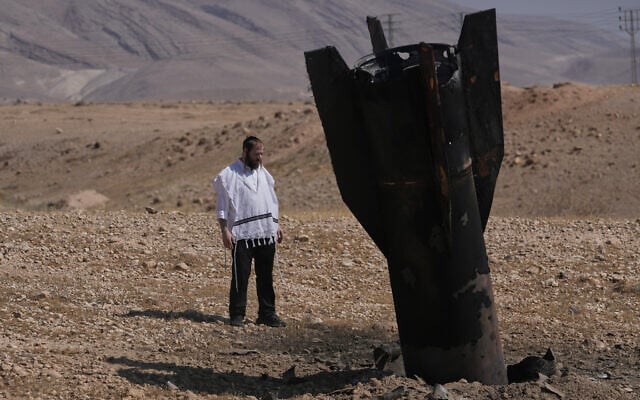
Maariv reports on page two that Israeli intelligence did not expect rockets to be fired from Sinai at Eilat. The article focuses on how the intelligence services didn’t have any warning that an attack was imminent. More alarming was the revelation by military intelligence that there are 10 known terror cells currently operating in the Sinai.
The Harpaz Affair is back on page six of Yedioth Ahronoth with new revelations that Harpaz’s connections may run deeper that previously thought. The article states that according to classified sources some heads of the IDF’s top units, including the elite Sayeret Matkal, violated orders and had connections with Harpaz. The final report is expected to be released in a few months.
Haaretz reports that both Iran and Hezbollah have increased their support for Syria and its embattled president, Bashar Assad. The article quotes Israeli intelligence sources saying that Hezbollah and Iran have provided instructional and logistical support and weaponry. Hezbollah fighters have even manned checkpoints in Lebanon so that the rebels cannot smuggle arms into of Syria.
Bibi vs. Grass
Israel Hayom reports on page seven about the continuing controversy over Gunter Grass’ recent poem calling Israel’s nuclear program a threat to world peace. The article is mostly a long quote from Prime Minister Benjamin Netanyahu, who attacked Grass saying, “For six decades Mr. Grass hid his Waffen–SS past, so it is no surprise that he would describe the only Jewish state in the world as a threat to world peace.”
The other papers also reported on the controversy but added Grass’s refusal to retract the poem. In Maariv’s article the German poet is quoted as saying, “I’m under a coordinated attack,” in reference to fierce reactions the poem has triggered.
Haaretz’s reports on page five that it will cost the state 25 million shekels to establish temporary housing for the residents of Migron. The current plan is that the Migron settlers will move into temporary housing at a tourist center at the Givat Winery. The article says that the government is expected to cover the cost of the temporary housing, but the residents themselves will pay for their permanent homes.
A page 12 article in Yedioth reports on a Be’er Sheva clinic under investigation for selling sick days to soldiers. The clinic was supposedly selling a day of sick leave for 50 shekels plus a Kinder brand chocolate egg for the desk clerks. The investigation is also looking into the allegation that the doctors didn’t sign the orders, but rather the clerks did.
A page 10 story in Maariv reports that permission has been granted in Jerusalem for the first ever street party for the homosexual community. The street party, which is scheduled for July 8th, is expected to be held in the center of the city.
Dan Margalit worries in Israel Hayom about the future of the Egyptian-Israeli ties following the most recent attack from Sinai. Though angered that “Egypt didn’t even take time to pretend to investigate the issue,” Margalit wonders how to solve the problem. He discounts the small American force that has been there since the 1979 agreements, and says that both Egypt and Israel have the will to work together to keep the area quiet.
Haaretz’s opinion page is full of Passover connections including its editorial cartoon of an ancient Egyptian on a chariot firing a missile into Eilat. Right below that is an op-ed piece by Yoel Marcus entitled, “From freedom to anxiety.” In the piece he comments on Israel’s political culture of fear mongering and cites examples of the recent discussions about the number of causalities if Iran attacked, and where to put an Iron Dome battery in Tel Aviv, just in case. Marcus asks, “If we are putting our security on the beards of Ahmadinejad and Khamenei, what does that broadcast? That the Jewish state has no security?”
The op-ed concludes that real victory is having secure borders in a state where people can be happy and sing about it with joy at the seder.








The Times of Israel Community.