

Kayak on the Jordan, where water’s not a problem, and the flowers are still in bloom
Take it slowly, and let any children you have with you do the paddling
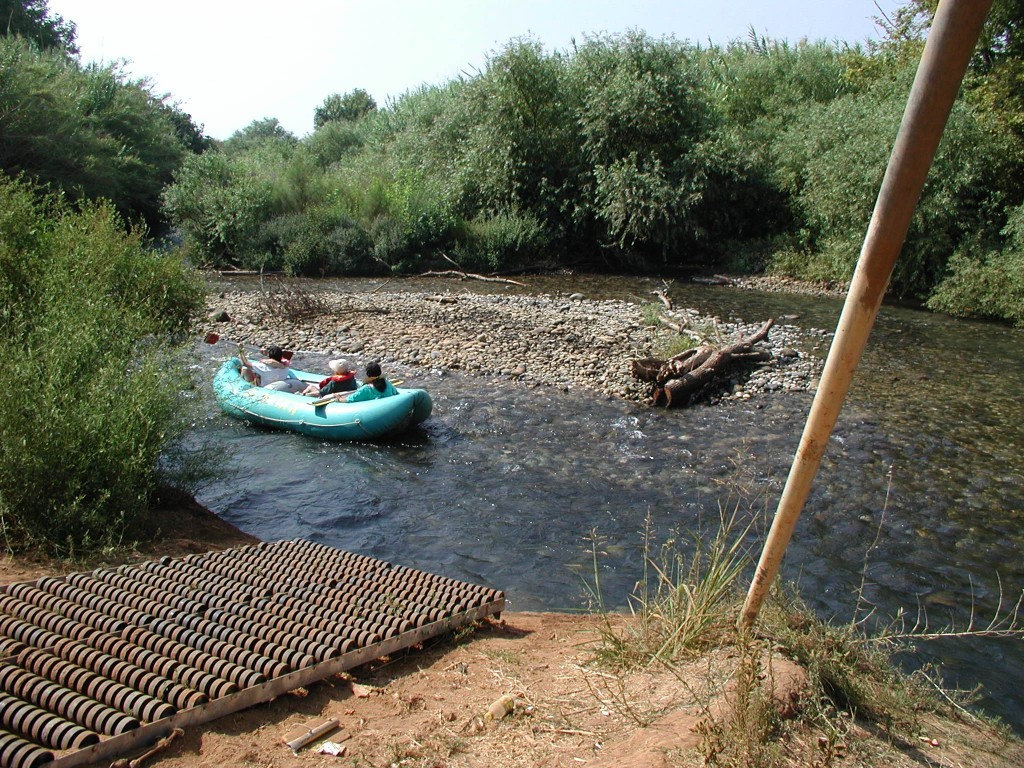
When I was growing up in Minnesota, we spent the hot and humid summers at a small cabin by a lake. As an adolescent I used to row out to the middle and just sit there, staring at the trees and the water until my turbulent soul was filled with peace.
Thousands of miles from Lake Charlotte and decades later, I managed to recapture something of that wondrous feeling. It was on the famous River Jordan, aboard a funny looking inflatable “boat,” or kayak.
Kayaking on the Jordan is very fashionable these days and this wasn’t the first time I had tried it. However, on a previous trip, I got caught up in a race with my kids; on this occasion I just let myself enjoy the scenery and the aura.
The trip takes you over several heavenly kilometers of cooling water – partway on the wild and exciting Hazbani river (Snir, in Hebrew,) and the other half on a staid and quiet Jordan.
After pushing off with your paddle you begin gliding gracefully down a Hazbani whose natural beauty has not yet been destroyed by the hand of man.
Of the three rivers which contribute to the Jordan, only the Dan and the Banias have their sources inside of Israel. They begin at the southern foot of the Hermon Mountains and travel a very few kilometers before flowing into the Jordan.
The Hazbani, on the other hand, originates in the Druze spiritual center of Hazbaya in southern Lebanon. Even before it reaches our borders the Hazbani must transverse over 40 kilometers, picking up numerous streams, rivers and tributaries along the way.
So many little rivers over such a long area naturally create a huge drain basin in the Hazbani. And as a result, when there are heavy rains it can overflow and cause serious floods.
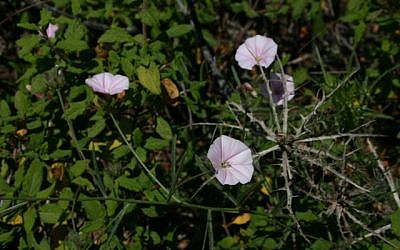
Foliage along the banks includes a thick profusion of willow trees. Peeking out from between the willow branches you can spy the thin stalks and purple flowers of the loosestrife, and here and there the large white blossom of the bindweed.
Kayak riders sometimes spot a nutria along the banks or even in the water. These furry little animals were brought to Israel from South America in an attempt to grow them for their fur so they could provide expensive coats. In Israel, however, their skins were altered — perhaps by the climate — and production became less feasible.
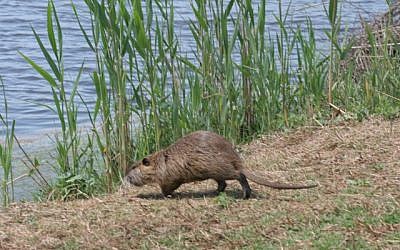
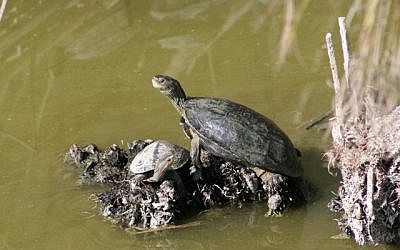
The line was discontinued but the nutria escaped from their kennels, moved into this part of Israel’s north, and adapted well to the local environment. There are turtles in the river as well: sunning themselves along the banks.
Sudden little rushes of water caused by stones and steep sections of riverbed look like miniature rapids. There is evidence of the winter’s turbulent currents all along the river, and the exposed roots of several huge maple-leaved plane trees are proof that in places the ground has been completely washed away by swift winter waters.
By late May hot, dry weather wilts most of the Galilee’s spring flowers and their colorful blossoms disappear. But here by the river, water isn’t a problem. Consequently quite a few flowers bloom through June and July. Such late flowering benefits both nature lovers and blossoms: the blooms have no competition and can easily attract the insects they need for pollination, while the river in summer is enchanting and colorful. Thus, even well into the season you can enjoy the sight of bright pink oleander.
If you have a few minutes of quiet as you relax on the river, listen for kingfishers who call out before they appear to make sure you will notice their beauty. Proudly spreading their shiny blue wings, these white breasted, red beaked creatures prefer a diet of insects to fish, despite their name.
Besides the kingfishers you will hear the bulbul cry, with the noise of both birds sounding strangely mystical in the quiet of the stream. While you are listening to their calls, fix your gaze on branches hanging over the water: You may spy the stunning red-orange or brilliant blue dragonfly, a sight to make even people immune to natural beauty take notice. Watch for colorful butterflies as well.
When the flowing river converges with a slower-moving stream to the left, you will begin sailing down the legendary Jordan River. Note that although the Snir is still au naturel, the Jordan into which it flows has been altered. Here, the water seems to stand still in some places and the banks are far apart.
Dozens of twists and turns were eliminated when the channel was artificially widened in the 1960s. The need for man’s intervention arose out of other man-made changes in the area, for after the Huleh swamps were dried out by the Jewish National Fund there were no channels left to absorb melting snow from the Hermon.
Every year the river overflowed and flooded the area, so the river was broadened and canals were constructed on each side of the stream. A system of dams along the river contributed to the solution, and today the Jordan rarely overreaches its boundaries. As you slither through the water, look up at the trees. Here and there you can enjoy splendid views of the majestic Naphtali mountains. If you are hot, drizzle cold, refreshing water all over your body.
Tamarisk trees line the water and there is an abundance of tall, thick reeds. Beyond the bushes stand tall, dark green cypress trees and a few scattered eucalyptus.
As compensation for the less exciting natural wonders in this section of the river, you get to slide down a little waterfall shortly before you end your ride. This is a definite thrill, providing a few seconds of skipped heartbeat as you wait for the kayak to overturn. It hardly ever does — but should the unexpected happen, don’t worry, for the water is not deep.
So delightful is the river journey that you may feel the trip is over almost before it has begun. Just take it slowly and let any children you have with you do the paddling. They will enjoy pushing the boats away from the thickets while you search for birds and butterflies.
—
Aviva Bar-Am is the author of seven guides to Israel. Shmuel Bar-Am is a private tour guide.
All rights reserved








The Times of Israel Community.