30,000 Israelis designated as draft evaders, but true figure is higher, IDF says
Foreign Affairs and Defense Committee told the figure is likely to rise by many thousands in coming month, as coalition rushes to pass law exempting Haredim from service
There are currently 30,000 Israelis designated as draft evaders, half of whom are members of the ultra-Orthodox community and half whose religious affiliation cannot be determined with certainty, Lt. Col. Avigdor Dickstein, head of the Haredi branch of the IDF’s Personnel Directorate, told the Knesset Foreign Affairs and Defense Committee on Tuesday.
Some of those with unknown religious affiliations are believed to be members of the general public, while others are part of the ultra-Orthodox community, Dickstein said, adding that the number of designated evaders is expected to rise by many thousands over the coming month.
His comments came as the Foreign Affairs and Defense Committee rushed to complete a marathon series of discussions on the government’s proposed military conscription bill for ultra-Orthodox yeshiva students.
If passed into law, the bill would grant renewed service exemptions to full-time yeshiva students while purportedly increasing conscription among graduates of Haredi educational institutions.
Critics, including the IDF brass and attorney general, have objected to the bill on the grounds that it is full of loopholes and will not increase Haredi enlistment, while hardline Haredi elements object to legislation conscripting or sanctioning any members of their community.
Some 80,000 ultra-Orthodox men aged between 18 and 24 are currently believed to be eligible for military service, but have not enlisted. The IDF has said it urgently needs 12,000 recruits due to the strain on standing and reserve forces caused by the war against Hamas in Gaza and other military challenges.
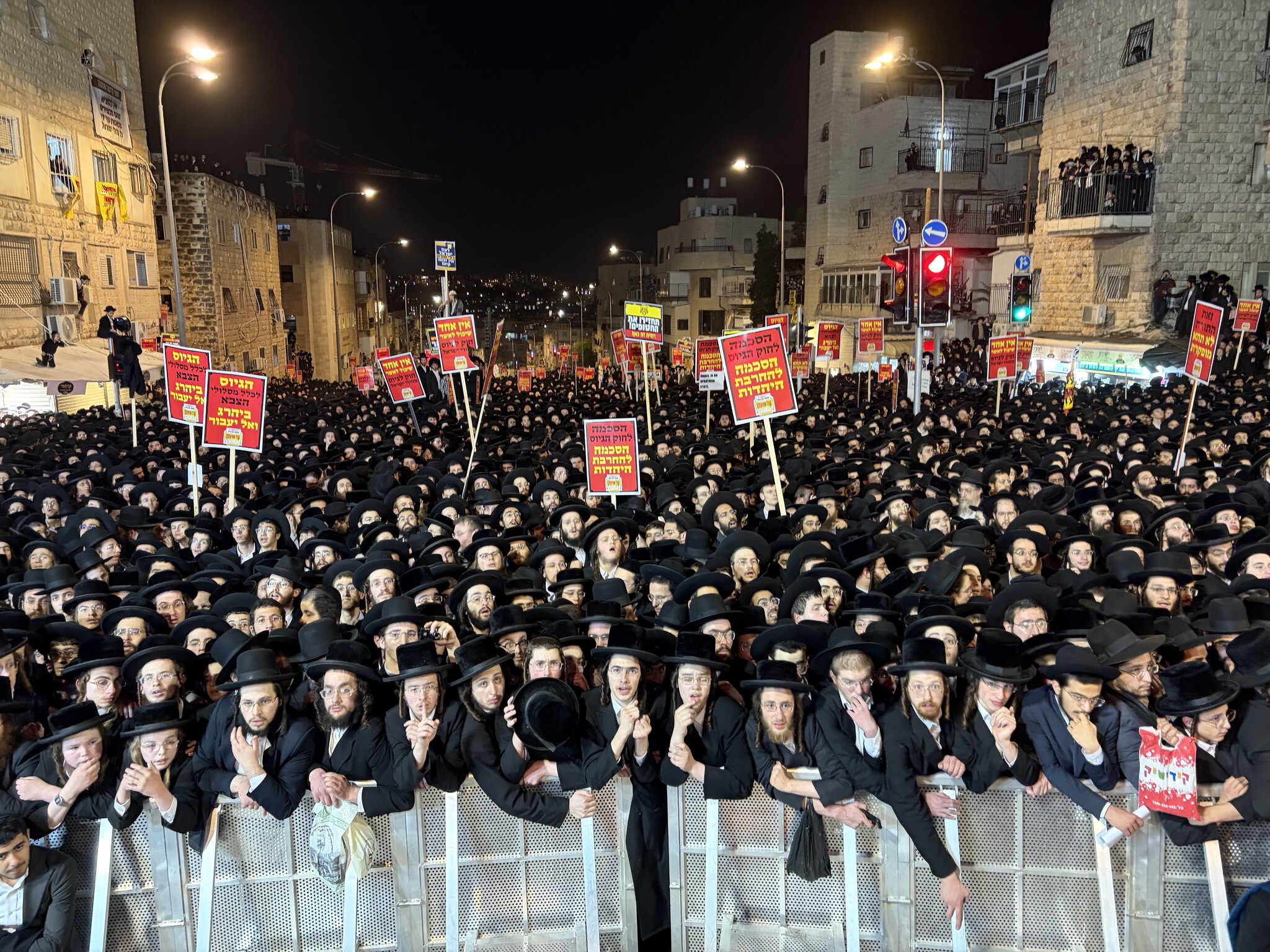
The IDF has sent out tens of thousands of enlistment orders to previously exempt Haredim since 2024, when the High Court of Justice ruled that the decades-long blanket exemptions from army duty traditionally afforded to full-time Haredi yeshiva students were illegal.
Since then, yeshivas harboring draft dodgers have seen their budgets slashed, and draft refusers have lost access to daycare subsidies for their children and other benefits. The military has also increased enforcement against evaders, arresting yeshiva students and holding them in military prisons.
Testifying before the Knesset State Control Committee in mid-September, the head of the IDF’s Personnel Directorate dismissed as ineffective the military’s efforts to crack down on ultra-Orthodox draft dodgers.
However, Dickstein told the Kan public broadcaster last week, after over 530 Haredim enlisted within one week, that the mass issuance of draft orders to ultra-Orthodox men and subsequent enforcement, including imprisonment, has been “unequivocally effective” in boosting enlistment.
In addition to restoring blanket exemptions for tens of thousands of yeshiva students, the government’s Haredi conscription bill, drafted by committee chairman Boaz Bismuth, would also effectively reset the status of yeshiva students who ignored call-up orders over the past year.
At the same time, the legislation would issue institutions with half of the funding they would have received if not for the High Court ruling, easing economic and legal pressure on the Haredi community.
Committee legal adviser Miri Frenkel Shor has objected to such an arrangement, arguing that canceling existing legal proceedings and judgments is a highly exceptional step, which does not apply to the entire population that is required to report.
This effectively means that Haredim who broke the law by refusing to report when ordered will receive immunity, while non-Haredi evaders will not.
Shor called on the committee to examine extending this provision to the general population.
Addressing the committee, Cabinet Secretary Yossi Fuchs argued that shortening mandatory military service and working to create a “small and smart army” was a mistake. This needs to be fixed in tandem with passing the law regulating Haredi conscription, he argued.
Fuchs’s argument echoed a recent request from IDF Chief of Staff Lt. Gen. Eyal Zamir to extend mandatory military service for men back to 36 months, as it had been until 2015.
Zamir, in a letter to Prime Minister Benjamin Netanyahu and other senior officials last week, warned that the manpower shortages, unless urgently addressed, “could lead the IDF to be in a state of unreadiness” over the next 12 months.
Emanuel Fabian contributed to this report.