9 Jerusalem light rail stops closed for months, causing significant disruptions
Light rail to offer limited service for three months amid work to link existing line with new route; commuters say substitute buses insufficient, businesses fear losses
Nine stations of Jerusalem’s Light Rail closed on Wednesday as construction work began on connecting two of the system’s lines, with the disruptions expected to last for at least three and a half months and create major inconveniences for the city’s residents.
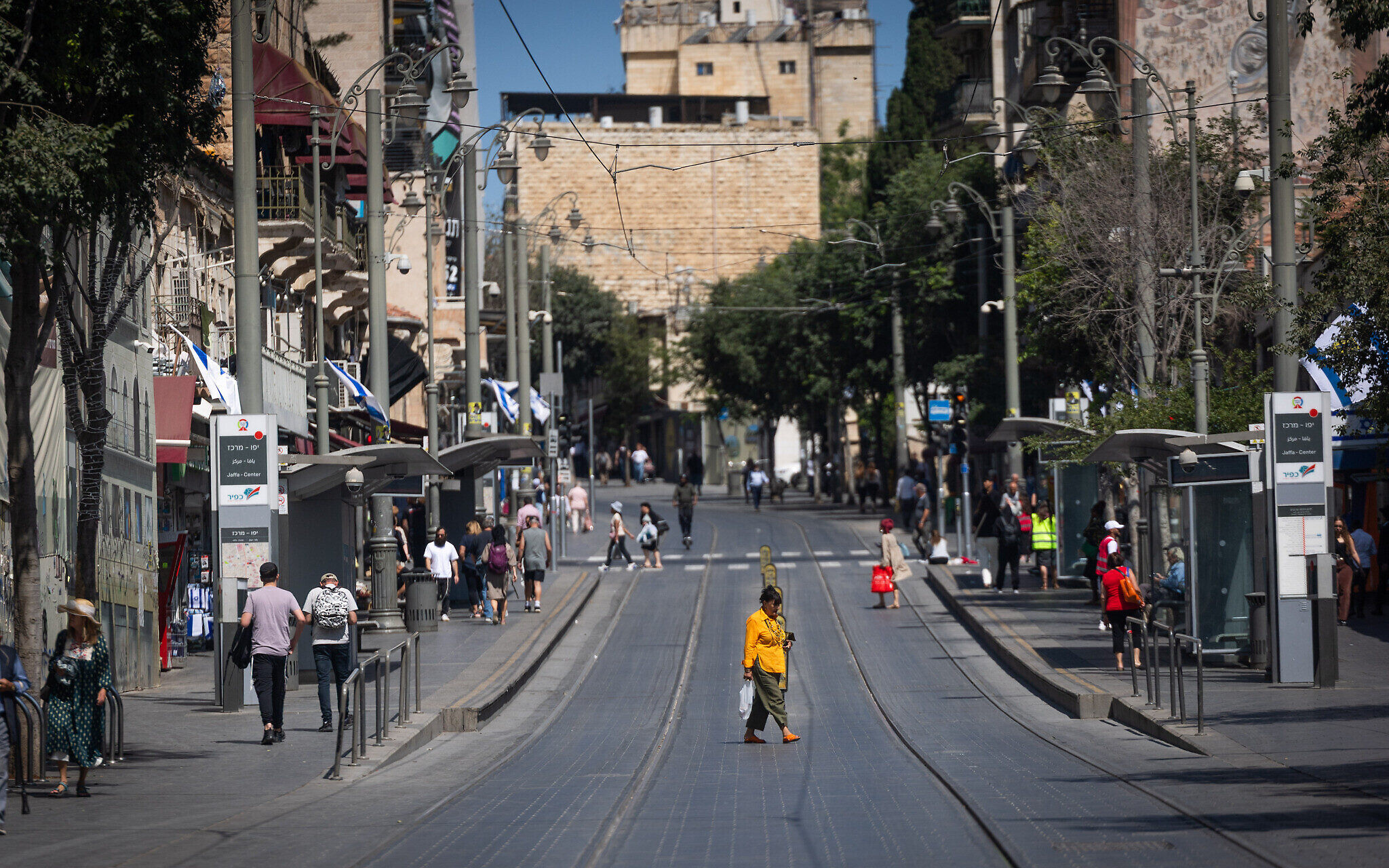
While the work is ongoing, the light rail will operate a limited service — between the stations Givat Hamivtar and Neve Yaakov, and the Central Bus Station to Hadassah Hospital Ein Kerem. The stations in between Givat Hamivtar and the Central Bus Station, which pass through the city’s main center, will not operate to ensure the work can be carried out, the Jerusalem Municipality and the Transportation Ministry said.
Free shuttle buses will be offered between Givat Hamivtar and the Central Bus Station, existing bus lines traveling to affected areas will be more frequent, and a subsidized bike rental service will also be available in the city.
The work will connect the existing Red Line, the first section of the light rail which opened in 2011, to the Green Line, set to be opened next year, at their intersection points located at Ammunition Hill in the city’s north, and the Nordau intersection near the Central Bus Station.
The work will last approximately 14 weeks, according to the Transportation Ministry, and will create the country’s first operating light rail network. Tel Aviv is also expected to have multiple light rail lines running in the next decade.
Some of the city’s residents have complained that the alternative transportation offered amid the construction is insufficient.
“I started a new job in Ein Kerem because I relied on the possibility to make the trip on the light rail,” Hagar Prince told Channel 12 news. “With the light rail, it takes me half an hour to reach Ein Kerem, and with the alternative public transport, the trip takes an hour, double the time. I am angry and disappointed that the work on the rail line will take so much time. It hurts me personally.”
Itamar Rubenstein, a resident of the central city of Ramat Gan who works at the Jerusalem’s District Court as an interpreter, told the Ynet news site that the construction is “no small headache,” adding that not everyone will be able to navigate the works.
“I hesitated whether to come to Jerusalem with a car, but in the meantime, I am finding alternative solutions. In the end, I need to get to work. I am hoping for the best,” he told the Ynet news site.
Businesses operating along the line fear the closure will impact their earnings, particularly since the construction will take place during the summer.
Ofek Ben Yitzhak, the owner of a fruit store that opened at the Mahane Yehuda Market two months ago, told Ynet: “The summer is coming, people want to go and hang out, and now they need to think about how they will get from place to place and spend more money on taxis. For elderly people who shop here, there is now no convenient way to do so.”
In a statement carried by Channel 12, the Jerusalem Municipality said that it was aware of the inconveniences, and that it was “easing restrictions on placing tables and chairs” on the affected streets, “promoting many street events along Jaffa Street, and is in ongoing dialogue with business owners.”
The Green Line, which began construction in 2018, will ultimately stretch 27 kilometers from the Hebrew University campus on Mount Scopus in the city’s north to the capital’s southernmost Gilo neighborhood.
Construction began this year on the Blue Line, which will connect the Ramot neighborhood in northern Jerusalem to Gilo in the southern part of the city.