A year into fake unity with Hamas, Abbas says ‘enough’
Whether or not the Hamdallah government indeed resigned, Gaza's Islamist rulers are unlikely to be part of the next one
The Palestinian unity government, established last June with great fanfare as the culmination of a reconciliation deal between Fatah and Hamas, came to its end with a whimper.
In a meeting Monday night, the PLO’s Executive Committee decided to consult with “all Palestinian factions” with the goal of forming a new government within a week.
Despite reports that PA President Mahmoud Abbas accepted the resignation of Rami Hamdallah’s technocrat government last week, Muhammad al-Madani, a Fatah official, insisted that the government never resigned. It will do so on Wednesday, he told The Times of Israel, after an agreement is reached with all PLO factions currently not represented in the unity government.
“We are examining the inclusion of Hamas. We want it to be a national unity government,” he said. But observers of Palestinian politics say the new cabinet will inevitably exclude the Islamist group, which rules in the Gaza Strip.
The Hamdallah government, sworn in on June 2, 2014, was a hollow shell from the very start. Beneath a veneer of national unity, Ramallah’s security agencies continued arresting and harassing Hamas operatives in the West Bank unabated, while Hamas placed hundreds of Fatah members in Gaza under house arrest, at times even shooting at its members.
All the while, media outlets on both sides of the political divide continued to defame each other, as though the reconciliation agreements of Cairo 2011 and Doha 2012 were never signed.
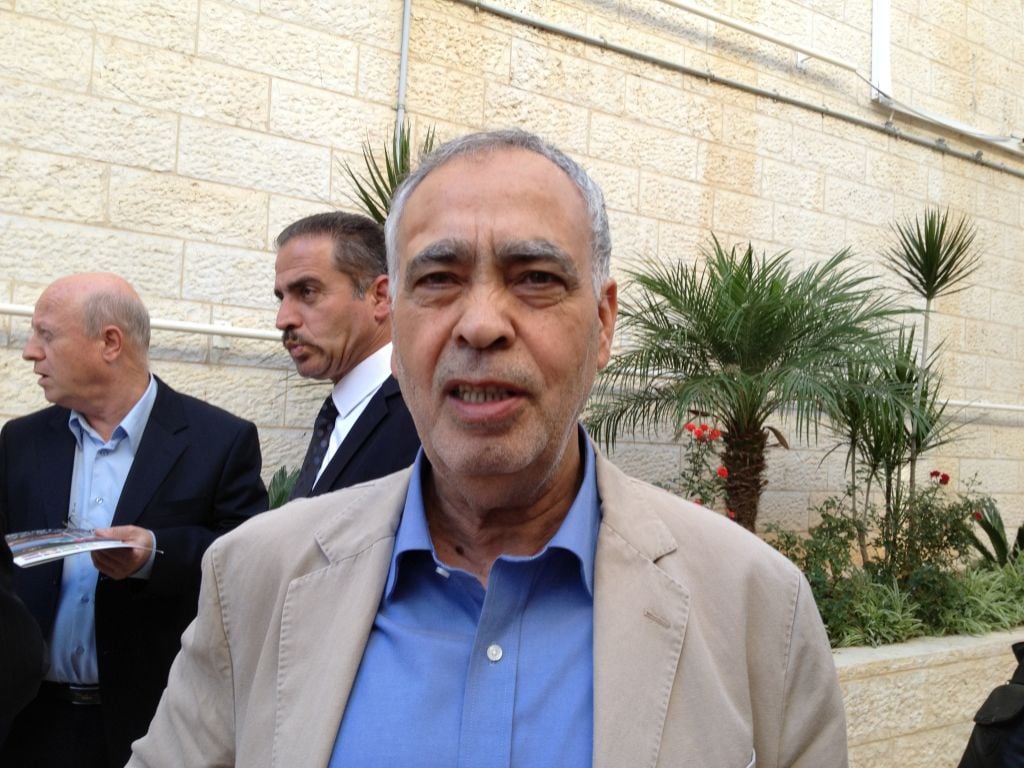
“The Hamdallah government was shackled and unable to deliver a thing,” said Nashat Aqtash, a communications professor at Ramallah’s Bir Zeit University who advised Hamas in its media campaign during the last national elections in 2006.
“The prime minister was out of sync with his cabinet,” he added.
According to Aqtash, the unity government failed in achieving its three stated goals: unifying Palestinian institutions controlled by Hamas in Gaza and Fatah in the West Bank, preparing for national legislative and presidential elections, and ending the state of political divide.
Abbas’s deep-seated suspicion of Hamas is hardly a secret. Last September, two weeks after Abbas publicly accused Hamas of scheming to overthrow him, a Lebanese daily leaked the minutes of a meeting between Abbas and Qatari leader Sheikh Tamim bin Hamad in Doha. Abbas was asking Tamim to pressure the Islamic movement into submission, accusing it of two attempts on his life in Gaza.
“Since the creation of the Palestinian Authority, they [Hamas] have been trying to undermine and topple it,” Abbas told his Qatari host. “They issue [religious rulings] to suit them and use religion to serve their purposes.”
Abbas then went on to accuse Hamas of collaborating with his nemesis, ex-Fatah security chief Mohammed Dahlan. He said that under such circumstances, ongoing cooperation with Hamas would be impossible.
“Why cooperate with Mohammed Dahlan? Hamas is ill-intentioned. I cannot work with them in such a way, and I do not want to remain their cover,” Abbas said. “My experience with them says they cannot be trusted. Even during the negotiations [with Israel in Cairo] they told the Fatah delegation: ‘We want partnership, but you are heretics to us. We are the ones representing Islam.’”
According to Aqtash, despite the pretense of unity, Abbas has devised a way of excluding Hamas from the upcoming government. He has demanded that all members of the new cabinet accept the three conditions of the Quartet on the Middle East: recognition of Israel, rejection of violence, and commitment to abide by previously signed agreements between the PLO and Israel.
“This demand is clearly aimed at embarrassing Hamas,” Aqtash said. “Hamas cannot simply change its colors at a time when so much domestic pressure is being placed on it from Salafi Jihadist elements in the Gaza Strip just waiting for its downfall.”
Madani, Abbas’s party member, acknowledged that the new government would be made up of politicians, not political independents. That, presumably, would render Hamas’s participation virtually impossible.
But if the end of the Palestinian unity government was a long time coming, why did Abbas wait an entire year to pull the plug?
One explanation could be his relentless attempt to internationalize the conflict by appealing to Western governments to recognize Palestine. Without the burden of a partnership with a bona fide terror organization, Abbas would find it much easier to convince “swing” countries to back the Palestinian bid. He would also be pulling the rug under the Israeli claim that the PA was disingenuous about peace due to its problematic partnership with Hamas.
But Hillel Frisch, an expert on Palestinian politics at the Begin Sadat Center of Bar Ilan University, has an economic explanation.
According to Frisch, Abbas entered the unity expecting to use Hamas’s economic pitfall to leverage political control over the Gaza Strip. But since February this year, Hamas has managed to pay its 42,000 civil servants employed in Gaza by taxing goods entering the Strip, as well as “Qatari largess,” managing to keep the PA out of Gaza.
“The financial crisis in Gaza is less acute now than it was at the end of 2014,” Frisch said.