After delays, parole board to rule on early release for ex-president
Following tearful hearing, Moshe Katsav hoping last third of 7-year sentence for rape conviction will be lopped off
An Israel Prisons Service parole board was slated to rule Wednesday on the possible early release of former president and convicted rapist Moshe Katsav, after delaying the decision twice in the past week.
The board spent 11 hours last week reviewing Katsav’s case at a hearing during which the ex-president, at times in tears, made an effort to persuade its members to shave off one-third of his seven-year sentence.
Katsav, 70, was convicted on December 30, 2010, on two counts of rape, among other charges. He began serving his sentence in December 2011, and is slated for release in December 2018. If he wins parole, he will be freed from the minimum-security Ma’asiyahu Prison in Ramle by July.
Katsav has told his close friends that he was “not especially optimistic” that he would be granted the early release, according to Channel 2 news.
He has so far served four years and four months.
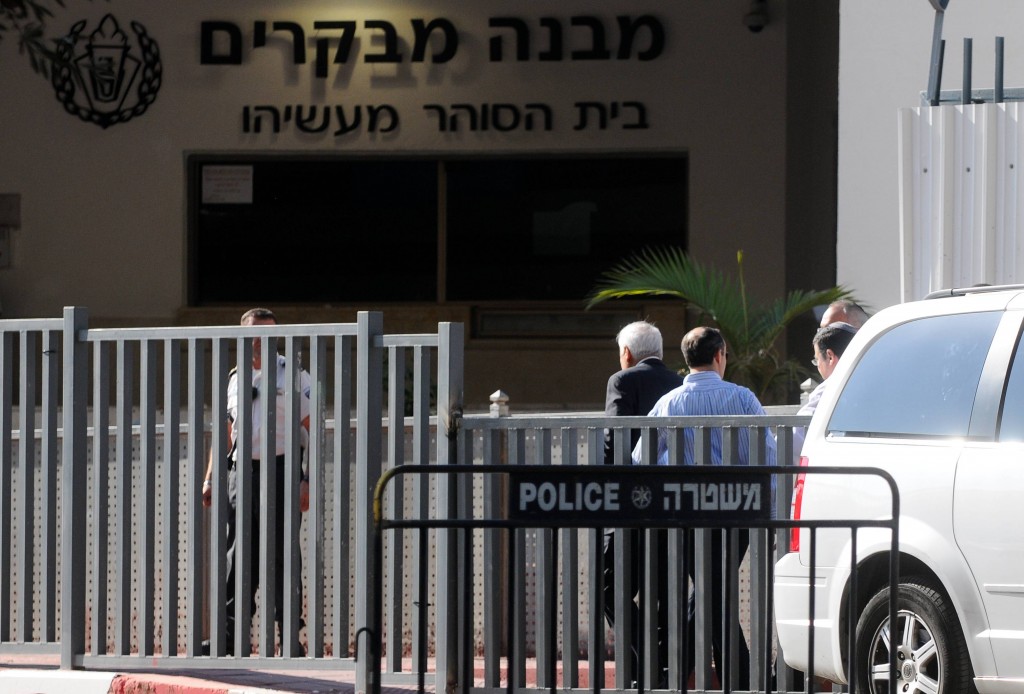
At the parole board hearing last Sunday, Katsav continued to maintain his innocence, as he has throughout his trial and prison term.
Speaking at the hearing, a representative of the Justice Ministry expressed the ministry’s opposition to Katsav’s early release.
Katsav had not proven “he was worthy of an early release,” primarily due to his continued refusal to accept the court’s verdict and take responsibility for his crimes, the state representative said. He has also refused to undergo rehabilitation programs in the prison, he said.
Last week’s hearing was expected to produce a decision, but board members asked to delay the decision until this week. A second hearing, set for Sunday, was also pushed off. The parole board has until April 22 to deliver its ruling.
The parole request has triggered a firestorm of criticism, including from lawmakers and at least one of Katsav’s victims.
If he goes free, “it would be unprecedented in Israel, and would send a very negative message, both about women and about sex offenders,” Odelia Karmon, who was assaulted by Katsav in the early 1990s, told Army Radio last week.
Karmon worked with the former president when he served as transportation minister from 1988 to 1992.
Early parole is very common in the Israeli prison system, with a majority of prisoners managing to obtain the standard one-third reduction to their sentence for good behavior. In Katsav’s case, the parole board will have to determine whether he constitutes a danger to the public and meets the “good behavior” requirements.
The Prisons Service says his behavior as a prisoner has been above reproach.
If Katsav is denied his request, his last recourse will be to appeal for a pardon by President Reuven Rivlin. The two are former Likud colleagues who served in the Knesset together for years before Katsav won the presidency.
The case has sparked a debate about convicted political leaders, with those opposed to the parole insisting that Katsav’s stature as a former president makes it all the more important that his sentence not be shortened.