After midterms, opposition leaders accuse Netanyahu of harming relationship with US
Traditionally Israel's strongest ally, Americans' support for the Jewish state has wavered as Mideast wars, hard-right government alienate both Democrats and Republicans
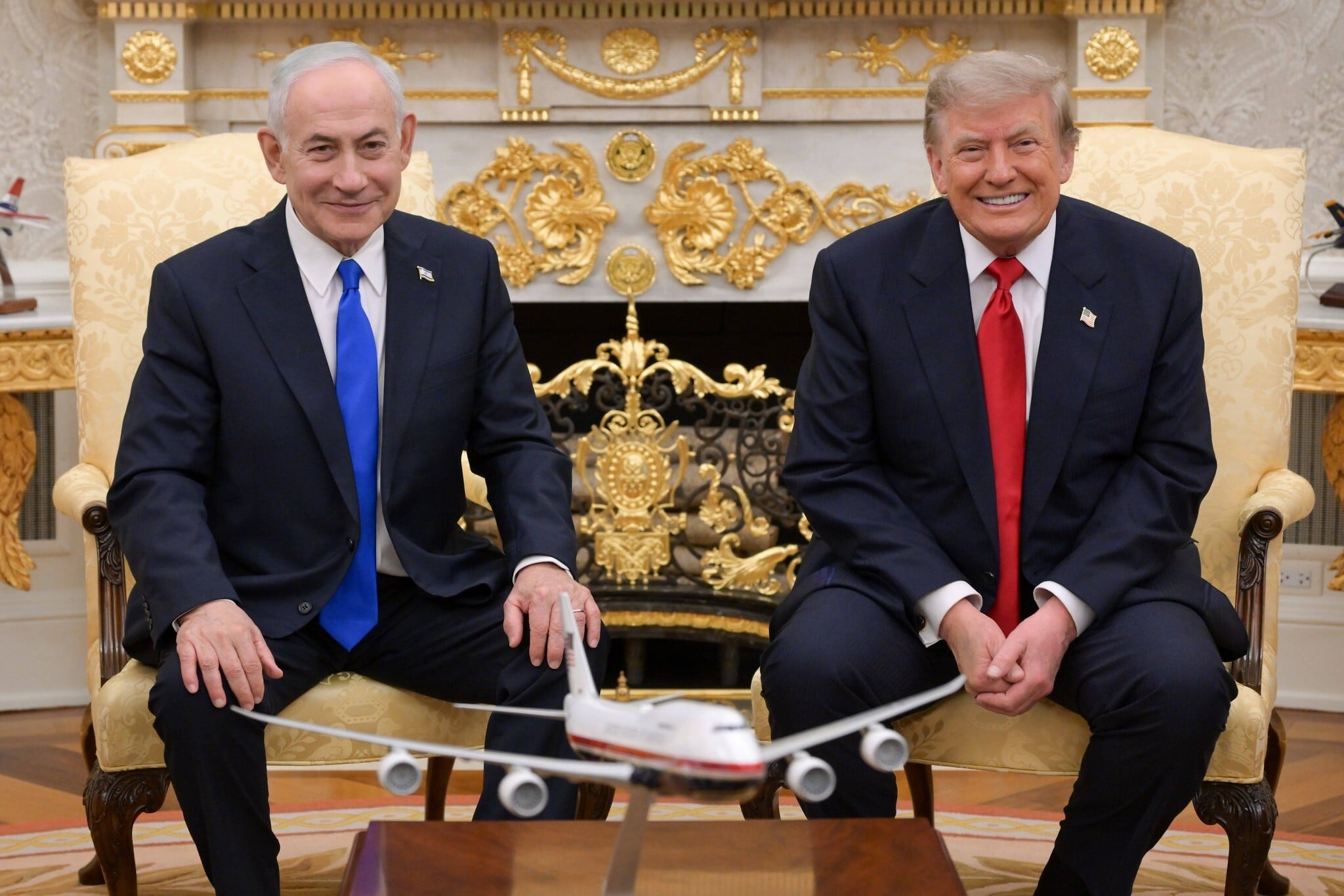
Prime Minister Benjamin Netanyahu’s political rivals seized on the results of the US midterm elections on Wednesday as proof that he had squandered generations of bipartisan American support for Israel, as they continued in their efforts to form a government without him.
Democrats, among them fierce critics of Israel, won majorities in both the Senate and House in Tuesday’s midterm election, in a scathing rebuke to President Donald Trump fueled in part by deep frustration over the unpopular US-Israeli war on Iran.
The US vote took place just a week after the election in Israel, when Netanyahu’s right-wing coalition lost its parliamentary majority but performed well enough to deny his main opponent, Yashar chair Gadi Eisenkot, a clear path to unseat him.
President Isaac Herzog is due to hold talks on Wednesday and Thursday with party representatives before tasking one of the two men with forming the next government. Meanwhile, Netanyahu remains prime minister in a caretaker capacity.
A ‘toxic’ leader
The United States has been Israel’s staunchest ally for generations under presidents of both parties, providing billions of dollars a year in military aid since the 1970s. But unlike previous leaders who assiduously courted Democrats and Republicans alike, Netanyahu openly backed Republicans.
Support for Israel among Democrats and some Republicans declined after Israel launched its military offensive in Gaza following the October 7, 2023, Hamas attack, and fell further this year since Trump and Netanyahu ordered a joint attack on Iran.
Some Democratic candidates made criticism of US military aid to Israel a prominent campaign argument. On Tuesday, Trump, who had endorsed Netanyahu, made an election-day pledge to swiftly halt $4 billion in annual funding to Israel, a move he said would take away a “bad talking point” used by Democrats.
The hawkish chair of Yisrael Beytenu, Avigdor Liberman, sought to tie Trump’s announcement about ending military aid to his endorsement of Netanyahu ahead of last week’s election, writing on X: “The price of Trump’s support for Netanyahu — 3.8 billion dollars a year.”
Yair Golan, head of Israel’s left-wing Democrats party, said on the social media platform that the US midterm election results “reveal just how toxic Netanyahu is among both Democrats and Republicans.”
“The continued tenure of Netanyahu and [far-right minister Itamar] Ben Gvir could set Israel on a path of international sanctions, global isolation, and clashes with the US, our friend and most important ally,” Golan warned. “Netanyahu lost the election. He is dangerous for Israel.”
Centrist Opposition Leader Yair Lapid likewise said the results showed “Israel cannot afford” for Netanyahu to remain in office.
“It endangers our security, it jeopardizes our democracy, and it will ruin our standing on the global stage,” Lapid said in a post.
Netanyahu has so far remained silent, both about the outcome of the US vote and Trump’s announcement on ending military aid. His office did not respond to a request for comment.

It could be weeks or months before it becomes clear whether it is Netanyahu or Eisenkot who ultimately faces the task of repairing the relationship with the US. Whichever candidate is chosen first by the president must build a new coalition or the other will be given an opportunity. If both fail, a new election will be called.
Meanwhile, Udi Sommer, a professor of political science at Tel Aviv University, predicted that the incoming Democratic-controlled US Congress would be the most adversarial towards Israel in its history.
Although most power over foreign policy still resides with the president, Democrats could apply pressure through hearings, congressional oversight and budgetary measures, he said.
“The Democratic landslide and the Republican wipeout encapsulate the next chapter in US-Israel relations,” Sommer said.
Times of Israel staff contributed to this report.