American envoy to UN: US having ‘tough conversations’ with Israel
Mike Waltz's comments come in response to question about West Bank; ambassador says Trump nixed Iran's latest offer as 'not good enough,' touts Gaza progress and plans to expand Abraham Accords
The United States is holding “very candid, tough conversations with the Israeli government,” US Ambassador to the United Nations Mike Waltz said in an interview published Wednesday.
His comments were in response to a question about the Trump administration’s approach to Israeli policy in the West Bank, though, Waltz didn’t say whether this was the topic of the “tough conversations” Washington is having with Jerusalem.
Speaking to Foreign Policy editor-in-chief Ravi Agrawal, Waltz was asked what tools the Trump administration was using to stop potential Israeli annexation, given that it has distanced itself from recent moves by the United Kingdom, France and Canada to sanction goods from West Bank settlements.
Waltz did not name a specific measure. He pointed instead to the UN Security Council resolution endorsing US President Donald Trump’s Gaza plan. “For the first time ever in international law, we also have a document that says no annexation and says there’s a pathway to a two-state solution with appropriate reforms,” he said. “That was incredibly significant.”
Adopted in November 2025, UN Security Council 2803 enshrines Trump’s 20-point plan for ending the Gaza war. But it does not make any mention of Israeli annexation of the West Bank.
Trump came out against West Bank annexation last year, but did so verbally to reporters in the Oval Office.
Waltz went on to note that Israel “is in the midst of an election, so we’ll see what the Israeli people decide in terms of the future there.”
On Gaza, Waltz recalled that a year ago, few believed all the hostages held by Hamas could be recovered. “No one thought we would get them all out. We did. All of them,” he said. “For the first time in a decade, there are no Israelis being held by Hamas somewhere in Gaza.”
He said the way the terror group used the remains of deceased hostages “to psychologically torture these families was inhumane of the highest order.”
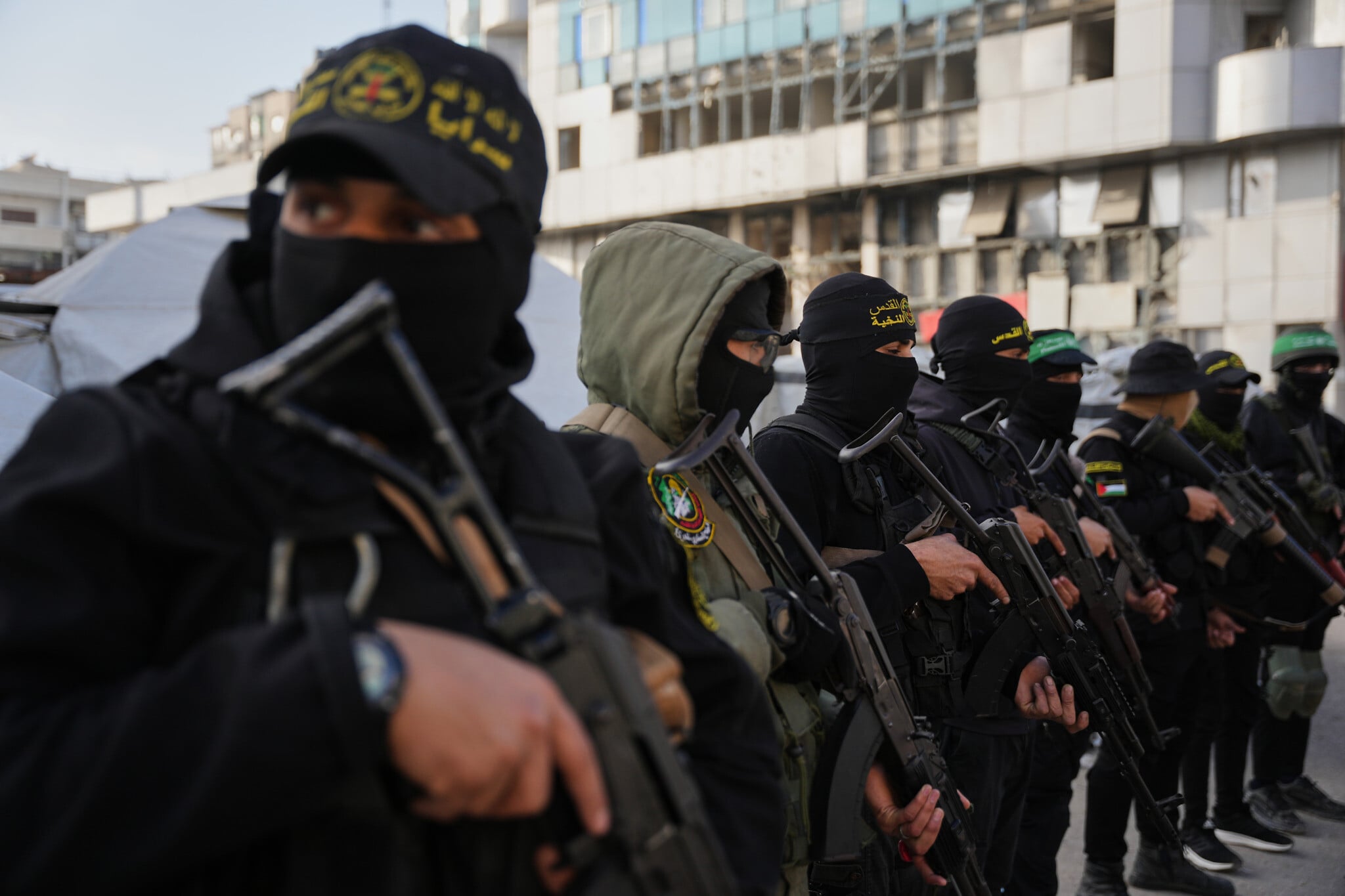
“The aid is flowing – admittedly not enough, and more needs to go in,” Waltz said. He listed a reconstruction fund and an international stabilization force with contributions from Morocco, Kosovo and Albania, and Palestinian police “being vetted and trained.” He also cited a governance body that will take over “when we get Hamas to the point of disarming,” adding that the group has signed a 15-point plan — though Israel has rejected that proposal as insufficient.
The alternatives, he argued, were that “the IDF would occupy forever” or “that Hamas would rule Gaza.” He added: “We have a long way to go, but I haven’t heard anyone else present a better plan when it comes to Gaza.”
Waltz also said he had recently hosted Israel, Morocco and the US “for a furtherance of that relationship,” referring to the Abraham Accords. “So the Abraham Accords are moving forward, and we do plan and hope to expand it in this term,” he said.
‘Not good enough’
Much of the interview focused on the ongoing US war with Iran. Iranian Foreign Minister Abbas Araghchi stayed in New York after the UN General Assembly to hold indirect talks with the US and left on Tuesday.
Waltz said he did not take part in the talks. “The Iranians came and made an offer, and US President Donald Trump and the team didn’t think it was a very good offer, to be candid with you,” he said. “Trump has basically said, ‘Not good enough.'”
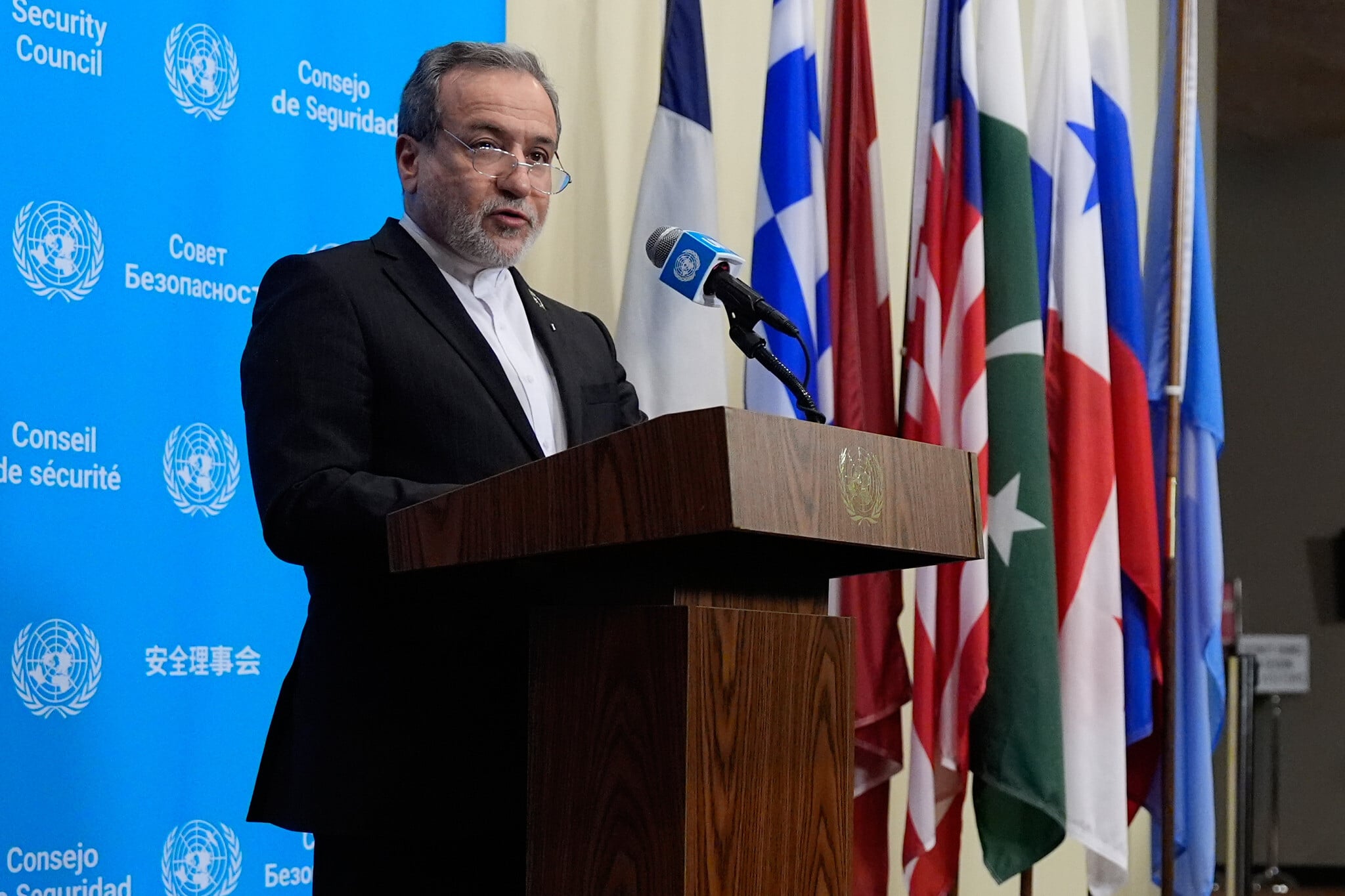
Washington, he said, “won’t unfreeze all of their assets or lift sanctions based on an Iranian promise that they’ll start to talk seriously about their nuclear program.”
“The Iranians have overplayed their hand,” Waltz said. “Their leverage over the Strait of Hormuz is declining by the day.” He said the US was “now receiving almost a prewar level of oil out of our Gulf allies,” while Iran’s currency had hit a record low.
He compared Iran’s conduct in the strait to Spain and Morocco trying to use the Strait of Gibraltar “as leverage on the world because they had a dispute.” Pressed by Agrawal, he acknowledged the US has never ratified the UN Convention on the Law of the Sea, which it accuses Iran of violating. “We haven’t, but we follow its tenets,” he said.
Defending the decision to go to war, Waltz said Iran was following “the exact playbook North Korea used,” amassing drones and ballistic missiles to make military action against its nuclear program too costly. “We couldn’t allow the Iranians to repeat the North Korea playbook,” he said. “If Iran tests a nuclear weapon, Saudi Arabia has already said they will, too.”
“A Middle East awash with nukes is something that should scare every American for the next generation,” he said. “Good presidents secure this generation; great presidents secure the next generation.”
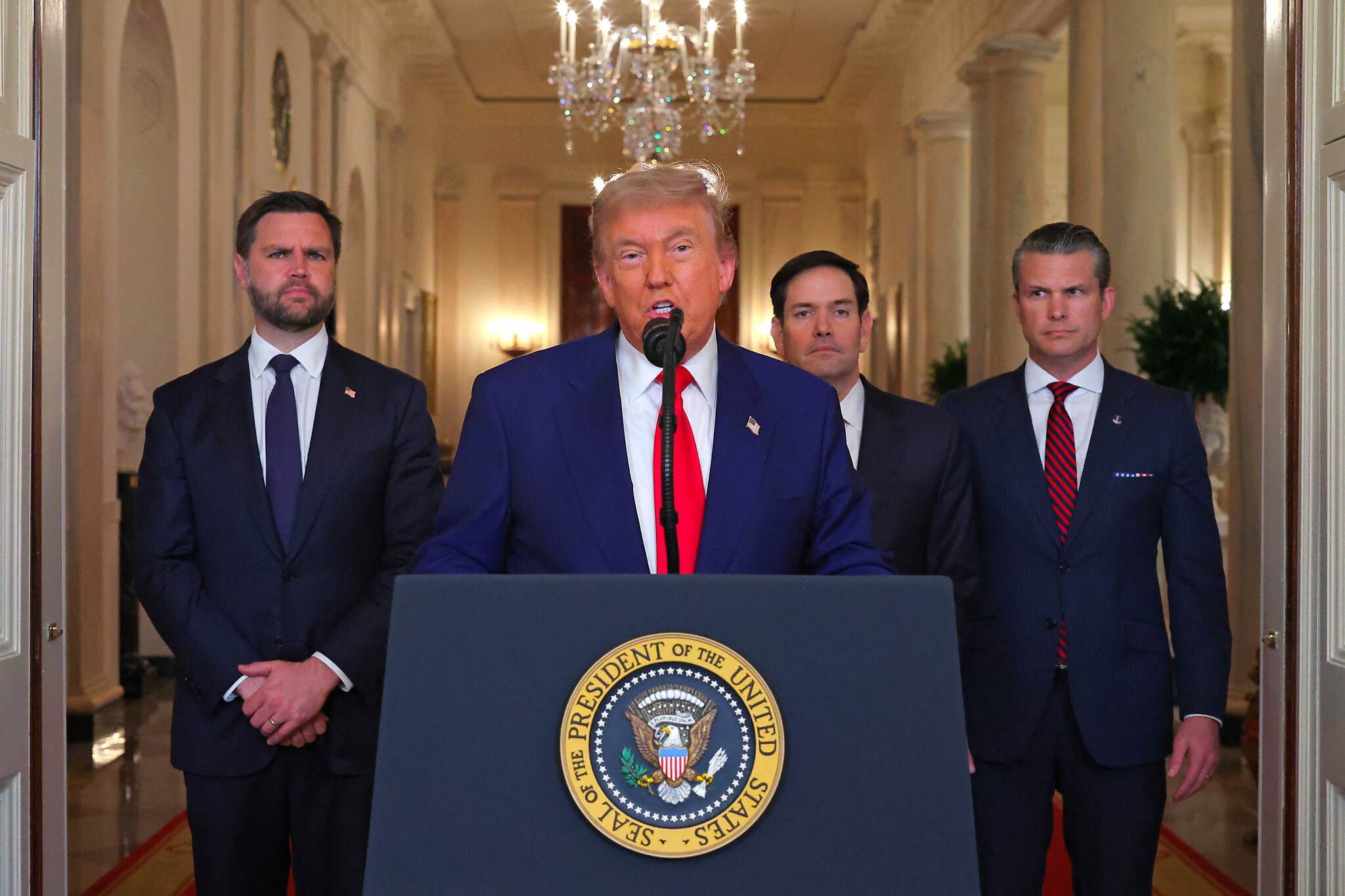
Agrawal asked whether Americans deserve a fuller accounting of US losses and mistakes, citing damage to US bases, the use of more than a third of the US stock of Patriot interceptors, and a 40 percent rise in gas prices. Waltz responded, “I don’t know a country that exposes its military’s mistakes.” Doing so mid-conflict, he said, “would be quite foolish.” On munitions, he said: “We do have the munitions that we need.”
Asked about Trump’s remark to The New York Times earlier this year that “I don’t need international law,” Waltz said it referred to the capture of former Venezuelan leader Nicolás Maduro. “Of course it matters,” he said of international law.
Looking at the wider region, Waltz said, “I’m very optimistic about Lebanon; I’m the most optimistic about Syria, in my lifetime; and Iraq is now moving finally in the right direction. Why? Because Iran is on its back foot.”
Waltz served as Trump’s national security adviser for 101 days before leaving the post last year, after a journalist was mistakenly included in a private chat group discussing US strikes on Yemen. He was subsequently named ambassador to the UN.