Another bloody Friday
A horrifying attack in a family home on Friday night leaves in its wake heart-rending accounts, bloody pictures and analyses on whether it could have been different, and could be getting worse
Through all the terrible, senseless attacks Israelis have suffered over the last few years, bombings, stabbings, shootings and the like, there are a few that stand out for their sheer lack of humanity, targeting innocent people in their homes, at prayer, at their most vulnerable. Attacks like the brutal slaying of the Fogel family as they slept one Saturday night in 2011, like the three kidnapped teens in 2014, like the killings of Dafna Meir and Hallel Yaffa Ariel, and the Dawabshe family, and the worshippers at a Har Nof synagogue and on and on.
These attacks are a ghastly degree apart from the others and Israeli society develops a bigger lump in the throat of its body politic when they occur. It’s no different on Sunday, as newspapers devote page after page to the Friday night killing of grandfather Yossi Salomon and his two adult children Chaya Salomon and Elad Salomon, including well over a dozen analyses/opinion pieces to accompany the news reporting on the killings and unrest in Jerusalem and the West Bank over the Temple Mount.
Both tabloid Yedioth Ahronoth and Israel Hayom devote nearly their entire front pages to the massacre, but only Israel Hayom gives in to the temptation to use the horrifying pictures of the Salomons’ bloodied kitchen in the aftermath of the attack during a Friday night celebration (Haaretz also leaves the dramatic and sickening blood-stained photos off its front page).
What Yedioth does have on its front page is pictures of the victims and a quote in large block letters from Michal Salomon, the widow of Elad Salomon, who was at the house at the time of the attack.
“I heard the terrorist ask in Arabic: ‘what’s your names’ — and understood that something bad was happening. I took the three kids upstairs quickly. I heard terrible screams and shots. I held the door closed with all my might since it didn’t have a lock. After what seemed like forever I understood it was over. I went downstairs and I saw Elad and I understood that he was no longer living.”
The inside of the paper shows no such self-restraint, running pictures overflowing with blood (and on a red background as if it needed emphasis). In both Yedioth and Israel Hayom, there is intense attention paid to the fact that the attack occurred in their home, at a celebration on Friday when people are supposed to be at their most joyous and safe.
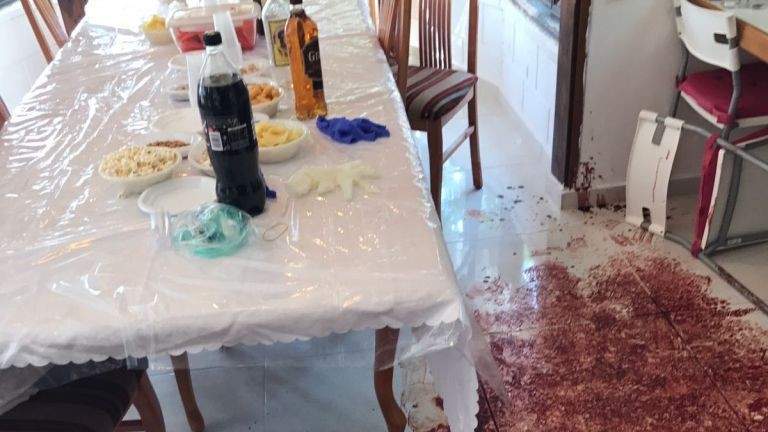
“Friday night, a time of family comfort,” Emily Amrousi writes in Israel Hayom, recalling the too-long roster of families killed in their homes on Shabbat or holiday eves. “In each of the cases intruders, thirsting for blood, broke into houses that had been sanctified with a cup of wine and love, and were full of joie-de vivre for a simple life, with dishes on the counter and quiet conversations, turning kitchens into slaughterhouses.”
Those heartrending scenes (and much of the blood) are missing from Haaretz, which takes a more analytical view and focuses mostly on the wider disturbances, with a flurry of commentaries barely mentioning the Halamish attack.
In one commentary, Amira Hass explains to readers why such an attacker would be motivated to act, though she writes that she offers no judgement on the results of their actions:
“First of all, the intolerable continuation of the occupation; then the inspiration of Al-Aqsa as a place that unifies, religiously and socially; the disappointing, weakened and weak leadership; and a willingness to die that is a mixture of faith in Paradise and despair at life,” she writes.
In another commentary, Barak Ravid blames politics for creating this situation in which violence is spiraling over Israel’s decision to put metal detectors at the Temple Mount.
“Netanyahu’s miscalculation … in setting up those detectors put him in an impossible bind. When it turned out that this move was meeting stiff opposition, the government was left with no good solutions, stuck between a rock and a hard place,” he writes. “If it were to remove the detectors, this would be interpreted as weakness, showing it capitulating to threats and admitting that it does not truly have sovereignty over the Temple Mount. If it left the detectors in place, it could find itself sliding towards a violent eruption in Jerusalem and the West Bank, and a crisis with the entire Muslim world.”
Yedioth Ahronoth’s Nahum Barnea shows that he is of the same mind, running a column with the headline “it could have been prevented.”
“We are the sovereign and we are the neighbor on the other side of the fence, on the other side of the bend in the road. We can’t just ignore them. We don’t have to love them: we need to work with them using determination, consistency and wisdom,” he writes of Israel’s relationship with the Palestinians. “Unfortunately, all the government moves since the Temple Mount attack last Friday have been missing these elements. There’s no determination, no consistency and no wisdom.”
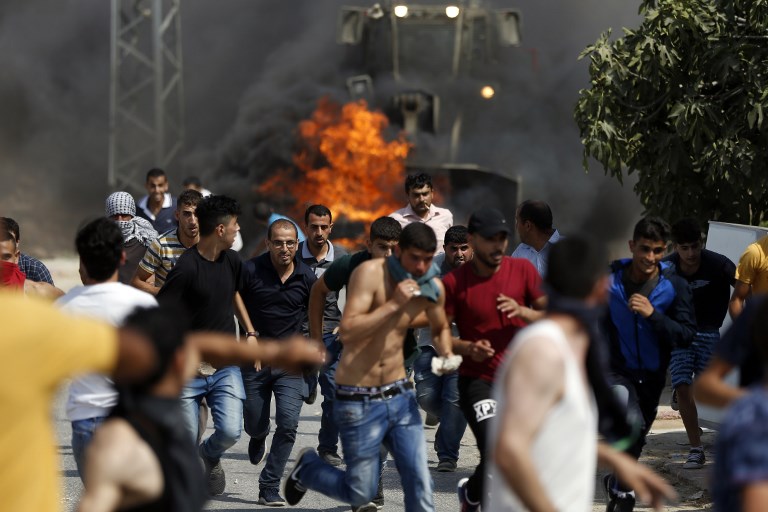
If the horrifying pictures and tales of government incompetence weren’t enough to make one throw up their hands in despair, Yoav Limor in Israel Hayom gives Israelis more reasons for despondency, saying that if this is the start of a new wave of violence, and it’s going to be much worse than the last one.
“Those comparing the unrest of the past week to the wave of mostly lone-wolf terrorism that erupted in October 2015 are wrong. The current crisis represents a much more slippery slope because it is fueled by religious rage. Past waves of terrorism, including the Second Intifada, the attempts to use security prisoners’ hunger strikes to agitate the Palestinian street, and other flare-ups in recent years, were more rationally motivated. In the past, flare-ups were led by political forces seeking national gains by means of violence. This time the unrest is emotionally motivated, driven by the false notion that Al-Aqsa mosque is “in danger” of Israeli takeover,” he writes.
“Another indication was the reaction on the Palestinian street to the gruesome terrorist attack in Halamish,” adds Limor. “The glory and support showered on the terrorist was unusual even for a society that regularly glorifies terrorists, raising concerns that others might very well follow in his footsteps.”