Anti-IS assaults gain ground in Iraq and Syria
Twin US-led coalitions of Iraqi and Kurdish-Arab alliance pushing jihadists from last two major cities, Mosul and Raqqa
MOSUL, Iraq (AFP) — Iraqi forces advanced in west Mosul and fighters in neighboring Syria seized a key supply route to Raqqa Monday, as twin US-backed offensives gained ground against the Islamic State group.
Supported by the US-led anti-IS coalition, Iraqi forces and a Kurdish-Arab alliance in Syria are battling to push the jihadists from Mosul and Raqqa, the last two major urban centers under their control.
The Pentagon said it has sent extra troops into northern Syria to make sure competing forces in and around the town of Manbij remain focused on fighting IS rather than each other.
Intense fighting since last week has forced tens of thousands of people from their homes, raising fears for many more civilians still trapped in IS-held areas.
In Iraq, security forces retook a series of government buildings that were one of the targets of a renewed push in west Mosul launched Sunday, said the Joint Operations Command.
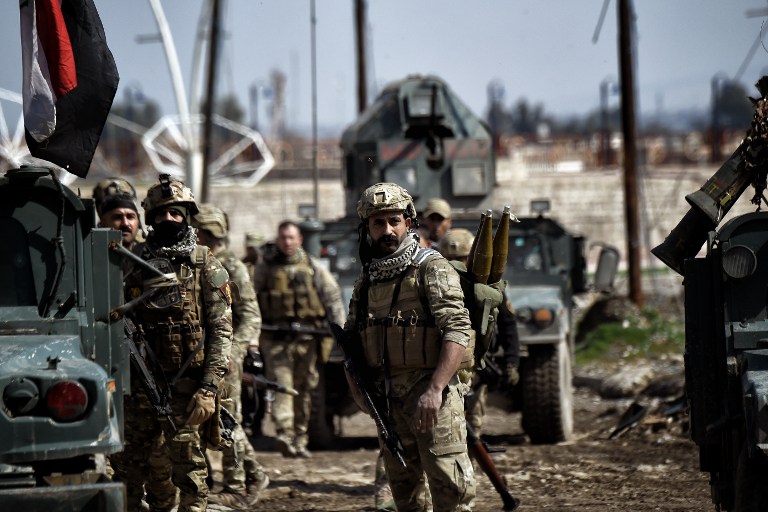
Iraq’s elite Rapid Response Division and federal police forces recaptured the Nineveh police headquarters, the courts complex and the water, electricity and sewage directorates.
And the Counter-Terrorism Service, the country’s premier special forces unit, retook Al-Sumood neighborhood, another target in the drive, and attacked Al-Mansur.
The operation to recapture west Mosul was launched on February 19, but slowed due bad weather until a fresh push began on Sunday.
AFP reporters in west Mosul witnessed intense clashes, with heavy automatic weapons fire and clouds of black smoke billowing over the city.
Bridge in sights
Rapid Response forces were also close to Al-Hurriyah Bridge and the provincial government headquarters, said Lieutenant Colonel Abdulamir al-Mohammedawi.
Mosul is divided by the Tigris River, and while bridges crossing it have either been damaged or destroyed, they would provide a link between the government-held east and IS-held west if they can be repaired or otherwise bridged.
The fighting in west Mosul has forced more than 50,000 people to flee, said the International Organization for Migration.
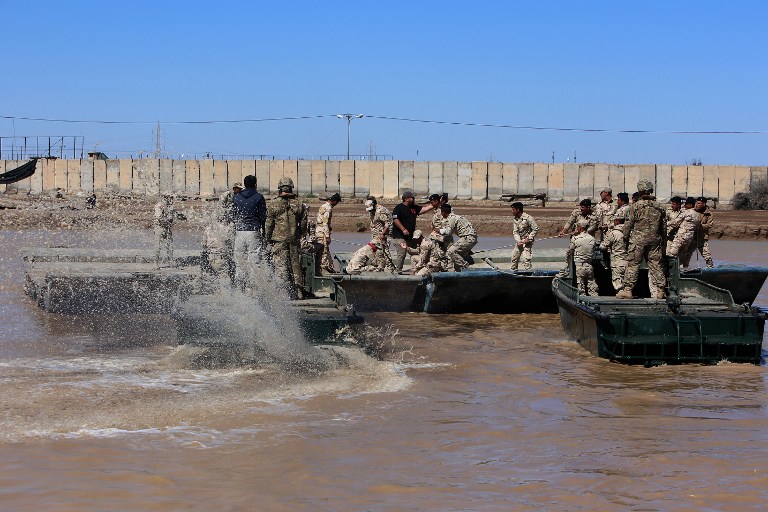
The operation to retake Mosul was launched on October 17, with a number of forces taking part but CTS and Rapid Response ultimately playing the leading roles.
In Syria, US-backed forces cut a key IS supply route between Raqqa and Deir Ezzor province.
The Syrian Democratic Forces seized control of the only major road linking Raqqa along the Euphrates valley to Deir Ezzor, said the Syrian Observatory for Human Rights.
US troops in Manbij
The SDF has controlled Manbij since last year when it pushed out IS, but recently it has clashed with Turkish-backed forces.
On Monday US defense department spokesman, Navy Captain Jeff David, said “additional” American troops had entered Manbij on a “reassurance and deterrence mission.”

Their task would be to ensure the Kurds and Turks — both US allies — stop attacking each other to focus on IS.
Turkish Prime Minister Binali Yildirim Monday gave assurances that Ankara would not attack Manbij without the cooperation of Russia and the United States.
The SDF, dominated by the Kurdish People’s Protection Units (YPG), has benefited from air support, equipment and training provided by the US-led coalition that has been carrying out air strikes against IS in Syria and Iraq.
The alliance began its offensive against Raqqa in early November and has since seized swathes of territory.
Elsewhere in Syria, heavy regime air strikes and shelling targeted the area around oil and gas fields in eastern Homs as regime forces battled IS, said the Observatory.
Government troops have advanced inside the Jazal field and seized most of it from IS, following up on the regime’s recapture of the city of Palmyra last week, the monitor added.
IS imposes dress code
Activists said IS has imposed an “Afghan-style” dress code in Raqqa to help its fighters blend into the civilian population.
One of them, Abu Mohamed, said the aim was to “make it harder for airplanes and the Kurdish forces… to distinguish between civilians and Daesh [IS].”
“Anyone who does not comply faces prison and a fine,” he said.
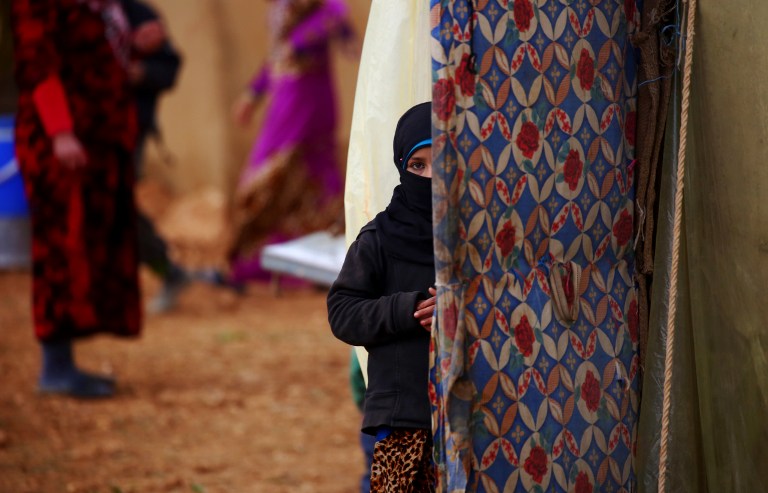
Around 66,000 people have fled north Syria in recent days, the UN said.
IS, which emerged from the chaos of Syria’s civil war to seize large parts of the country and Iraq in 2014, has lost much of the territory it once claimed.
The Syrian conflict broke out in March 2011 with protests against President Bashar al-Assad and escalated into a complex war that has killed more than 310,000 people and displaced millions.
Save the Children Monday warned that a generation of Syrian children could be “lost to trauma.”
“After six years of war, we are at a tipping point,” it said in a report on the war’s impact on children’s mental health.
“The risk of a broken generation, lost to trauma and extreme stress, has never been greater.”
Rouba El Husseini contributed reporting from Beirut.