Arab parties emerge as potential kingmakers, presenting Zionist opposition with fateful choice
Despite anti-Netanyahu majority, opposition leaders' refusal to rely on Arab parties could force fresh elections or unity government, either of which would keep premier in power
Near-final results show that a clear majority of Israelis voted for parties opposed to Prime Minister Benjamin Netanyahu’s continued rule, yet the longtime premier could remain in power — not because his opponents lack the numbers to replace him, but because some refuse to recognize Arab lawmakers as legitimate political partners.
A historic surge in Arab voter turnout in Tuesday’s election has placed Israel’s Arab-majority parties in a position to determine the next government, putting the Zionist opposition’s longstanding refusal to rely on their support to a potentially decisive test.
With 85.6 percent of ballot boxes counted as of 2:32 p.m. Wednesday, partial results published by the Central Elections Committee gave 53 seats to Netanyahu’s bloc and 48 to the bloc led by Eisenkot’s Yashar party. The two Arab-led parties are projected to win a combined 19 seats — an unprecedented high — with 12 for the Joint List and seven for Ra’am. The two parties have five seats apiece in the outgoing Knesset. The previous combined record was 15, in 2020.
Despite leading the largest party, Netanyahu has no obvious path to expanding his bloc beyond his existing far-right and ultra-Orthodox allies to get the 61-seat majority he needs to form a government.
Meanwhile, the Zionist opposition and Arab parties are projected to hold 66 of the Knesset’s 120 seats, reflecting widespread opposition to Netanyahu’s government, in part due to the extraordinary turnout by Arab voters driven by deep animus toward Netanyahu’s government and its far-right ministers, Itamar Ben Gvir and Bezalel Smotrich.
Yet while the Arab parties have signaled their willingness to help bring about a change of government, Eisenkot and several of his prospective coalition partners would have to reverse their pledges not to rely on Arab lawmakers to form one. Without the Arab parties’ support, the Zionist opposition cannot secure a parliamentary majority.
Whether Netanyahu remains in power may therefore ultimately be decided by three men — Eisenkot, Naftali Bennett and Avigdor Liberman — and their willingness to cooperate with the Arab parties to replace him.
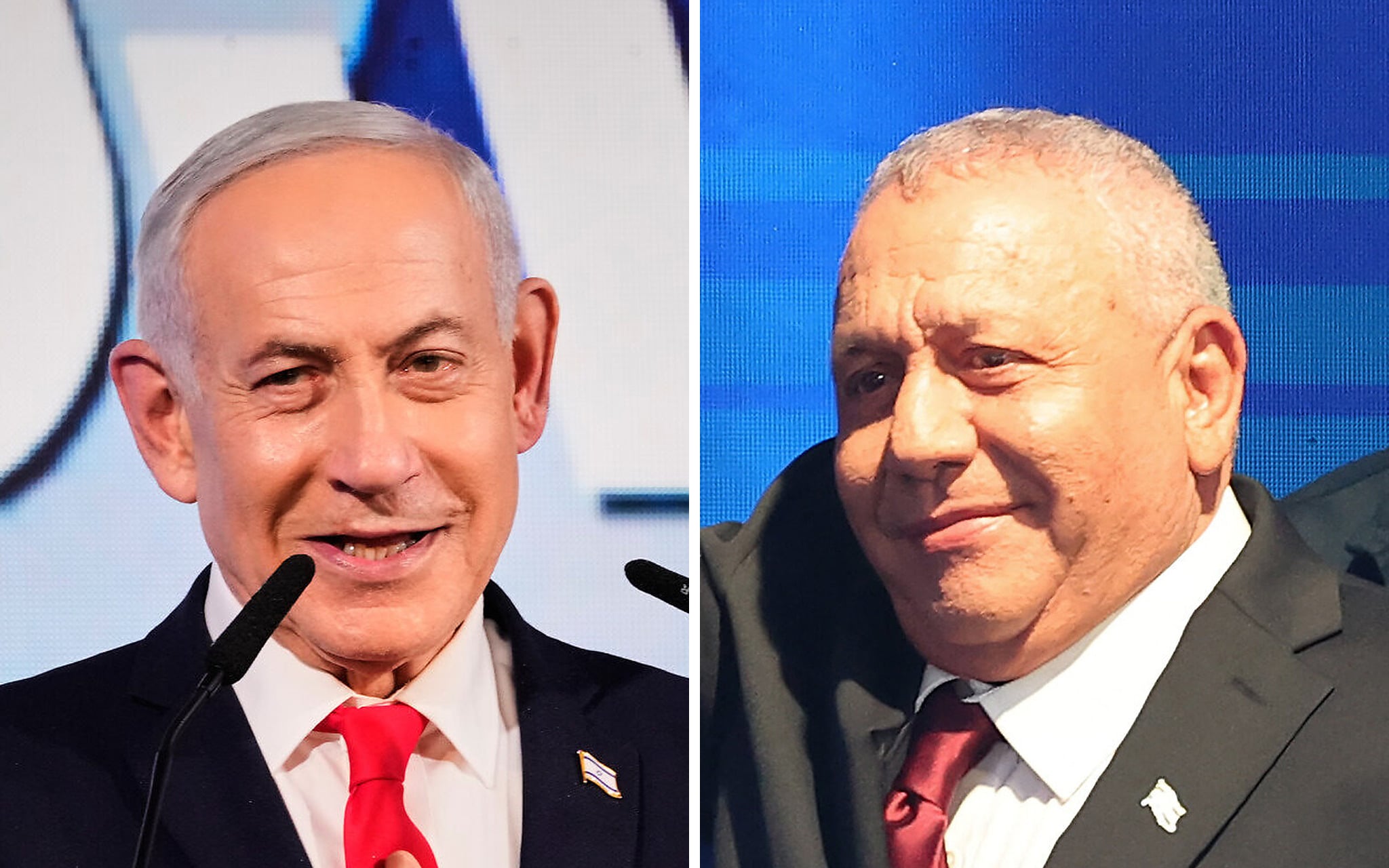
For years, Netanyahu has campaigned to portray Arab lawmakers as illegitimate political partners — effectively excluding representatives of roughly one-fifth of Israel’s population from governing. Will this manufactured stigma prevent the opposition bloc from replacing a government it has repeatedly accused of destroying the country?
Should the anti-Netanyahu bloc refuse to cooperate with the Arab parties, the only apparent alternatives would be another election or a unity government with Netanyahu — both of which would leave the premier in power, at least in the short term. Either outcome could provoke a backlash from voters who turned out in extraordinary numbers seeking change, only to see the opportunity squandered.
But reversing their pledges not to rely on Arab parties could also alienate some of Eisenkot, Bennett and Liberman’s own voters.
What do the Arab parties want?
Ra’am chairman Mansour Abbas has signaled his willingness to join an Eisenkot-led coalition outright, provided such a coalition proves viable.
“Everyone is speaking with us, not just from the ‘change bloc,'” Abbas told Channel 12 following Tuesday’s exit polls, suggesting that figures from Netanyahu’s camp had also approached him. Abbas later explicitly said that Likud had approached him.
Indeed, it was Netanyahu himself who first helped legitimize Ra’am as a potential coalition partner, courting Abbas after the 2021 election before the Islamist party ultimately joined the Bennett-Lapid government. Despite his subsequent denunciations of Arab parties as illegitimate governing partners, it is not clear that Netanyahu would reject Ra’am’s support if it offered him a path to another term in office.
Since his Islamist party became the first Arab-majority faction to join an Israeli government in 2021, Abbas has sought to make his party more palatable to Jewish voters and potential coalition partners, most notably by recruiting former Yesh Atid lawmaker and deputy public security minister Yoav Segalovitz, a Jewish Zionist, as his party’s No. 2 candidate.
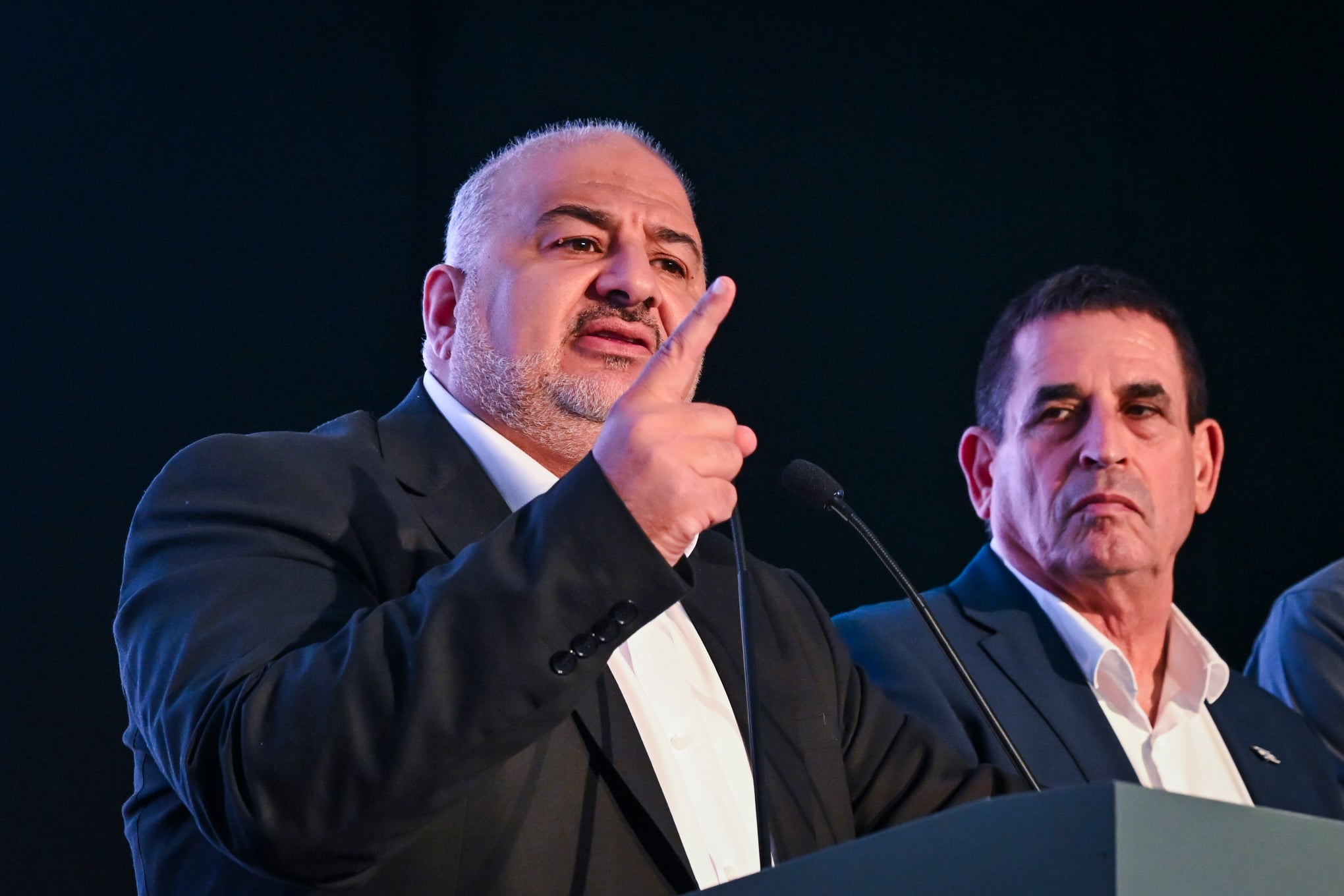
Over the summer, Ra’am also formally severed its political subordination to the Shura Council, the religious body that previously guided its decisions, in an effort to establish itself as a more independent political party.
On Wednesday, the Joint List, meanwhile, offered to support an alternative government from outside the coalition, with chairman Yousef Jabareen vowing to use his faction’s newfound parliamentary strength to oust Netanyahu.
“Anyone who wants to offer a substantive and genuine alternative to Netanyahu’s government of bloodshed will have to talk to us in order to pave the way for the change that the Israeli public longs for,” Jabareen told Channel 13 on Wednesday, vowing to “leverage political power” to remove Netanyahu, Ben Gvir and Smotrich from government.
The Joint List, an alliance of the Communist Hadash, Arab nationalist Ta’al and Palestinian nationalist Balad parties, has historically refused to join Zionist-led governments, and has only rarely recommended candidates to form them, most notably during Benny Gantz’s unsuccessful bids to replace Netanyahu in 2019 and 2020.
After four years of a government widely reviled by Arab voters over its policies and rhetoric toward their communities, both the Joint List and Ra’am are prioritizing Netanyahu’s removal, even before a new coalition is formed.
In addition, both the Arab and Zionist opposition parties have signaled their intention to use their parliamentary majority to replace Likud’s Amir Ohana as Knesset speaker, giving Netanyahu’s opponents control over the legislative agenda even if the prime minister remains in office at the head of a caretaker government.
Such an arrangement could allow them to advance legislation establishing a state commission of inquiry into the October 7, 2023, Hamas-led attack, among other measures.
Before joining a new anti-Netanyahu coalition, Ra’am is likely to seek a ministerial or deputy ministerial post in the National Security Ministry.
Merely to bolster the opposition bloc, both Ra’am and the Joint List would likely seek commitments to address pressing issues facing Arab communities, including rampant organized crime, housing shortages, discrimination and chronic underinvestment.
Could the Zionist opposition concede?
Despite the Arab parties’ unprecedented electoral success, their ability to translate that strength into political influence depends largely on whether Eisenkot, Bennett and Liberman are willing to reverse their stated opposition to relying on Arab lawmakers. Bennett and Liberman previously served in a government that included Ra’am, with Bennett as prime minister but have pledged not to sit with Arab parties this time around.
Democrats leader Yair Golan, meanwhile, has urged his prospective coalition partners to embrace cooperation with the Arab parties, challenging what he described as Netanyahu’s racist double standard in treating Arab lawmakers as illegitimate while relying on non-Zionist ultra-Orthodox parties that promote military draft exemptions for their communities.
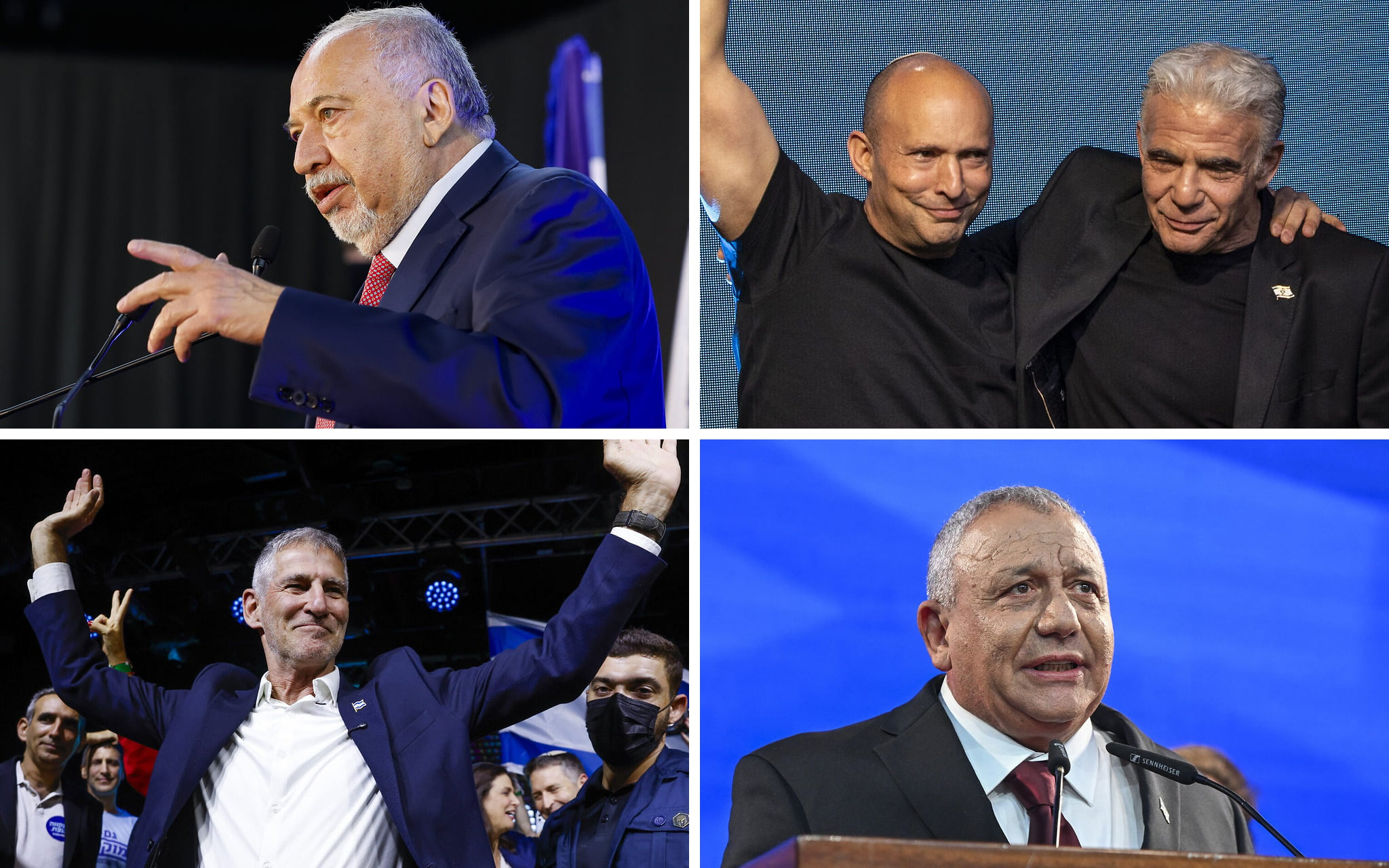
“If Netanyahu insists on counting only a Zionist majority, let him first subtract from his own bloc the 16 Knesset members from the non-Zionist Haredi parties. They won’t preach to us about Zionism,” Golan wrote on X on Wednesday.
The contrast is particularly striking given Ra’am’s stated support for universal national service, under which Arab citizens would be able to choose between civilian and military service.
“We have a majority. We have responsibility. And we have an opportunity to form a government of change in partnership with Israel’s Arab citizens,” Golan said, calling for an end to “Netanyahu’s racist division between Jewish votes and Arab votes.”
Even if Eisenkot were open to including Ra’am or relying on Arab parties for support, he would likely face resistance from right-wing and religious lawmakers within his own Yashar party, raising questions about whether such a government could survive even if it were formed.
Bennett’s 2021–2022 coalition, which included Ra’am, ultimately collapsed amid defections by right-wing lawmakers, including Amichai Chikli and Idit Silman, who subsequently joined Likud.
Another option is that, under Israeli law, a government does not necessarily need 61 affirmative votes to take office, provided it wins a Knesset confidence vote. Eisenkot could therefore seek to establish a minority government with Ra’am’s participation and outside support from the Joint List.
There is historical precedent for such an arrangement. After Shas withdrew from his coalition in 1993, prime minister Yitzhak Rabin governed with just 56 coalition lawmakers, relying on outside support from Arab parties. His successor, Shimon Peres, also headed a minority government with Arab-party support.
The alternatives carry considerable risks for Eisenkot and his prospective partners. Another election would offer no guarantee of replicating Tuesday’s extraordinary turnout, particularly among Arab voters and the tens of thousands of Israelis who reportedly traveled from abroad to cast their ballots. Frustrated voters could also punish opposition leaders they blame for frittering away an opportunity to replace Netanyahu.
A unity government with Netanyahu, meanwhile, would betray the central premise of Eisenkot’s campaign and risk devastating his public support. It would also require the Yashar leader to overlook the precedent of Benny Gantz’s ill-fated decision to enter a rotation government with Netanyahu in 2020, which collapsed before Gantz could assume the premiership.
That leaves Eisenkot and his allies with one apparent path to replacing the prime minister: a controversial and unprecedented cooperation with Israel’s Arab parties.
The alternative? The continued reign of Netanyahu’s government.