Argentina leader rejects Iran claims, calls to dissolve spy agency
After alleging rogue agents killed Alberto Nisman to discredit government, Kirchner asks to form new intelligence service, says accusation of cover-up with Tehran 'unreasonable'
BUENOS AIRES — In her first public comments since the mysterious death of a prosecutor that rocked Argentina, President Cristina Fernandez de Kirchner called on Congress to dissolve the country’s intelligence services Monday and dismissed allegations she had colluded with Iran to protect suspects in a deadly bombing 20 years ago.
Kirchner said it was “unreasonable” to think that her government would have shielded Iranian officials suspected in the 1994 bombing of a Jewish community center that left 85 people dead.
In remarks transmitted on national television, Kirchner said there was nothing for Argentina to gain from a secret deal with Iran, which prosecutor Alberto Nisman had alleged days before he was found dead in his apartment bathroom.
“It’s unreasonable to think our government could even be suspected of such a maneuver,” she said during an hour-long speech.
Kirchner said that reforming the intelligence services was a “national debt” the South American country has had since the return of democracy in 1983.
“The plan is to dissolve the Intelligence Secretariat and create a Federal Intelligence Agency” with a leadership chosen by the president but subject to Senate approval, said Kirchner.
Nisman, 51, was found dead January 18 in the apartment, the day before he was scheduled to elaborate on explosive allegations that Kirchner shielded Iranian officials suspected in the AMIA bombing.
In two letters this week, Kirchner suggested that Nisman’s death was a plot against her government possibly orchestrated by intelligence services. Monday’s comments were the first time she has spoken publicly about it.
She lamented that more than 20 years later nobody had been convicted or even detained. She noted that her predecessor, husband and former President Nestor Kirchner, had appointed Nisman to the case after years of paralysis.
Kirchner had removed the leadership of the current intelligence service as recently as December.
She said she would send her intelligence system reform bill to Congress before she leaves for China next week, and swiftly scheduled special congressional sessions for it to be taken up.
Kirchner also took aim at Diego Lagomarsino, a Nisman colleague who lent Nisman the pistol with which the prosecutor was killed. Lagomarsino on Monday was charged with giving a gun to someone who is not its registered owner, officials said.
“Lagomarsino is not just a staunch opponent of the Government,” Kirchner said suggesting his brother’s work on behalf of Clarin newspaper, in her view, raised red flags. She has had a long-running feud with the paper.
Argentina’s political opposition criticized Fernandez’s latest comments.
Before there are any reforms to the intelligence services, the government “should explain the 11 years it has managed” them, Margarita Stolbizer, an opposition member of Congress, told Todo Noticias.
“The speech was filled with imprecise (statements) and lies,” Stolbizer said. “She did not give answers to the doubts about this government nor about the content of Nisman’s denouncement.”
Employing the fiery rhetoric she is known for, at the end her televised speech, Fernandez told listeners that she had a message for her countrymen.
“I will not be extorted, I am not afraid” of being cited by judges or denounced by investigators, she said. “They will not make me move even a centimeter from what I have always thought.”
Kirchner’s government alleged Friday that Nisman’s death was linked to a power struggle within the country’s intelligence service involving agents who were recently terminated, Reuters reported.
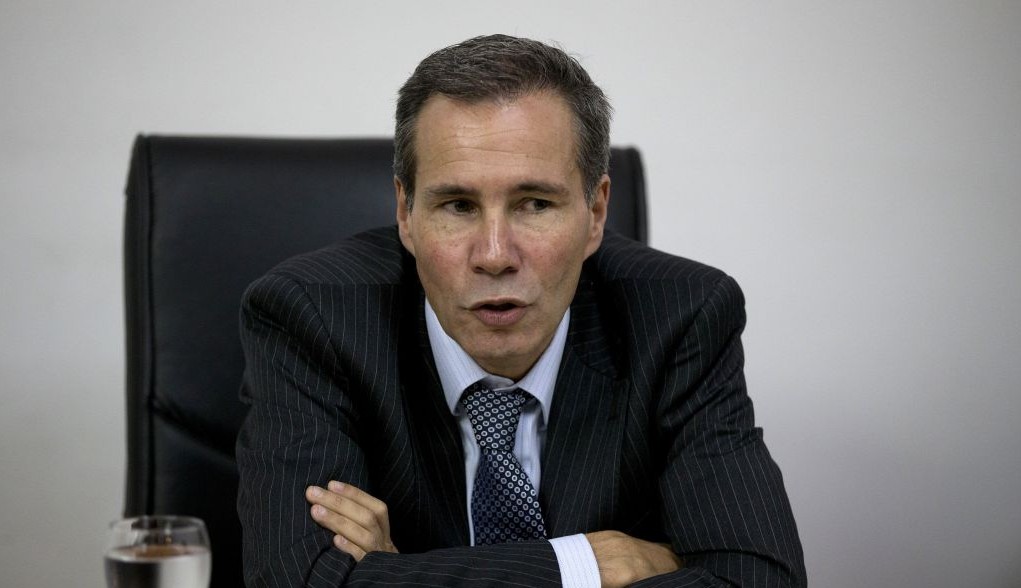
The government further suggested that these rogue elements may have had a hand in writing some of Nisman’s damning report on the government’s efforts to cover up Iran’s role in the attack.
“When he was alive they needed him to present the charges against the president. Then, undoubtedly, it was useful to have him dead,” the president’s chief of staff, Anibal Fernandez, told Reuters on Friday.
Nisman was found in the bathroom of his locked apartment, a bullet wound on the right side of his head and, next to his body, a .22 caliber handgun and a single bullet casing, authorities said.
Nisman had spent 10 years investigating the AMIA bombing, which he pinned on Tehran and the Hezbollah terror group.
The death was initially ruled a suicide, but many, including Kirchner, have challenged that assumption.
Nisman’s body was found hours before he was to appear in congress to detail his accusation that Kirchner, her foreign minister and other top officials had conspired to shield Iran and the Iranian officials who he alleged had masterminded the bombing.
Administration officials dismissed his allegations as ludicrous.
The head of Argentina’s intelligence agency, Antonio “Jaime” Stiusso, who was helping Nisman with the investigation along with other agents, was fired in December, Reuters reported.
Nisman had suspected agents from a rival faction within the agency had lent a hand to the president’s plot to cover up Iran’s actions, the report said.
Kirchner seemed to allege Thursday that Nisman had been fed false information by Stiusso, who had then disposed of him. “They used him while he was alive and then they needed him dead. It is that sad and terrible,” she wrote, according to the Buenos Aires Herald.
“Prosecutor Nisman did not know that the intelligence agents that he listed as such, were not. Least of all that one of them had been accused by Stiusso himself,” she wrote.
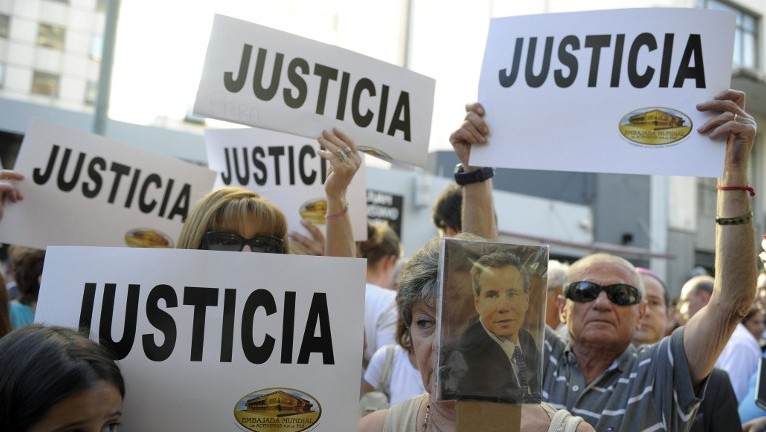
The death has sparked mass rallies and protests in support of Nisman by Jewish community members and others calling for justice in his killing and in the bombing.
Tuesday marks two years since Kirchner and Foreign Minister Hector Timerman, also fingered by Nisman for whitewashing Iran’s role, announced the formation of a “truth commission” with Tehran to investigate the bombing.