Artist who was at Nova on eve of massacre finds solace creating portraits of victims
Muralist Benzi Brofman's 'Faces of October 7th' -- graffiti depictions of those killed and taken hostage during the October 7 attack -- is exhibited in Jerusalem
On Thursday, October 5, 2023, graffiti artist Benzi Brofman drove south to the Re’im parking lot, for an event preceding the Nova desert rave that would be held there the following night. By Friday afternoon, he was back home in the Jezreel Valley.
The next morning, Brofman and his wife stared in disbelief at their television screen, watching the scenes of horror unfolding in the south, including at the very parking lot where he had held his live graffiti event.
For the last 12 months, Brofman has become a portraitist for the bereaved and the families of hostages, drawing the faces of loved ones who were killed on October 7 or in the ensuing war, or who haven’t yet returned home from captivity in Gaza.
Several dozen of those portraits are being exhibited in “Faces of October 7th” through October 30 at Stand With Us, the non-profit Israel education center in Jerusalem, memorializing those who were killed and supporting their families.
“It’s not really an exhibit of drawings, the goal was to memorialize the people in the drawings,” said Brofman, who creates realistic portraits in black and white with touches of color.
Brofman wants people to “leave, leave, leave everything else you’re doing, get in your car, drive, even if it’s hard, to see this and deal with it,” he said. “It’s the deed of memorializing and supporting the families and crying, even if it’s hard to do.”
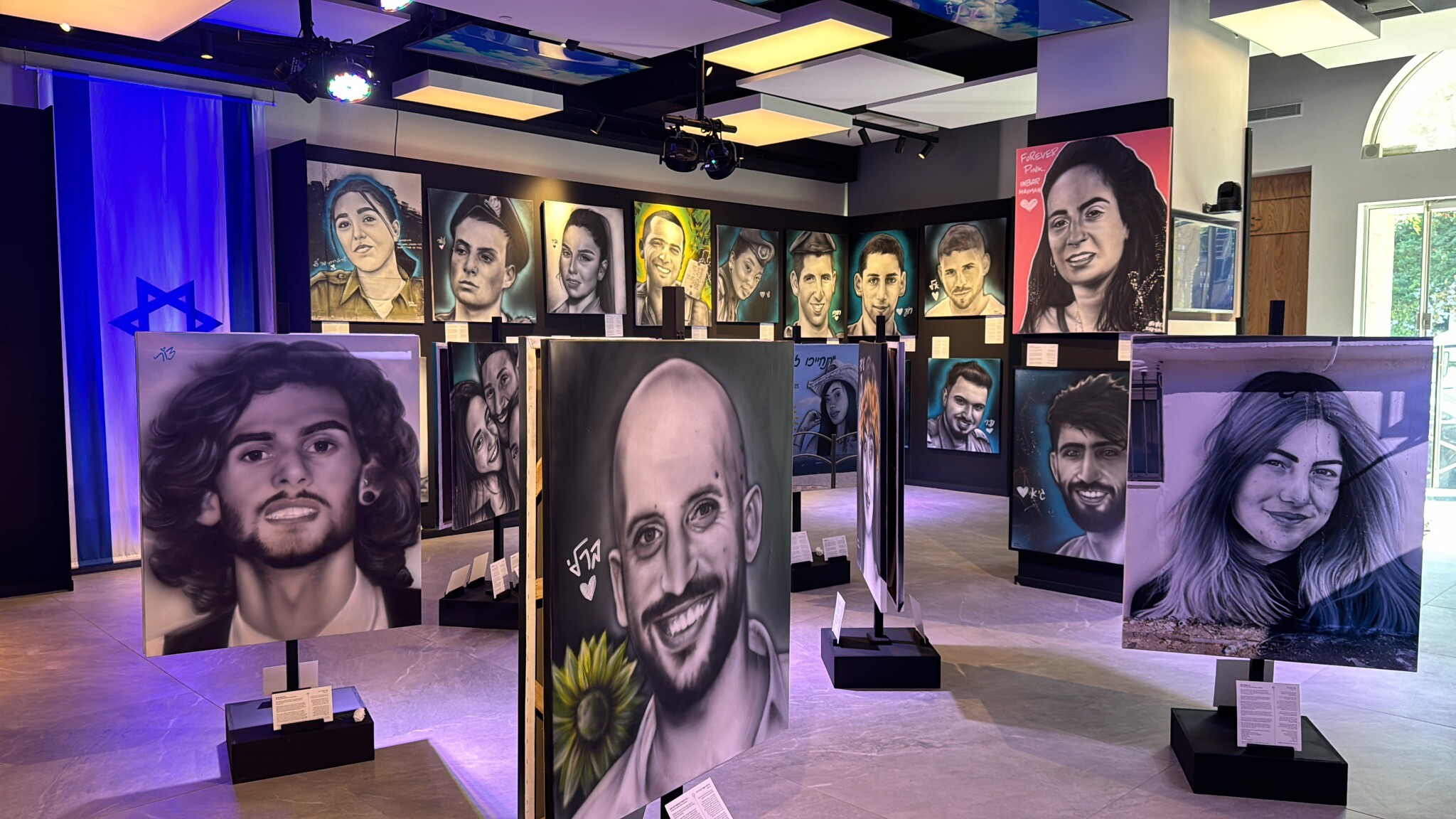
The exhibit is hung in one large gallery space of the organization’s office suite, situated off King David Street, with portraits divided between hostages and those killed on October 7 and in the past year.
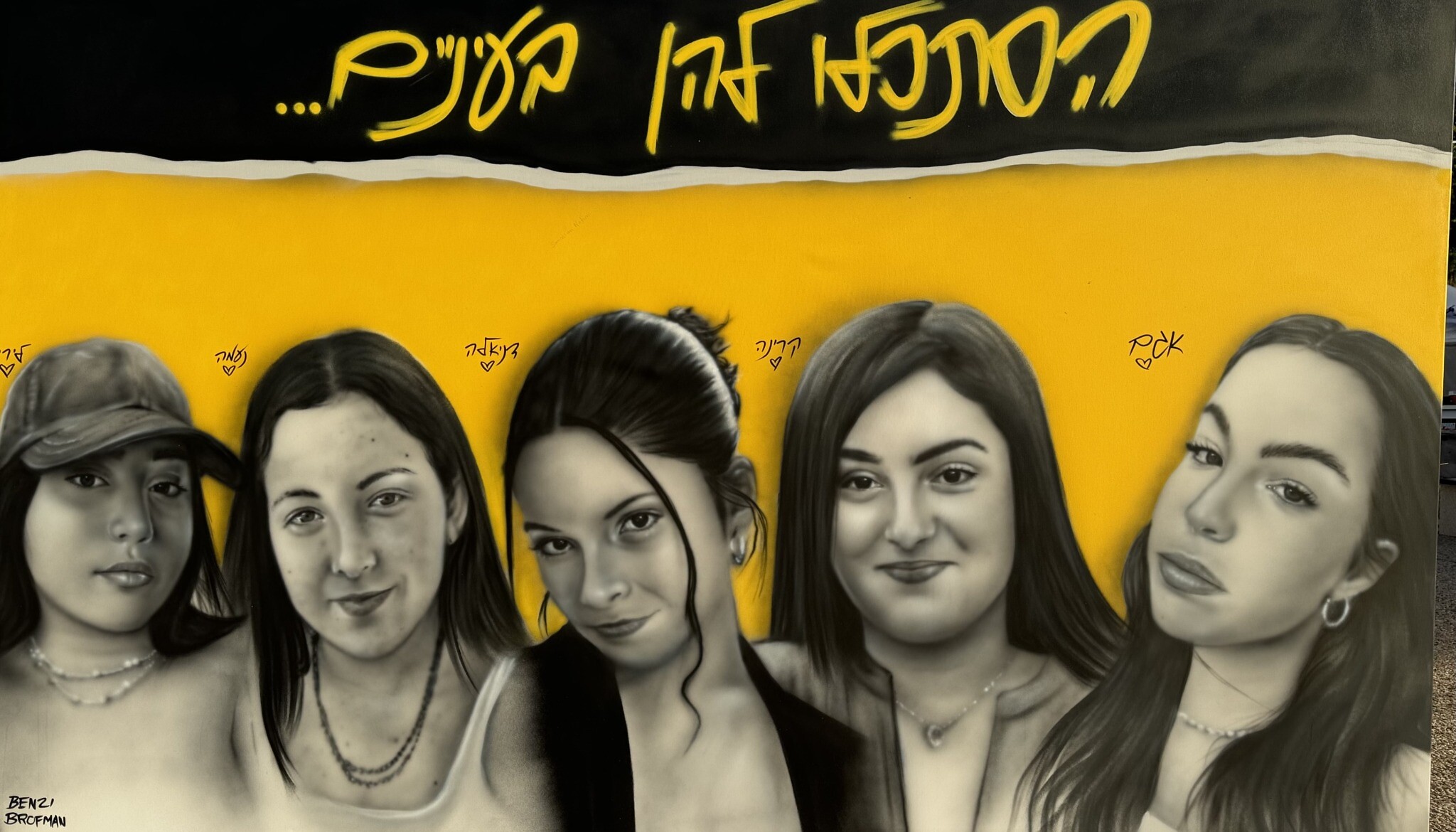
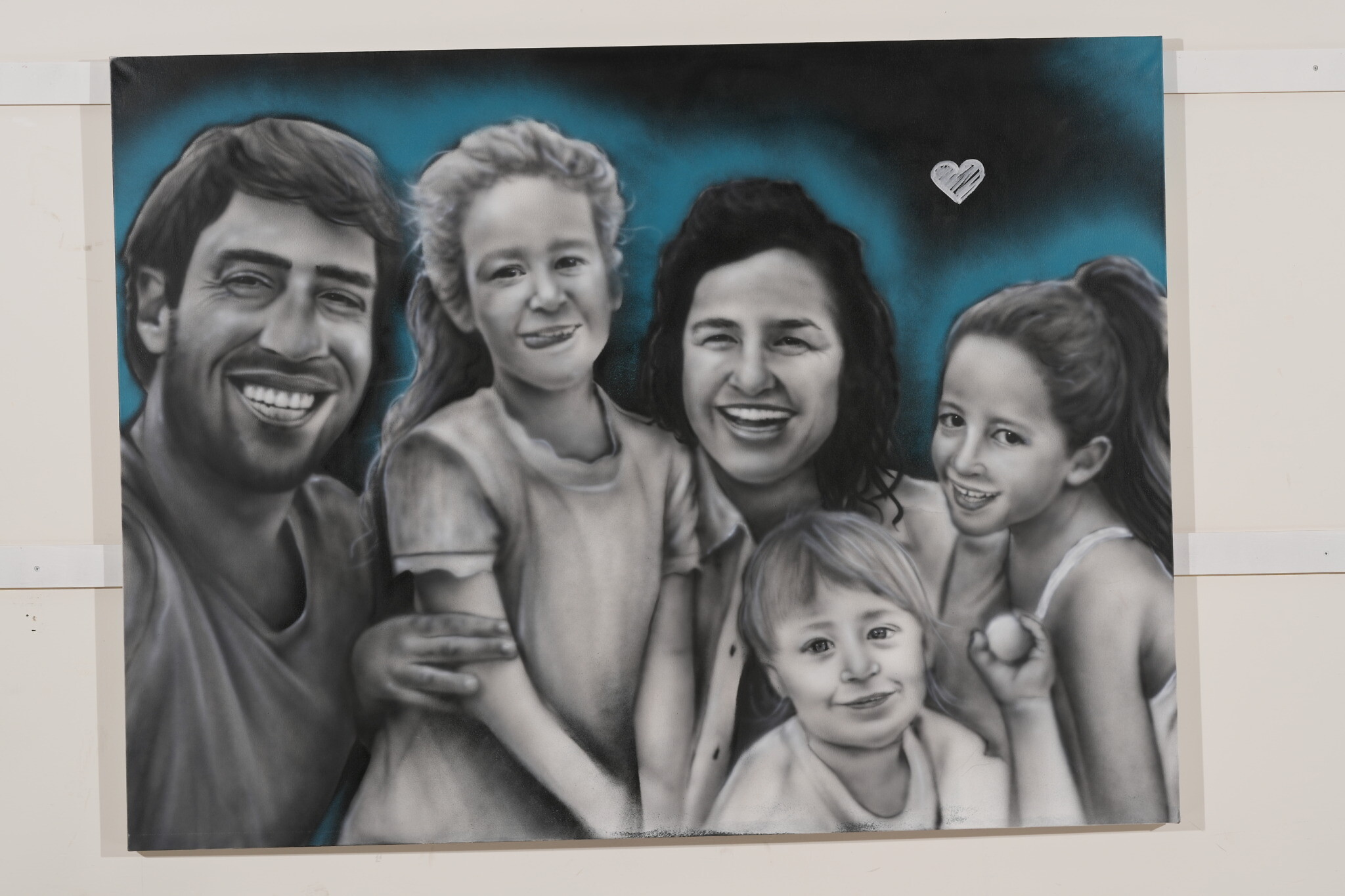
The now-familiar faces include those of the Bibas family — hostages Yarden Bibas, his wife Shiri Bibas and their two little redheaded boys, Ariel and Kfir — and the five hostage female surveillance soldiers: Liri Albag, Karina Ariev, Agam Berger, Naama Levy and Daniella Gilboa.
There are portraits of Nova victims, such as one young man named Ben Bernstein, and a portrait of six men with connections to the Kfar Saba area, including hostages Yair and Eitan Horn, Guy Gilboa-Dalal and Eviatar David; Oz Daniel, a soldier killed on October 7, his body taken to Gaza; and Hadar Goldin, a soldier who was killed in 2014 and whose remains are still being held in Gaza.
Brofman calls the exhibit “a box or space for crying, to talk about what happened, and to feel it,” he said. “People don’t cry, they avoid it. I get it, the soul is tired. But this is a place for letting it all out.”
Last year, on October 8, Brofman, 41, a self-taught muralist who usually designs walls for businesses and urban projects, was already on his way to run a graffiti party for survivors from the south, evacuated to his region.
“I reached the group and the organizer pulled me aside and said, pointing to certain kids, ‘Just note that that kid’s father was killed and that kid’s father is a hostage,'” he said.
Events like that occupied Brofman for the first few days following the Hamas massacre. Then he got a call from two young fans familiar with his work, asking him to draw Vitaly Karasik, an Israel Police sergeant killed battling terrorists at the Nova rave.
They wanted the painting of Karasik to be graffitied on a wall, but Brofman thought it made more sense to draw it on canvas, so it could be given to his family and placed where they wanted it, in their house, at a later date.
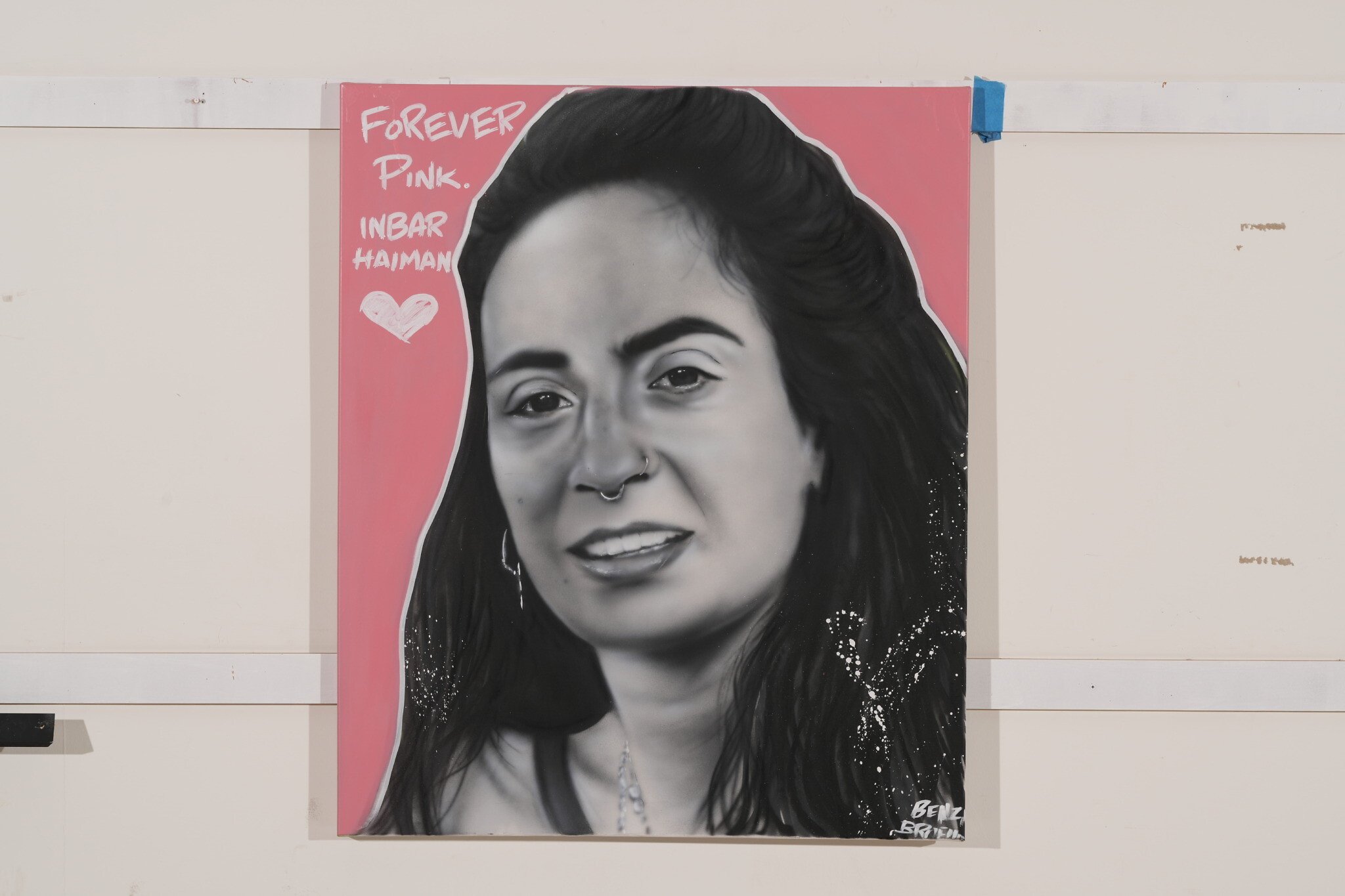
And so the ad-hoc project grew. Brofman drew Karasik, and then Inbar Haiman, a Nova partygoer who was still considered missing in October and later designated as having been murdered at the party.
“From then on, I understood that that’s what I’m doing,” said Brofman.
At the end of October, Brofman was commissioned by Israeli ambassadors to England, Germany and the Netherlands to recreate his graffiti works of hostages in well-known locations in major cities, such as Shoreditch and Camden in London, and Mitte in Berlin.
By the time he returned home to Israel, the IDF had entered Gaza, creating what Brofman terms “Chapter 2” in his post-October 7 world.
Soldiers were being killed every day, and he found himself “drawing kids I know who are killed from the Jezreel Valley and the local kibbutz communities,” he said.
By spring, Brofman had amassed some 100 portraits, most on canvas and about 15 graffitied on walls around the country.
“It helps me,” he said. “Anyone who can get up in the morning and know what he’s doing to help someone else is in a better situation.”
He first returned to the location of the Nova rave, the Re’im parking lot, about a month ago, on a Shabbat morning, meeting with bereaved families that he’s become close with over the last few months.
“I remember the way there and the way out but I felt like I was there every day of the past year,” he said.
Brofman was hired to present his Graffiti Live show on October 5, 2023, drawing a large-scale work of three world-renowned Israeli trance figures who had died in the previous 20 years.
“It’s not what I usually do, but I had this need to memorialize these three Israelis who were central to the local trance world,” said Brofman. “It came from a desire to remember them with love.”
He wanted the younger trance scene to know them and their music.
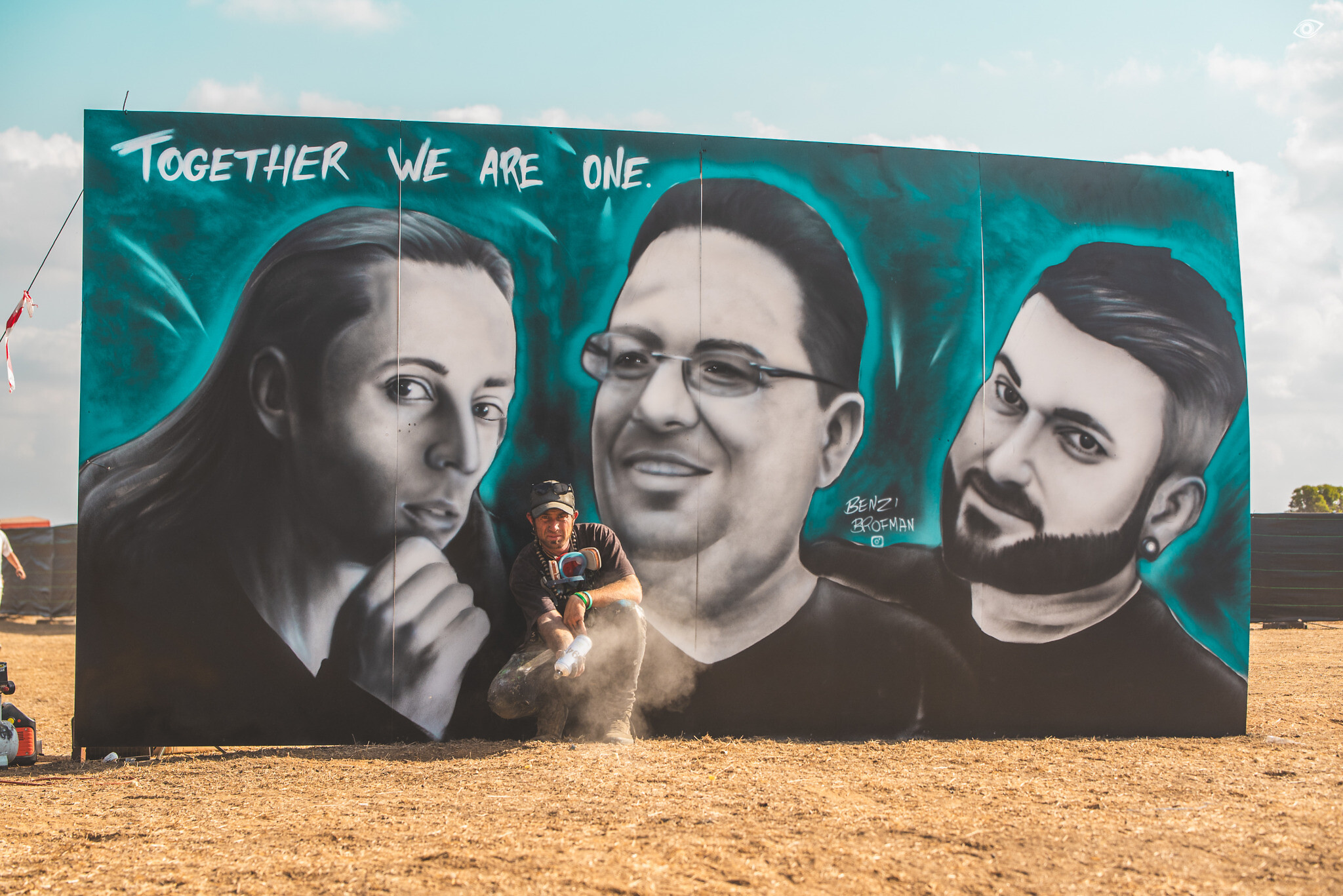
Brofman, who lives in the Jezreel Valley, is usually accompanied by his wife or a friend, but when his wife heard that the event was taking place in Re’im, ten minutes from the Gaza border, she didn’t want to go.
He couldn’t find any friends to accompany him, and after getting sick with Covid the previous Sunday, he wasn’t sure he’d be able to make it.
But Brofman felt secure about the location, knowing that the army had approved the party.
By Thursday morning, Brofman felt better and called Kibbutz Be’eri and then Kibbutz Alumim to find a place to sleep that night. He drove south, getting some sleep earlier in the evening on Thursday at his room in Alumim, and then starting work in the middle of the night on Thursday, part of the pre-party before the Nova rave.
He finished his artwork on Friday around midday and had a moment when he wondered if he should stay at the festival, or head home.
“If my wife or a friend had come, if I hadn’t just gotten over the coronavirus, I’m sure I would have stayed,” said Brofman.
Instead, he drove home and went to sleep. When he awoke on October 7, his wife was already sitting on the couch, watching the scenes of terror that were unfolding in the south.
“I have this sense of knowing I could have been taken hostage, or suffered post-traumatic stress or been murdered,” said Brofman. “Even today, I can’t really explain how I feel.”
What he does know is that painting portraits, speaking to bereaved families, and to people in anguish, helps them and helps him.
“For now, this is what I’m doing,” said Brofman.
“Faces of October 7th” includes a video, an interactive touchscreen about the events of October 7, and a VR experience connected to the events of that day. The NIS 30 tickets must be reserved in advance.