As Herzog consults party heads, Haredi faction says it won’t recommend Netanyahu as PM
Move by UTJ's Degel HaTorah underscores rift with premier; Eisenkot expected to get mandate as Ra'am confirms it will endorse him; president pushes parties to end refusal to work together
The Degel HaTorah faction of the ultra-Orthodox United Torah Judaism party confirmed speculation on Wednesday that it would not endorse any candidate for prime minister, as President Isaac Herzog started consultations in Jerusalem on who shall be granted the mandate to form the next government.
The consultations at the President’s Residence were scheduled to take place over two days, starting with the smallest parties on Wednesday evening and concluding with the largest — Prime Minister Benjamin Netanyahu’s Likud — on Thursday.
Each party is asked to recommend a candidate for prime minister before Herzog decides who he should afford the first opportunity to form a coalition.
Under Israeli law, Herzog must select the lawmaker he believes has the best chance of forming a government, not necessarily the head of the party with the most seats.
Religious Zionism, Otzma Yehudit, Shas and Likud have all said in advance that they would recommend Netanyahu, while Yashar, the Democrats, B’Yachad, Yisrael Beytenu and Ra’am said they would back Yashar leader Gadi Eisenkot.
As of Wednesday night, the Arab-led Joint List had not indicated whether it would back Eisenkot for prime minister or if, like Degel HaTorah, it would choose to abstain.
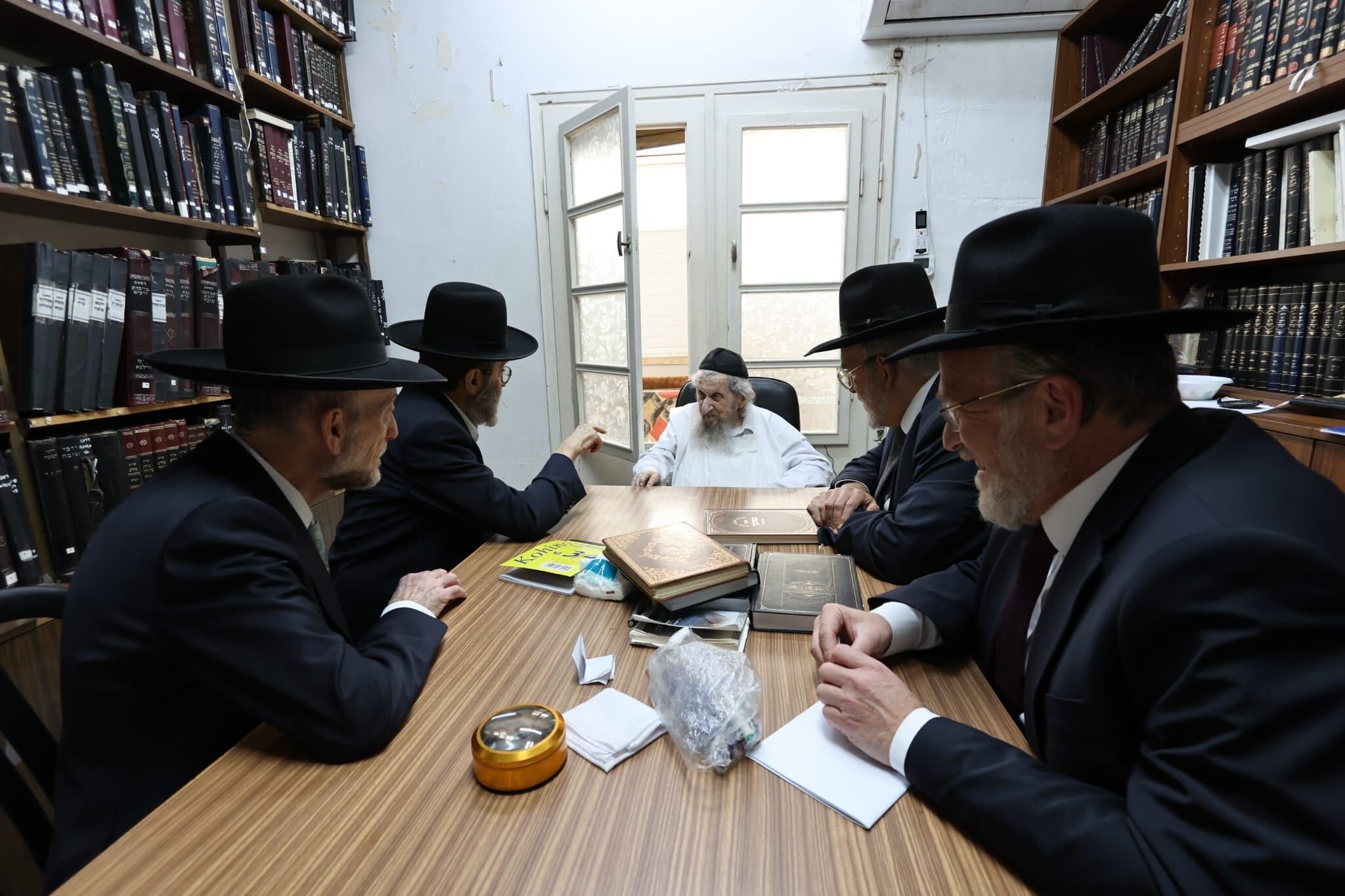
Degel HaTorah, which represents the so-called Lithuanian faction of Ashkenazi ultra-Orthodox Jews, holds four of UTJ’s seven Knesset seats, and includes overall party chairman MK Yaakov Asher. The faction said it would refrain from recommending anyone for prime minister following instructions from its spiritual leaders, Rabbis Dov Lando and Moshe Hillel Hirsch.
The other three UTJ lawmakers elected to the 26th Knesset belong to the Hasidic Agudat Yisrael faction, which has not yet made clear whether it will recommend Netanyahu or follow Degel HaTorah’s lead and abstain.
Even a partial UTJ abstention is significant, as it highlights the rift that has emerged with longtime ally Netanyahu over the outgoing coalition’s failure to pass a law enshrining IDF service exemptions for Haredi men.
The party is scheduled to meet with Herzog on Thursday.
Regardless of whether or not Agudat Yisrael abstains from recommending a candidate to Herzog, Eisenkot is widely expected to receive the mandate to form a government, as he held a clear lead in recommendations by Wednesday night, after the Arab-led Ra’am party announced that it would back his candidacy.
Herzog suggests far-right minister’s opposition to Arab parties is racist
Wednesday’s consultations at the President’s Residence began with Religious Zionism, which won six seats in a technical bloc with Zehut in last Tuesday’s election.
Zehut’s lone MK, Moshe Feiglin, made his own recommendation separately.
The party, represented by Settlements Minister Orit Strock and incoming lawmakers Tzvika Mor and Itamar Eitam, told Herzog it recommended Netanyahu as prime minister and called for a “broad national government” under his leadership.
“We need to sit together without boycotts, and reach understandings and agreements,” Strock asserted, referring to the refusal of the opposition parties to consider sitting in a government under Netanyahu.
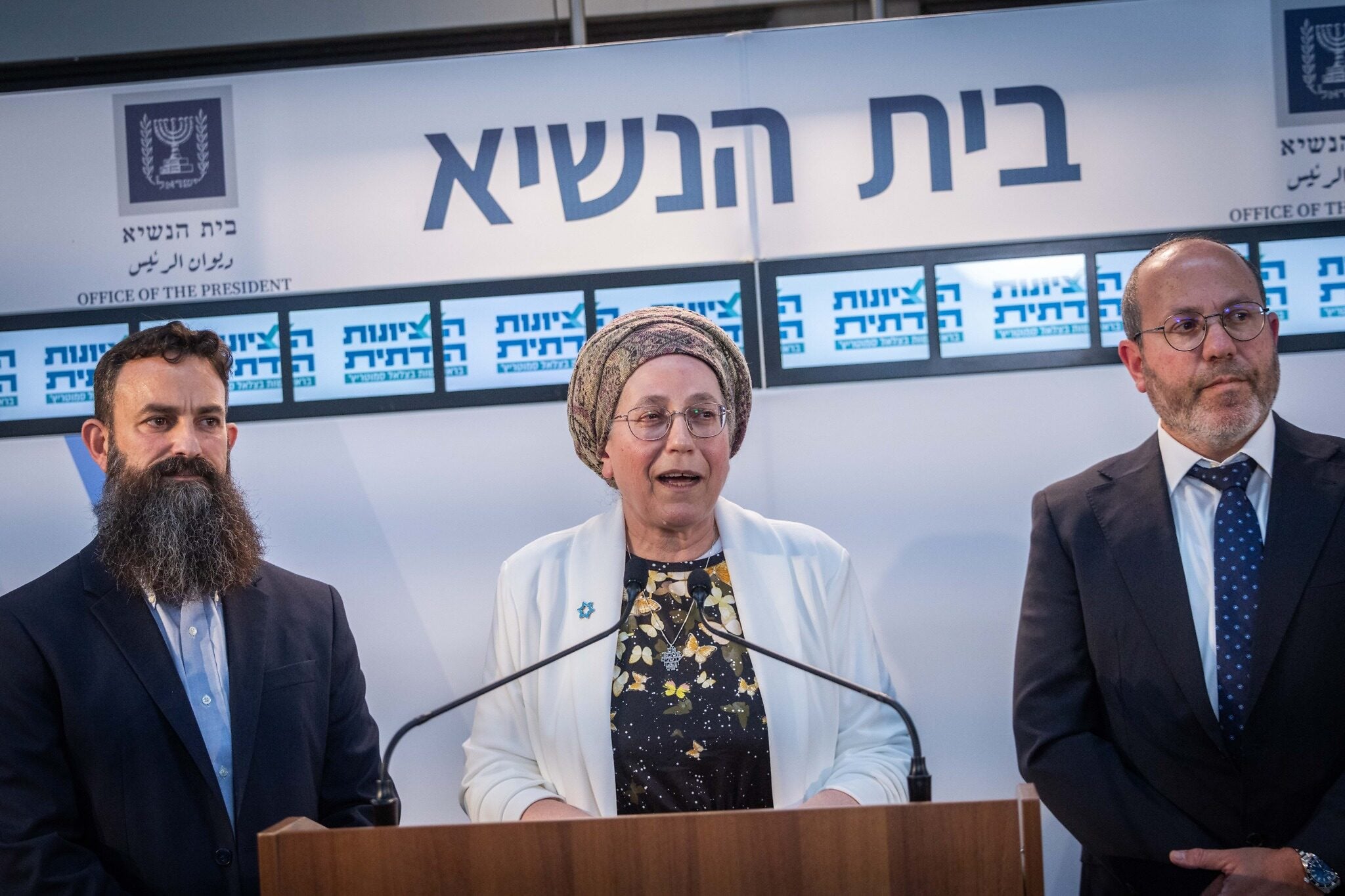
During the consultations, which were broadcast live, Herzog pushed back against Strock over her blanket rejection of Arab parties, and rebuked another representative for alleging a hostile takeover of the state from within.
“We believe the Arab parties are not legitimate participants in this process, not because they are Arab, but because they are nationalists,” Strock told Herzog, arguing that the Arab politicians view Israel’s establishment as a catastrophe and that their electoral victories benefit Israel’s enemies.
Herzog, in response, asked, “How do you distinguish between racism and what you’re saying?”
He later noted that the Jewish No. 2 candidate on Ra’am’s list, Yoav Segalovitz, was a police commander. “This generalization really bothers me,” he said.
The president also rebuked Religious Zionism representative Mor, who echoed unsubstantiated allegations made by the pro-Netanyahu bloc that the election was “stolen” by Arab parties, claiming that forces were carrying out a “takeover” of the state “under the guise of democracy.”
“That is a very dangerous remark,” Herzog responded to Mor. “To claim that another side is carrying out a takeover from within is extremely dangerous.”
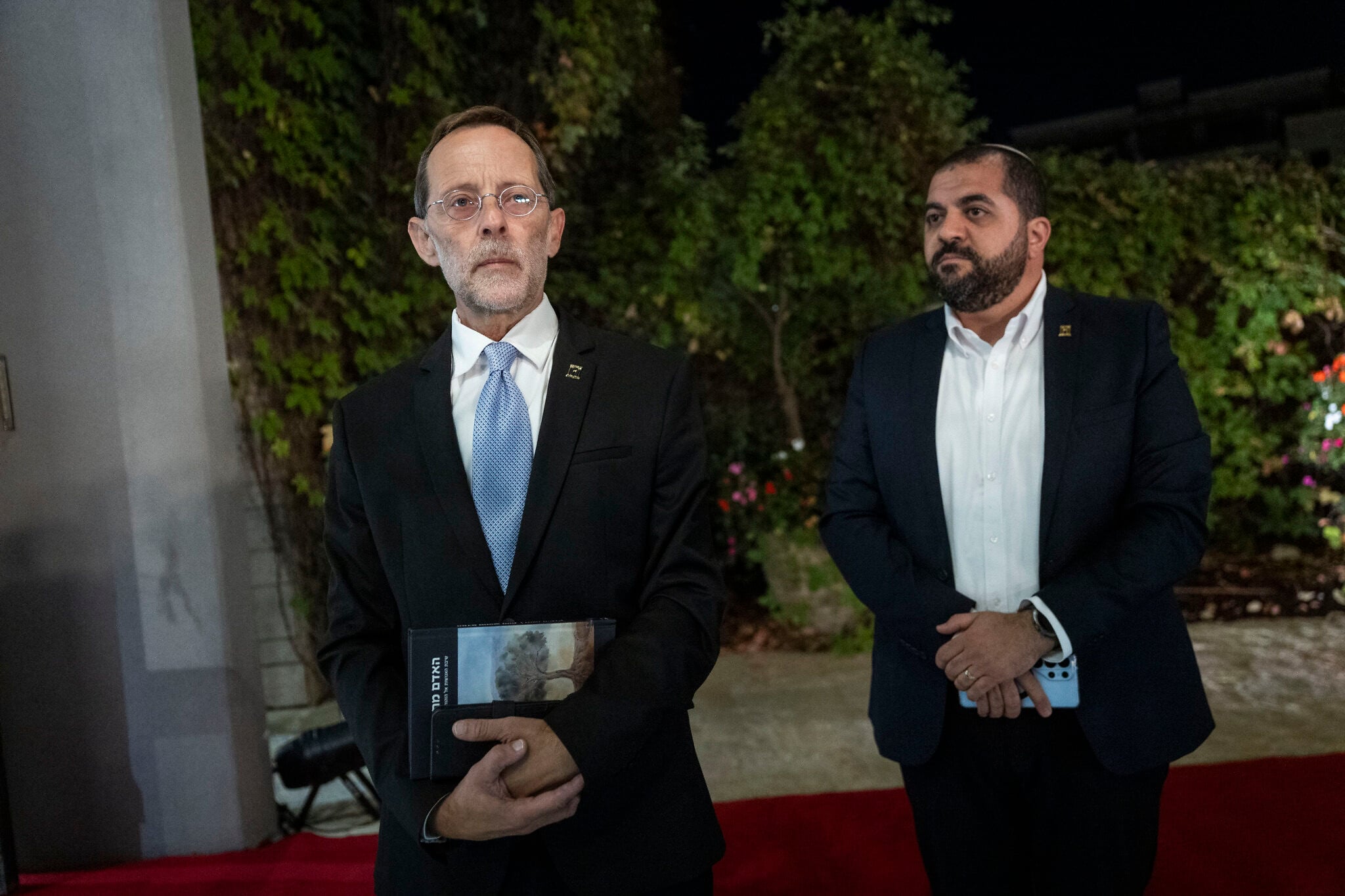
Later that evening, Zehut’s Moshe Feiglin also recommended that Netanyahu receive the mandate, but only after telling Herzog that he believes “a dark cloud hangs over the very legitimacy of these elections” because of the ongoing investigation into allegations of voter fraud.
The party’s director general, who attended with Feiglin, told Herzog that although the right-wing libertarian Zehut was recommending Netanyahu, it “would be happy to be part of any government, as long as it aligns with our principles and prevents the next massacre.”
Feiglin clarified, however, that this offer to work with anyone did not extend to the Arab parties.
Shas dodges question about unity government
Next to meet with Herzog after Religious Zionism was Shas, also with six Knesset seats, after the party suffered its worst election loss since 1992.
Unlike UTJ, the Sephardi ultra-Orthodox party had announced in advance that it would back Netanyahu for prime minister.
During their meeting with Herzog, the party’s representatives, all but one of whom are already sitting members of the Knesset, defended their stance against military conscription for Haredi men, with MK Michael Malkieli saying the party had “never disrespected IDF soldiers,” but merely prioritized “recognizing the value of Torah scholars.”
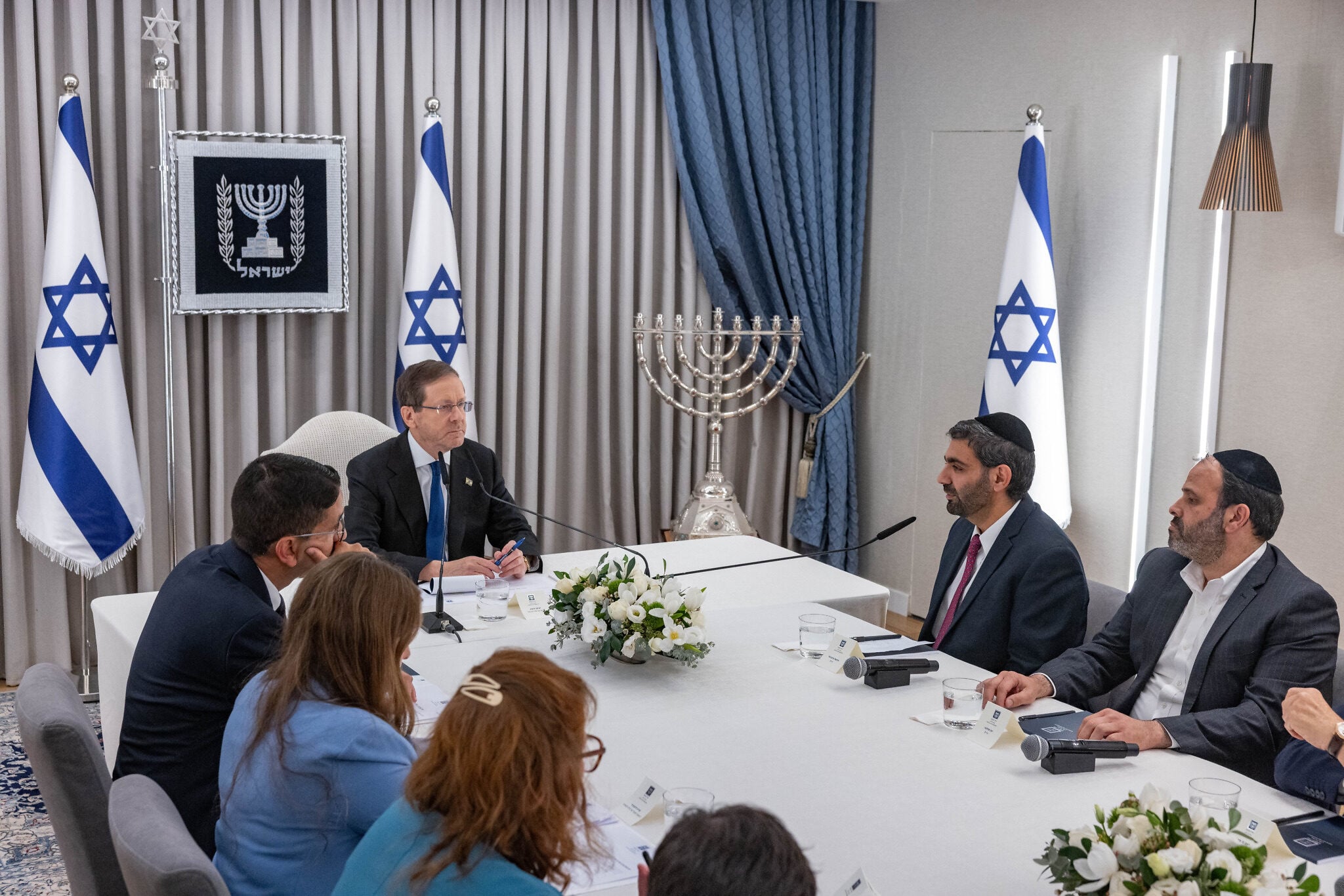
The representatives dodged a question from Herzog about why Shas has been silent about the possibility of a unity government, telling him: “It is Prime Minister Netanyahu who will form a unity government, and we want you, Mr. President, to grant him the mandate.”
Yisrael Beytenu: Ruling out Arab, Haredi parties isn’t ‘personal’
Herzog’s meeting with Shas was followed by consultations with representatives of Yisrael Beytenu, which won seven seats in last week’s election.
The party had said ahead of time that it would endorse Eisenkot for prime minister, and its representatives confirmed as much to Herzog.
The president took time during the consultations to discuss Yisrael Beytenu’s narrow set of requirements for a future government, after party chair Avigdor Liberman ruled out relying on the Arab-led parties or on the Haredim, as well as sitting in coalition with Netanyahu, or holding a second round of elections.
“If you won’t sit with this one or that one or the other one — where does it lead?” Herzog queried.
“The current government is not right-wing in its policies,” MK Oded Forer, who was leading the group, responded. “They have not taken responsibility for the October 7 massacre. We cannot be expected to hand them the keys.”
“So what’s left? Who do you intend to sit with?” Herzog prompted again, to which Forer mused that there were perhaps “elements within Likud,” apparently referring to the possibility that they would defect.
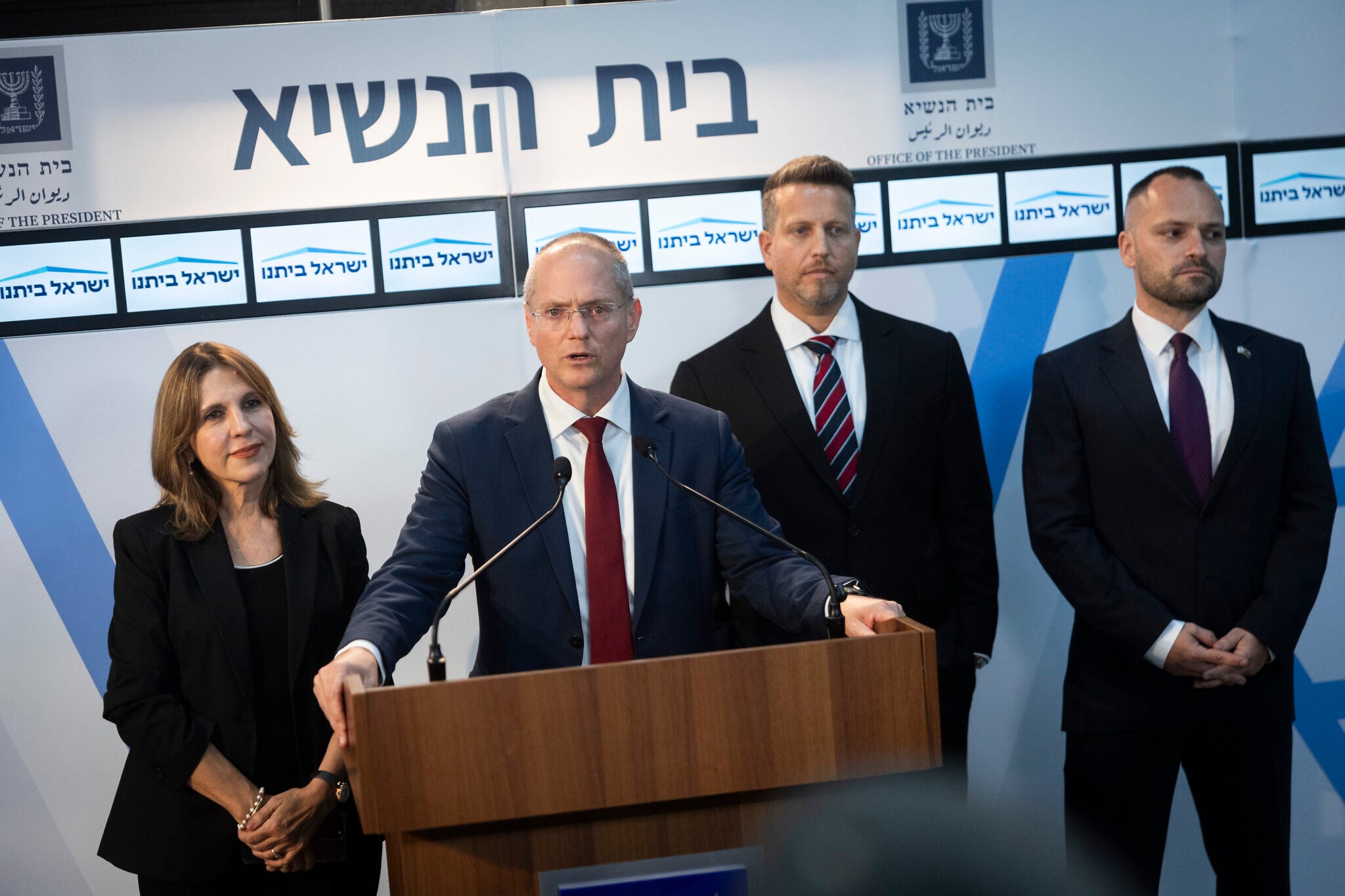
Forer also stressed that the refusal to work with the Arab and ultra-Orthodox parties was “not personal” but strategic. Yisrael Beytenu, he said, cannot work with partners who are “unable to define Hamas as a terrorist organization,” and is dedicated to bringing more soldiers into the IDF.
The night’s consultations ended with Feiglin, and were due to pick up again on Thursday at 8:30 a.m. with United Torah Judaism.
By the end of the consultations, Eisenkot is expected to have received at least 56 recommendations for receiving the mandate, as opposed to 53 for Netanyahu.
It was not clear yet whether the Joint List would add its 11 seats to Eisenkot’s recommendations, or whether it would abstain from recommending anyone, as it has in past elections.
If he does receive the mandate, Eisenkot will have a maximum of 42 days from that point to form a coalition. He will not have an easy path to a government, however, due to opposition within his bloc of Zionist parties to working with both the Arab and the Haredi parties.