At Ethiopian orphanage, HIV-positive kids dream big
Taking a break from Netanyahu's African diplomatic marathon last week, reporters slipped away to visit Addis Ababa's AHOPE center supported by Hadassah and the Israeli Embassy
ADDIS ABABA, Ethiopia — At first, Kalkidan Tesfaye ignored the foreign visitors and just continued chatting with her two girlfriends. But a few minutes later, without even being introduced to the group of Israeli journalists who suddenly showed up, she opened up.
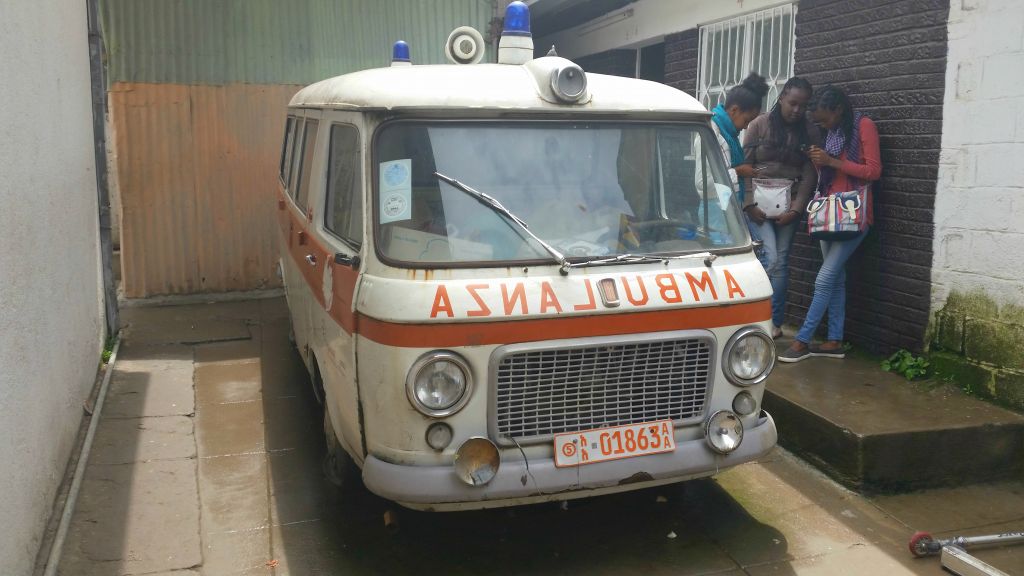
“I knew I had HIV when I was six years old,” she said in remarkably good English. At that time, a decade ago, Tesfaye did not really understand the implications of that. Today she knows exactly what it means to carry the dangerous virus, but she has decided not to let it stand in her way. “Now I am a free woman. I live life, like everyone,” she said, standing next to an ambulance that looked like it was taken from a 1970s movie.
Tesfaye, who said she wanted to be a psychologist when she grew up, is one of 30 orphans who are HIV-positive and receive various social and medical services at AHOPE for Children‘s Ethiopia branch. Tucked away in a small, barbed-wired compound on Mekanissa Road, near the embassies of the Vatican and the United Arab Emirates, this center provides the children, most of whom lost both parents, with a warm home and professional psycho-social support.
Most importantly, though, the center makes sure the children who live here take the anti-retroviral drugs they are required to take daily. The children’s pills — so-called cocktails — are stowed in a large light-blue closet with glass windows, located in the center’s main office.
“Some of them take it once a day, some of them take it twice a day, depending on the type of medication they take,” said Mengesha Shibru, the center’s director. “They take it for the rest of their lives.”
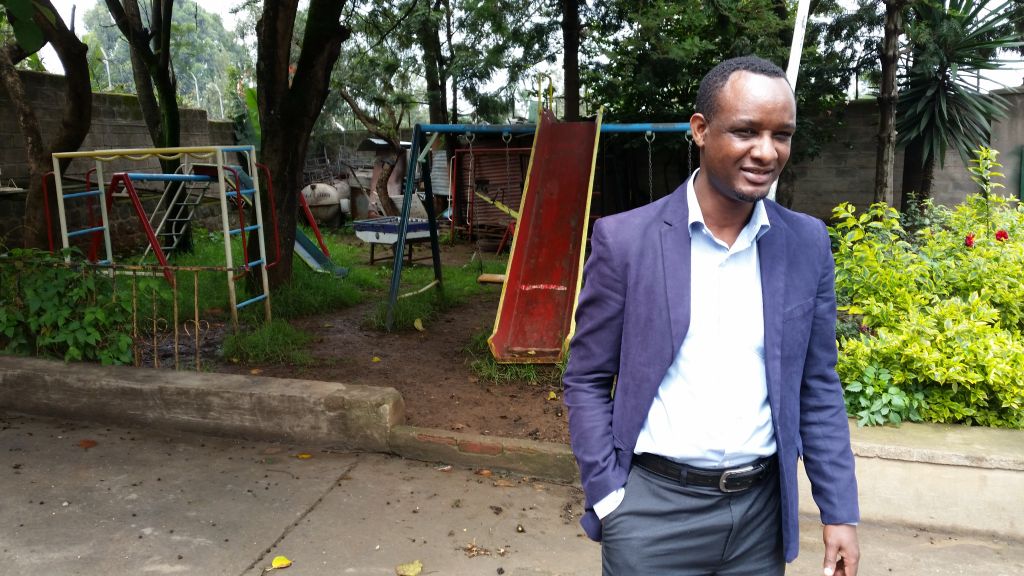
Last Thursday, Shibru welcomed a group of a half-dozen Israeli journalists who spontaneously decided to take a break from covering Prime Minister Benjamin Netanyahu’s visit to Africa, which took place mostly in splendid presidential palaces and fancy hotel rooms. Shibru, wearing a dark blue suit, took the unannounced guests on a tour through the center and patiently answered their questions about the sensitive task of dealing with children who are HIV-positive.
One of the most difficult aspects of his work is telling the children about the virus they carry, he said. AHOPE, which receives financial and other support by the Israeli Embassy in Addis and Jerusalem’s Hadassah Hospital, has what he calls a special “disclosure model” to guide the process of informing the children of their condition.
“We have what we call a partial disclosure, because they can’t fully understand the idea of what HIV is and how it’s going to affect their bodies,” Shibru said. Every child is different, but they all learn about their condition incrementally. “When they reach the age of 10 we will disclose their status [but] it also depends on their curiosity level. When they ask a lot of questions, it tells us that they’re ready to know more.”
For the time being, no plaques tell visitors about the Israeli contribution to the center, although it is quite substantial. Prof. Dan Engelhard, who heads the Pediatric Infectious Diseases Division and the Pediatric AIDS Center at Hadassah, has been involved with AHOPE for over a decade, offering care, advice and concrete assistance to the center. According to the Hadassah medical organization, Engelhard has “saved the lives of thousands of African children.”
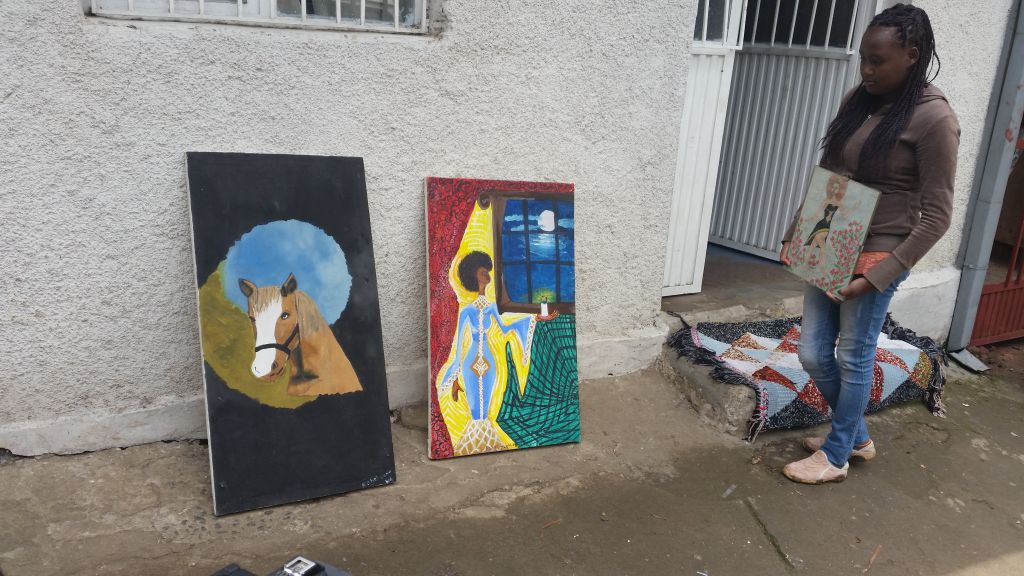
Most recently, Hadassah has helped the center create an arts and crafts area, allowing the children to create works of arts they display and sell to the public. The Israeli Embassy in Addis Ababa also makes frequent financial contributions to the center.
“We have an arts room over there, because most of our kids are traumatized,” he said, pointing to a yellow tent located on the center’s unmowed front yard. “They’ve passed through so many traumas. So we believe that music, sports and drawing art are ways of overcoming those traumas.”
As difficult as life may be for orphans carrying HIV, the overall situation in Ethiopia is slowly improving, Shibru said. Public awareness and government-sponsored projects have helped cut in half the number of people who are HIV-positive. Today, an estimated 700,000 Ethiopians carry the virus.
“Previously, it was a normal thing to lose a child, especially in 2004, 2005 and also 2006,” Shibru recalled soberly. “Kids were dying like flies.” But the situation has since drastically improved. “I’ve been at AHOPE for seven years and we’ve never experienced a child dying from HIV. There were other cases. This year, for instance, we lost a child because of a heart attack that was not directly related to HIV.”
The orphans under his care know their condition is no longer as deadly as many people still think it is. “They have big dreams,” Shibru said, standing next to the three girls who has given short interviews to reporters. “They want to be like every one of us.”