Ax attack in Germany demands ‘early warning system,’ say Jewish leaders
After IS-inspired assault in Wurzburg, head of Jewish community in Bavaria says cooperation from Muslim groups needed to root out Islamic extremism
German Jewish leaders warned that all German institutions, not just Jewish ones, should take extra precautions against terrorism in the wake of an Islamic State-inspired ax attack on a train in Wurzburg.
“[We] are just as concerned about such attacks as are non-Jews here,” Josef Schuster, head of the Central Council of Jews in Germany, told JTA following the Monday night attack, which left five people injured, including four members of one family visiting from Hong Kong. Two of the victims are in serious condition.
The perpetrator, a 17-year-old Afghan refugee, was shot dead by police. He reportedly had shouted “Allahu Akbar,” Arabic for “God is great,” before launching the attack.
The Islamic State group Tuesday released a video purportedly of the teenager.
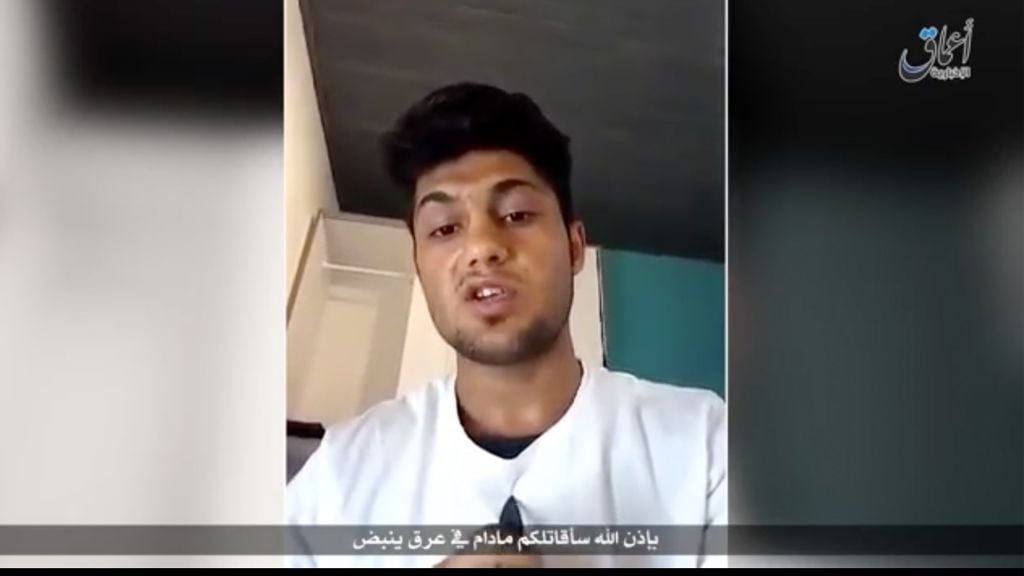
The video showed teenager “Mohammed Riyadh” — knife in hand — announcing in Pashto he would carry out an “operation” in Germany, and presenting himself as a “soldier of the caliphate”.
German authorities said they had found a hand-painted IS flag and what they called a suicide letter among the asylum seeker’s belongings. The assailant was killed by police as he attacked officers while trying to flee.
“The perpetrator of the stabbing attack in Germany was one of the fighters of the Islamic State,” the IS-linked Amaq news agency said.
Amaq later released a video it claimed showed the attacker threatening “infidel” countries.
German authorities said they had authenticated the video.
The gruesome attack shows that an “early warning system” and cooperation from Muslim groups in Germany are urgently needed to root out Islamic extremism, Charlotte Knobloch, head of the Jewish Community in Bavaria and Munich, said in a statement issued Tuesday.
Such terrorism “points to the urgent need to focus on integration” of refugees from Muslim lands, said Schuster, who lives in the Bavarian city of Wurzburg. More than 1 million people from war-torn countries — mostly Afghanistan, Syria and Iraq — have sought asylum in Germany in the past year.
Deidre Berger, head of the American Jewish Committee’s Berlin office, said there was particular concern about “more than 100,000 unaccompanied minors” among the new refugees “whose lives are uprooted” and who have expectations of life in the West that may not be fulfilled.
“They are highly susceptible to the easy answers of radical Islamist ideology, which empowers them to be a hero instead of an underdog,” Berger said. “As we see in this most recent act of terrorism, it is not just the Jewish community that needs to be vigilant against future acts of terror.”
Though this attack may highlight fears about radical Islamists slipping in with genuine refugees, “It’s not OK to blame or fear all refugees because of the act of one,” said Schuster, who has backed Chancellor Angela Merkel’s safe haven policy while urging vigilance.
A record 1.1 million people were let in to Germany last year, with Syrians making up the largest group followed by Afghans.
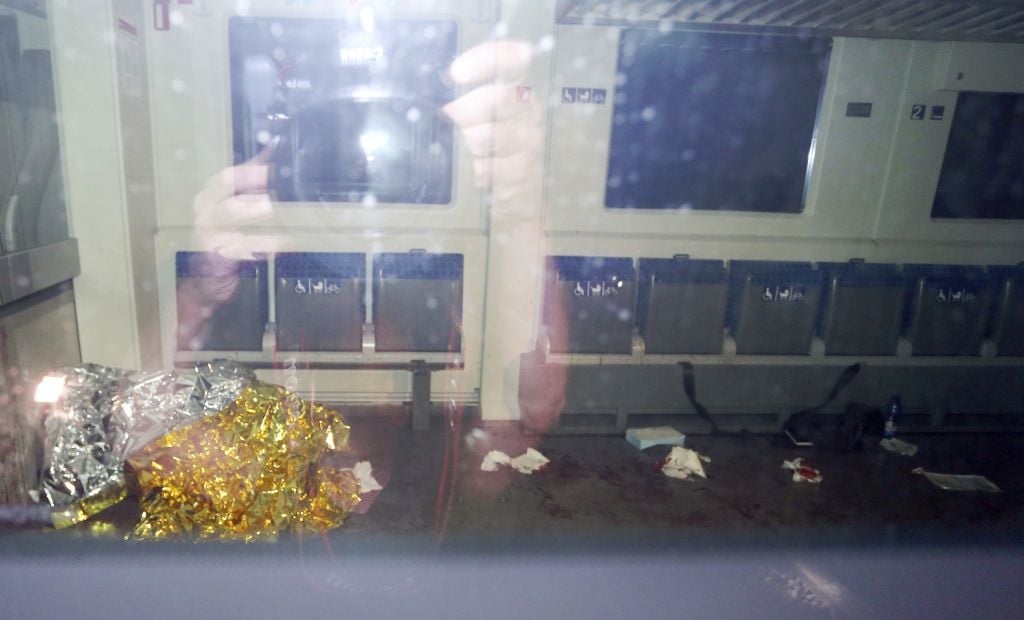
The assailant had arrived as an unaccompanied minor in Germany in June 2015 and had been staying with a foster family in the region for the last two weeks. Locals described him as “calm and even-keeled” and a “devout Muslim who did not appear to be radical or a fanatic”, according to Joachim Herrmann, interior minister of Bavaria state.
“According to the investigation thus far, there was no evidence on site to point to him belonging to the Islamist network,” Herrmann said.
“We must determine what the motive was and to what extent he really belonged to the Islamist scene or self-radicalized very recently,” Herrmann said, adding that the assailant had no criminal record in Germany.
Police however later found a farewell letter he apparently left for his father, who still lives in Afghanistan, in which he said the world’s Muslims “must defend themselves”.
The teen had learnt on Saturday that a friend had died in Afghanistan, which police suggested could have pushed the attacker to act.
“Now pray for me that I can take revenge on non-believers, pray for me that I can get to heaven,” the note said.