Bennett: Netanyahu aides who ‘served the enemy’ in Qatargate deserve life sentence
Former premier, running in upcoming election against current PM, notes recent reports revealing details of scandal, alleges aides smeared Egypt to help 'enemy' Qatar
Former prime minister Naftali Bennett claimed on Tuesday that the suspects in the Qatargate scandal deserve a life sentence for having “maliciously sabotaged” Israel’s ties with Egypt while promoting the image of Qatar, which Bennett branded an “enemy.”
The comments, made in a social media video, were Bennett’s latest volley of harsh rhetoric about the scandal, in which Prime Minister Benjamin Netanyahu’s senior aide Jonathan Urich and former spokesperson Eli Feldstein are accused of working as paid lobbyists on behalf of Doha while in the premier’s employ.
The allegations are particularly explosive because Hamas’s leadership is based in Qatar, which alongside Egypt has acted as a mediator in negotiations over the Gaza war and the current ceasefire.
Bennett is running against Netanyahu in next year’s elections. Figures across the political spectrum have called for consequences in the Qatargate case following a wave of bombshell media reports about it.
“Now all of the people of Israel know: From the materials that have been uncovered, it has clearly emerged that Netanyahu’s people not only received a salary from Qatar in order to whitewash Qatar/Hamas, but they also took advantage of their special position in the [Prime Minister’s] Office to tar Egypt,” he said. “All this was done to serve the enemy, Qatar/Hamas, at a time of war.”
He then cited a clause of Israel’s criminal code that, he says, indicates that the punishment for such conduct is life in prison.
In a subsequent post, Bennett shared the text of the law in question, which says that those who conspire against an ally are liable for seven years in prison. But in certain cases where the offense is compounded by intent to harm ties, the defendant can be sent to prison for life.
Whether the Qatargate offenses would qualify for that punishment is unclear, per the text of the law. On Sunday, i24 News reported that correspondence between the suspects showed that they had shared fabricated information attributed to “senior security officials” and “senior American officials” that played up Qatar’s role in negotiations with Hamas while attempting to sideline Egypt, another mediator of ceasefire talks in the Gaza war.
“A person who intentionally sabotages Israel’s relations with another state is liable for life imprisonment,” Bennett says in the video. “This is exactly what Netanyahu’s people did when they maliciously sabotaged our relations with Egypt.”
Bennett, who is running against Netanyahu in next year’s elections, previously called the scandal “the gravest betrayal in the history of the State of Israel.” In Tuesday’s video, he doubled down on making that statement, saying he “didn’t do so lightly.”
“The term ‘betrayal’ means a targeted action against the security-diplomatic interest of the state of Israel,” he said.
At the end of the video, he called on Netanyahu to stop supporting the suspects and to disavow them. Netanyahu has decried the scandal as a “witch hunt” and denied wrongdoing. Urich still works for his office.
“He must denounce them and give answers to Israel’s citizens,” Bennett said. “IDF soldiers and all of the people of Israel must know that the holy of holies of Israel, the Prime Minister’s Office, is completely clean of the interests of enemy states.”
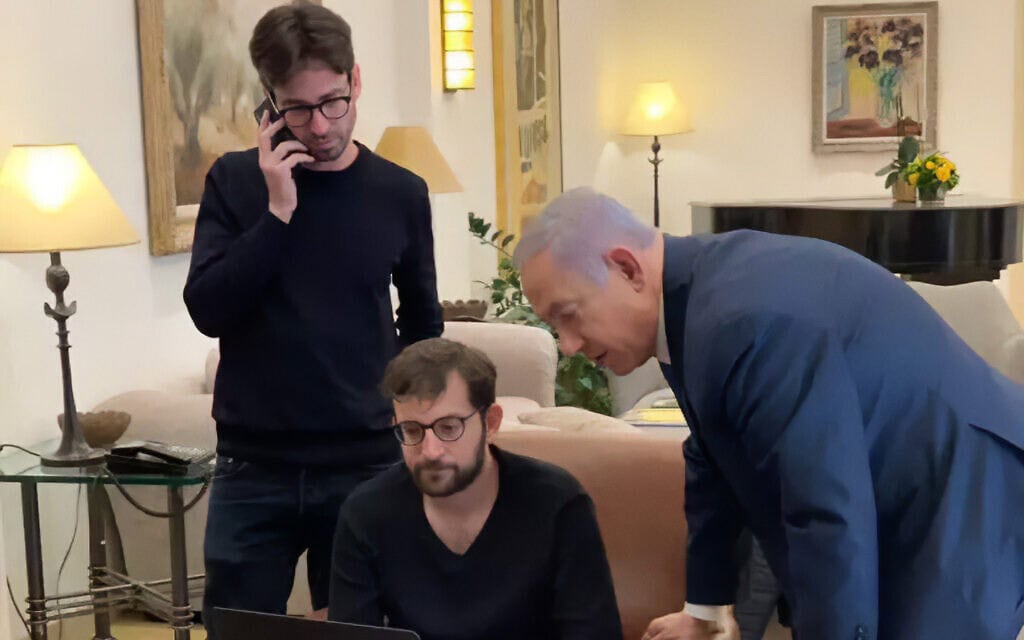
The wave of recent media reports, including revelations of text messages between the suspects and a lengthy interview with Feldstein on the Kan public broadcaster, has led a growing number of politicians, including several ministers in Netanyahu’s cabinet, to call for the scandal to be investigated and consequences to follow.
A poll on Monday by the Walla outlet found that half of Israelis consider the allegations to be treason. The poll also found that the scandal is likely to sway only a small number of votes, though surveys are predicting a close race between the pro- and anti-Netanyahu blocs, making such shifts potentially significant.
Nava Freiberg contributed to this report.