Boko Haram’s elusive leader said wounded in airstrike
Nigeria claims to have seriously injured Abubakar Shekau and killed other commanders in raid on Islamist group's forest stronghold
LAGOS, Nigeria — Nigeria’s military claimed Tuesday to have seriously injured Boko Haram’s elusive leader Abubakar Shekau and killed other commanders in an airstrike on the Islamist group’s forest stronghold.
Nigeria has repeatedly claimed to have killed Shekau in previous raids only for him to appear shortly afterwards in videos.
Shekau was “fatally wounded in the shoulder” during Friday’s raids, said army spokesman Sani Usman in a statement, without giving further details.
Usman also said three Boko Haram commanders — Abubakar Mubi, Malam Nuhu and Malam Hamman — were confirmed dead with several others wounded.
The claim comes as US Secretary of State John Kerry visits the country for talks likely to focus on the fight against Boko Haram, which launched an uprising in 2009.
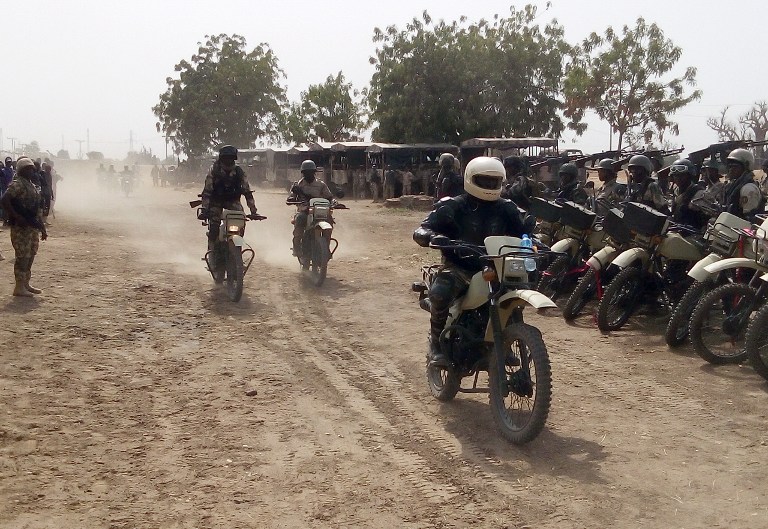
Nigerian forces, with the support of regional troops, have recently recaptured swaths of territory lost to the jihadists.
The mysterious Shekau’s fate has been the subject of speculation recently amid claims he had been replaced by Sheikh Abu Musab al-Barnawi, the group’s former spokesman.
Barnawi’s appointment was contained in a magazine issued by the Islamic State group, to which Boko Haram pledged allegiance in March last year.
But only a week later, the shadowy Shekau surfaced in a video posted on social media, ridiculing suggestions of his death and looking more composed and energetic than in previous appearances.
Boko Haram, which seeks to impose a strict Islamic law in Nigeria’s mainly-Muslim north, has killed some 20,000 people and forced at least 2.6 million others to flee their homes since 2009.