Brexit and the anti-elite revolt: What UK vote may mean for Clinton and Trump
The British referendum is no exact mirror of the US political landscape, but analysts and operatives see many striking similarities
It was Britain’s poorer and less-educated citizens — angry at not having shared in the economic benefits of a new world order — who pushed it out of the European Union, in a vote that threatens elites, analysts say.
They are those who suffered the worst hangover from the economic crisis, and whose precarious economic position makes them most fearful of rising immigration — to the benefit of far right groups in the EU and Donald Trump in the United States.
“I see the same pattern everywhere I look,” said William Galston, a senior fellow at the US-based Brookings Institution.
“The demographic splits within the UK are exactly the same category for category as the demographic splits within the American electorate in this presidential election.”
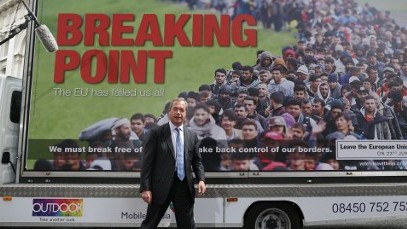
Rural areas with high numbers of migrant workers, former industrial hubs and poor areas around cities, those without a university education and older voters were all among the 53.4 percent who voted Brexit.
Galston said this was the same demographic backing controversial Republican candidate Trump in the US, as well as eurosceptic and far-right parties enjoying a rise in support across Europe.
“They mistrust political elites because up until now they haven’t seen any political parties who appear to recognise their discontent and respond to it.”
Galston said while he did not expect these forces to prevail in the United States as they did in the Brexit vote, they were a “major warning signal to established parties throughout Europe.”
Fears are high of a domino effect, with eurosceptic, leftist and far right parties from France to the Netherlands crying victory after the shock Brexit result was announced and calling for similar votes in their own countries.
Political scientist Melanie Sully of the Vienna-based Go-Governance Institute warned Europe was facing a “crisis of democracy” that could be exploited by xenophobic, far right parties.
“If you don’t have any trust in politics, it’s exactly the sort of black hole populists can march into and capture the mood and build on it, to perpetuate their own falsehoods,” she told AFP.
At the root of this surge in anti-establishment sentiment is a feeling of fear, loss of control, and traditions and identity lost among those who are struggling economically, analysts say.
“Before we talk about populism, the anti-establishment, we have to talk about the social position of these people. What do they earn? How do they see their everyday lives?” said Tetiana Havlin, a sociologist at the University of Siegen in Germany.
“In everyday life nobody thinks about anti-globalisation, anti-establishment. They just see their challenges”, she said.
“This of course gives fertile ground for populism… but in the end this is about what people feel.”
Observers point to two main drivers of the surge in scorn for the elite: the hangover from the 2008/2009 economic crisis and the refugee crisis.
“You have a lot of people who took a big hit. These are people who feel economically vulnerable, and when you put demographic fears on top of economic vulnerability this is what you get,” said Halston.
“I don’t think its mysterious anymore, we may have been scratching our head a year ago but we should be in no doubt now.”
Britain’s stunning vote to bolt from the European Union sent political tremors across the Atlantic, fueling Trump’s confidence that frustrated US voters will back similarly sweeping change and rattling Democrats who are banking on Americans ultimately choosing a more conventional leader in Hillary Clinton.
The British referendum was no exact mirror of the US political landscape. The American electorate is far more diverse and Trump is deeply unpopular with minority voters, a serious weakness dogging his Republican candidacy. The referendum also centered on a single issue, while the presidential election can be as much a decision about personality and temperament as candidates’ policies.
Yet the parallels between the forces that drove the British vote and those at the core of Trump’s campaign are striking. Among them: a belief that globalization is hurting the working class, and increased immigration is changing the country’s character. In both nations, there is strong resentment of political elites who often appear to have little connection to the voters they’re supposed to represent.
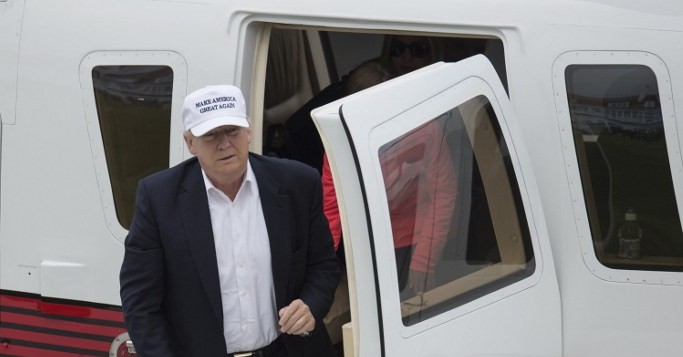
“I think there are great similarities between what happened here and my campaign,” Trump said from Scotland, where he was attending the opening of one of his golf courses. “People want to see borders. They don’t necessarily want people pouring into their country that they don’t know who they are and where they come from.”
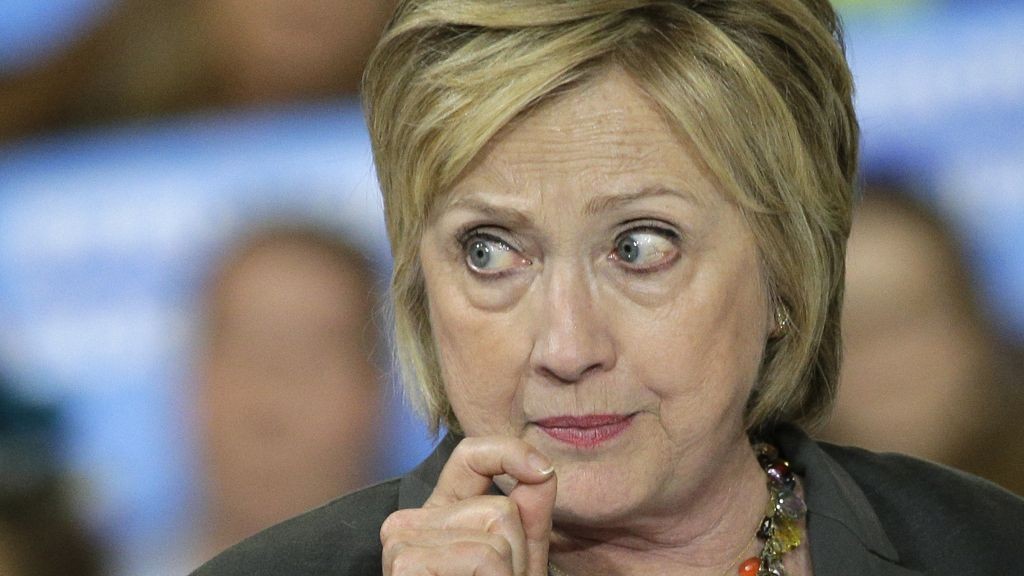
In the US, Clinton cast the economic uncertainty as a reason America needs “calm, steady, experienced leadership” in the Oval Office — a knock on her often unpredictable and politically inexperienced Republican rival. Clinton aides also highlighted Trump’s assertion Friday that a weaker pound would make his Scottish golf course more attractive to visitors.
“Donald Trump actively rooted for this outcome and he’s rooting for the economic turmoil in its wake,” said Jake Sullivan, Clinton’s senior policy adviser.
Other Democrats, openly anxious, warned that the party should not underestimate the willingness of angry American voters to choose a more uncertain path in November and side with Trump.
“It’s a timely big splash of cold water in the face of Democrats,” said Ron Kirk, the former Democratic mayor of Dallas and US trade representative for President Barack Obama.
Democratic operative Lynda Tran said that if US voters are indeed seeking a broad political overhaul in November, Clinton will be “at a major disadvantage.”
“Having spent the last three decades of her life in public service, in the public eye and being a core part of the policies and the administrations that have brought us to where we are right now, it’s very difficult for her to grab the mantle of change,” Tran said of the former secretary of state, senator and first lady.
The British referendum comes as Trump tries to rebound from one of the worst stretches of his campaign. He’s struggled to raise money and build a robust organization for the general election, and this week he shook up his operation by firing campaign manager Corey Lewandowski.
But for some Republicans, the outcome in Britain was a reminder that despite Trump’s shortcomings, he may be the candidate most attuned to voters — an intangible that campaign cash can’t buy.
“Brexit is a wakeup call for the Clinton team,” said Scott Reed, chief strategist for the US Chamber of Commerce. “The status quo won’t work this cycle.”
The referendum was fueled by support from white, working class voters from outside Britain’s population centers — a similar profile of Trump’s supporters. The biggest challenge for Trump will be broadening his base and overcoming his negative standing with minorities and women.
Unlike in Britain, where the referendum was decided on the basis of a national popular vote, the American election is determined on a state-by-state basis, with many of the most politically powerful states also being the most diverse.
But Jerry Spaulding, a farmer from Gilmanton, New Hampshire, who plans to vote for Trump in November, said he wouldn’t be surprised if the breadth of Trump’s support is broader that it may look in public opinion polls.
“I do think you’re going to see a lot of people coming out of the woodwork like they did in Britain,” Spaulding said.