British political turmoil deepens after EU referendum
EU leaders to meet in Berlin for talks on UK exit; Kerry due in London, Brussels
LONDON — Britain’s shocking decision to remove itself from the European Union brought more political turmoil Sunday as Scotland’s leader threatened to block the move and the opposition Labour Party’s leader faced a coup attempt from his own legislators.
The vote to leave sent the pound and global stock markets plunging. Britain’s Treasury said finance minister George Osborne would make an early morning statement Monday “to provide reassurance about financial and economic stability” before the London Stock Exchange reopens.
The sense of unease spread as European leaders stepped up the pressure on Britain to begin its complex exit from the 28-nation EU immediately, rather than wait several months as British Prime Minister David Cameron prefers.
US Secretary of State John Kerry is due in London and Brussels for crisis talks and the leaders of Germany, France and Italy will meet in Berlin.
European Parliament chief Martin Schulz warned Sunday that a period of limbo would “lead to even more insecurity and thus endanger jobs” and said a summit of EU leaders Tuesday, which Cameron will attend, was the “right time” to begin exit proceedings.
But Cameron has said negotiations on Britain’s departure must wait until a successor is chosen from his Conservative party, which could be as late as October.
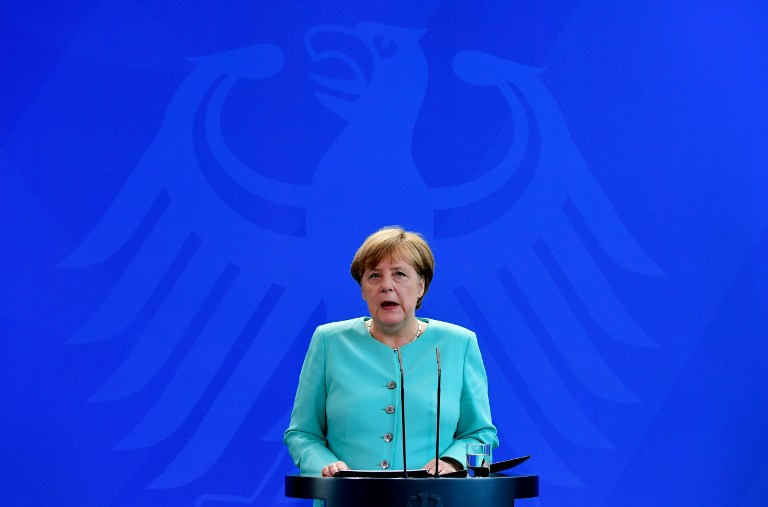
German Chancellor Angela Merkel, who will host French President Francois Hollande, Italian premier Matteo Renzi and EU President Donald Tusk on Monday, has said there is “no reason to be nasty in the negotiations”.
On Sunday Hollande and Merkel confirmed they were in “full agreement on how to handle the situation” French presidency sources said after a phone call between the two leaders.
Both heads of state “want the greatest clarity to avoid any uncertainty,” and “stressed the need for European initiatives and the need to act quickly on concrete priorities,” one source told AFP.
Kerry meanwhile, during a stopover in Rome on Sunday, expressed regret at Britain’s decision to become the first EU nation to leave the bloc — and vowed Washington would maintain close ties with the 28-country alliance.
“Brexit and the changes that are now being thought through have to be thought through in the context of the interests and values that bind us together with the EU,” he said.
The leaders of the successful campaign to leave the EU stayed largely out of the public eye, as opponents accused them of lacking a plan to calm the crisis the result has triggered. In his first statement since Friday morning, “leave” leader and former London Mayor Boris Johnson used his column in the Daily Telegraph newspaper to urge unity and say “the negative consequences (of the vote) are being wildly overdone.”
He said Britain would forge “a new and better relationship with the EU — based on free trade and partnership, rather than a federal system.”

The vote, however, risks causing a political schism in the United Kingdom. Scottish First Minister Nicola Sturgeon said she would “consider” advising the Scottish Parliament to try to use its power to prevent Britain from actually leaving the EU. She said Scottish lawmakers might be able to derail the move by withholding “legislative consent” for a British exit, or Brexit.
“If the Scottish Parliament was judging this on the basis of what’s right for Scotland, then the option of saying ‘We’re not going to vote for something that is against Scotland’s interests,’ of course, that is on the table,” she said of the possibility of withholding consent.
Sturgeon said she believes Scotland’s approval is required for the move but conceded the British government would likely take “a very different view.”
Thursday’s UK-wide vote to leave the EU was very unpopular in Scotland, where 62 percent cast ballots to stay, and Sturgeon says she is studying ways to keep Scotland part of the EU bloc.
The Scottish question looms large because Sturgeon also has said another referendum on Scottish independence from Britain is “highly likely” as a result of Britain’s EU vote. A Scottish referendum in 2014 ended with voters deciding to remain in Britain, but analysts believe Britain’s withdrawal from the EU may strengthen the independence movement.
In Northern Ireland, which also is part of the UK, Deputy First Minister Martin McGuinness said his priority is forging “special arrangements” to enable Northern Ireland to maintain its EU ties. Some Brexit opponents have also talked of trying to use Northern Ireland’s Assembly to try to block Britain’s departure.
Northern Ireland voters also expressed a preference for keeping Britain in the EU. The unhappiness with the results in both Scotland and Northern Ireland is adding to the sense that the Brexit vote may over time lead to the breakup of the United Kingdom.
Northern Ireland Secretary Theresa Villiers, Cameron’s lead official in Belfast, played down the suggestion that the Scottish Parliament or the Northern Ireland Assembly had the standing to prevent a British departure from the EU.
She said decision-making power resides solely in the British Parliament, which is expected to abide by the results of the referendum, which showed 52 percent of British voters wanted out.
“In the weeks and months ahead, we will be working with both the Scottish government and the Northern Ireland executive on all these matters,” she told BBC. “But ultimately it is (the British) Parliament’s decision.”
Adam Tomkins, a law professor and member of the Scottish Parliament, agreed with this assessment. The Conservative Party legislator tweeted that it was “nonsense” to suggest the Scottish party could block a British departure simply by withholding consent.
The vote is already cutting short Cameron’s career. He said after the results that he will resign as prime minister when the Conservative Party chooses a new leader, who will be charged with implementing the separation from the EU.
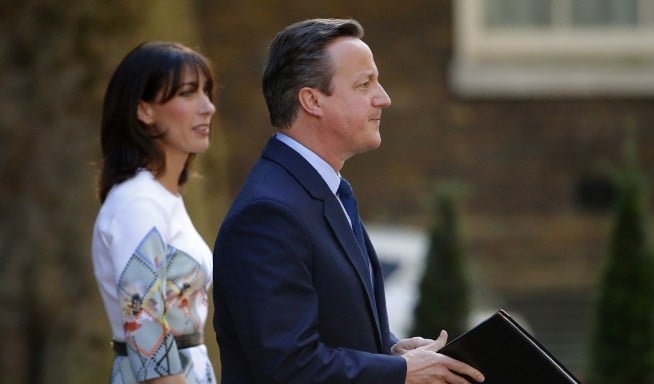
The new party leader, who will become prime minister, is expected to be in place by October. At that point, he or she may choose to call a quick election to solidify a mandate — and the prospect of an election in the near future may have spurred a revolt Sunday against Labour leader Jeremy Corbyn that has been simmering for months.
Corbyn, a longtime critic of the EU who was criticized by many for doing a weak job presenting the party’s position favoring membership, for the first time faces an open rebellion from senior members of his “shadow cabinet” — the opposition party’s mirror government of senior lawmakers.
Eleven “shadow cabinet”members resigned Sunday after Corbyn fired shadow Foreign Secretary Hilary Benn overnight for reportedly plotting a rebellion against him. The dissidents want Corbyn, who represents the far-left wing of the party, ousted before the next general election because many believe he cannot win.
In her resignation letter, shadow Heath Secretary Heidi Alexander bluntly told Corbyn he had to go.
“I do not believe you have the capacity to shape the answers our country is demanding and I believe that if we are to form the next government, a change of leadership is essential,” she wrote.
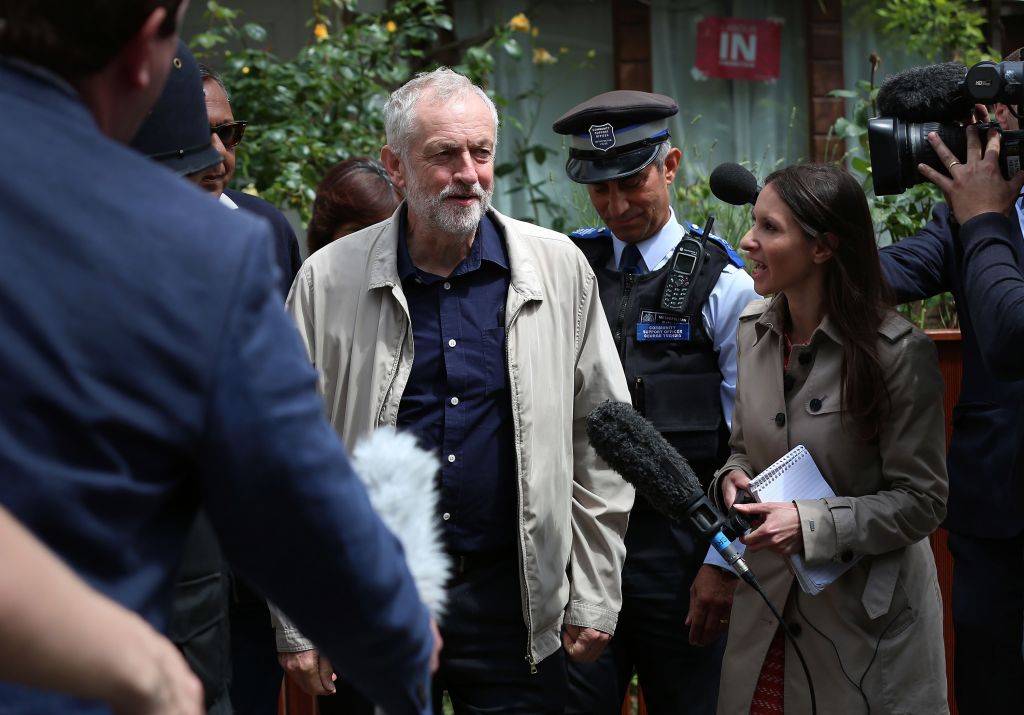
In a statement released late Sunday, Corbyn said he would not resign and would run in any new leadership contest. Senior allies said he still has strong support among the party’s rank-and-file members, who chose him as leader last year.
“I regret there have been resignations today from my shadow cabinet,” Corbyn said. “But I am not going to betray the trust of those who voted for me — or the millions of supporters across the country who need Labour to represent them.”