Cause is lost for Islamic State, Obama says, as fight shifts gears
President says group is on defensive and suffering major losses as official announces move to 'phase two' of battle against jihadis
The Islamic State group in Iraq and Syria is on the defensive and “their cause is lost,” US President Barack Obama said Wednesday after meeting with CIA chiefs and other security officials.
Obama paid a rare visit to CIA headquarters in Virginia to discuss progress of Operation Inherent Resolve, the 20-month-old US-led campaign against IS jihadists in Iraq and Syria.
“ISIL is on the defensive, and we are on the offensive,” Obama said, using an IS acronym. “We have momentum, and we intend to keep that momentum.”
Obama said it had been “a bad few months” for the Islamic State and gave a detailed account of areas where US-backed forces have wrested territory back from the extremist group.
Obama pointed to recent US air strikes that killed three senior IS leaders and a report this week showing the group’s ranks are at their lowest level since 2014.
“In the days and weeks ahead we intend to take out more [leaders.] Every day, ISIL leaders wake up and understand it could be their last,” Obama said.
“Their ranks of fighters are estimated to be at the lowest levels in two years and more and more are realizing that their cause is lost,” he added.
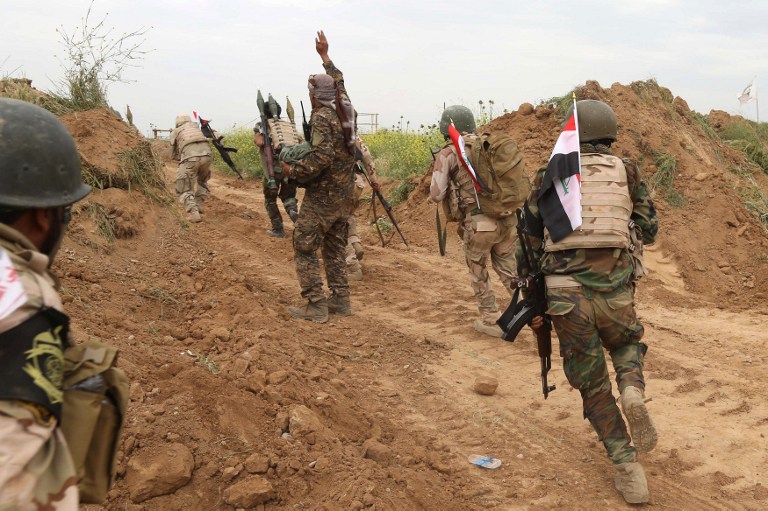
Obama offered no new steps or specifics about how the US will beef up the fight against IS, although US officials have suggested those steps are in the works. Defense Secretary Ash Carter has said the Pentagon is seeking ways to increase military support for the fight, including a likely increase in US forces, along with the possible use of Apache helicopters for Iraqi-led combat missions.
The visit to the CIA’s campus in suburban Virginia was designed to assure Americans that the US is fully engaged in the fight, despite persistent complaints from Obama’s critics that his strategy isn’t aggressive enough. Indeed, in recent months Obama has made similar field trips to the Pentagon and the State Department to illustrate how all facets of the US government are on the case.
Obama stressed the importance of ending the five-year civil war in Syria as key to facilitating a lasting defeat of the IS group.
“So we continue to work for a diplomatic end to this awful conflict,” he said.
Earlier Wednesday, Baghdad-based spokesman Colonel Steve Warren said the US-led coalition campaign had successfully entered the second “phase” of operations.
The coalition is working through three main steps as it wages its 20-month-old fight against the IS group, Warren said.
“Our enemy has been weakened and we now are working to fracture him. Phase one of the military campaign is complete,” Warren told Pentagon reporters, noting that this initial step was to “degrade” the IS group by stopping it from making additional territorial gains.
“We are now in phase two, which is to dismantle this enemy,” he added.
Warren said the final phase of the campaign is to ensure the IS group is dealt a lasting defeat, primarily by enabling local forces to prevent a resurgence of jihadist influence.
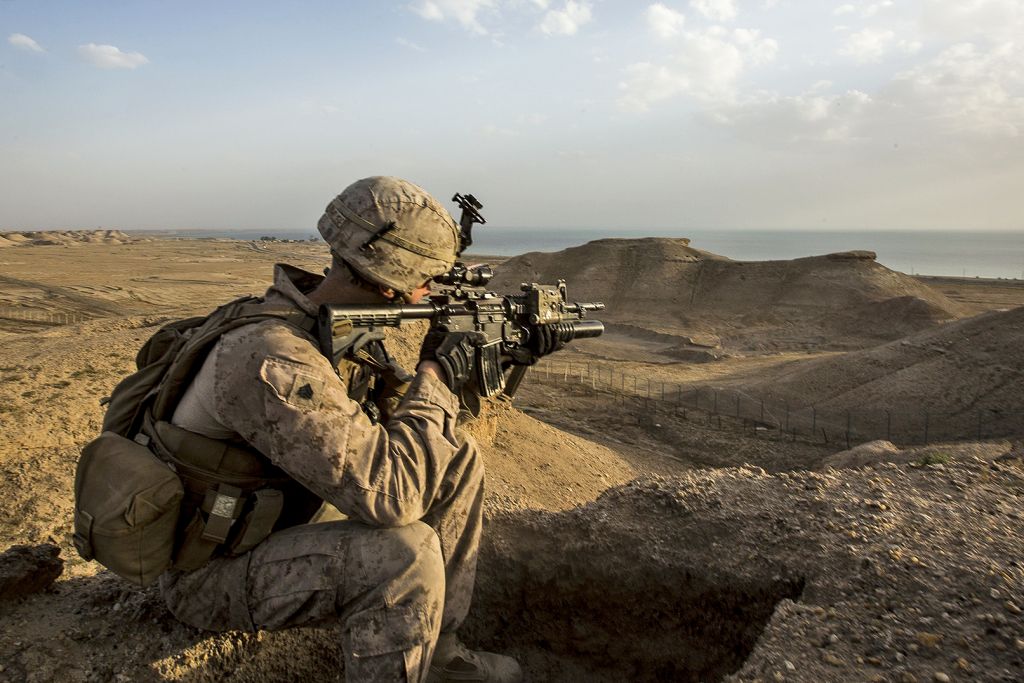
Though the IS group maintains a firm grip on vast areas of the two countries, the jihadists have suffered some serious setbacks including the loss of Ramadi in Iraq.
“While ISIL can still put together some complex attacks, they have not been able to take hold of any key terrain for almost a year now,” Warren said.
Though Obama gave an optimistic portrayal of progress in both Iraq and Syria, the picture on the ground remains muddled at best.
In Syria, escalating fighting between the government and militants has threatened to jeopardize a fragile cease-fire the U.S. and Russia brokered earlier this year. Peace talks resumed Wednesday in Geneva aimed at resolving Syria’s civil war, though deep disagreements about who should participate have continued to plague that process.
Syrians living in parts of the country still under government control also voted Wednesday in parliamentary elections that Syrian President Bashar Assad’s opponents dismissed as a sham intended to lend an air of legitimacy to his beleaguered government, in yet another worrying sign for the peace talks.
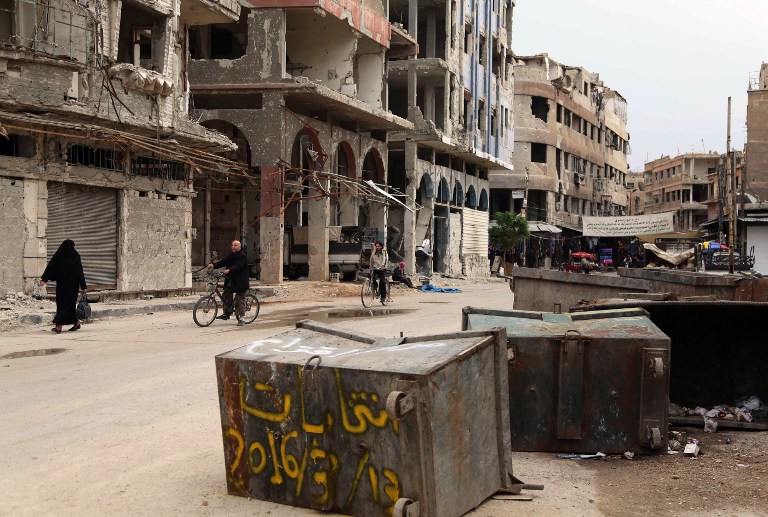
The uptick in violence in Syria has raised difficult questions about how to proceed if the truce falls apart and frees Assad and his Russian backers to resume attacks on US-supported opposition groups. Russia, which had been bolstering Assad with an air campaign against his opponents, recently ordered a drawdown in warplanes, but said strikes would continue against IS and the al-Qaeda-linked Nusra Front. Both of those groups are excluded from the cease-fire.
In Iraq, Obama pointed to the Iraqi military’s preparations to retake the IS stronghold of Mosul as an example of increased momentum in the fight. Yet modest signs of progress have been tempered by ongoing sectarian challenges and a political crisis in Baghdad that have threatened to further destabilize the country.
Obama’s remarks at the CIA came the week before he travels to Saudi Arabia for a summit with Persian Gulf leaders focused largely on the threat from the Islamic State.
Previewing his request to countries attending that summit, Obama said “the entire world” must step up to help Iraq restore stability “so that ISIL cannot return.”