Clashes reported as Iranian student protests persist for fourth consecutive day
Regime-aligned Basij militia members said to use violence in effort to contain protesters in some locations; chants call for 'dictator' Khamenei's death
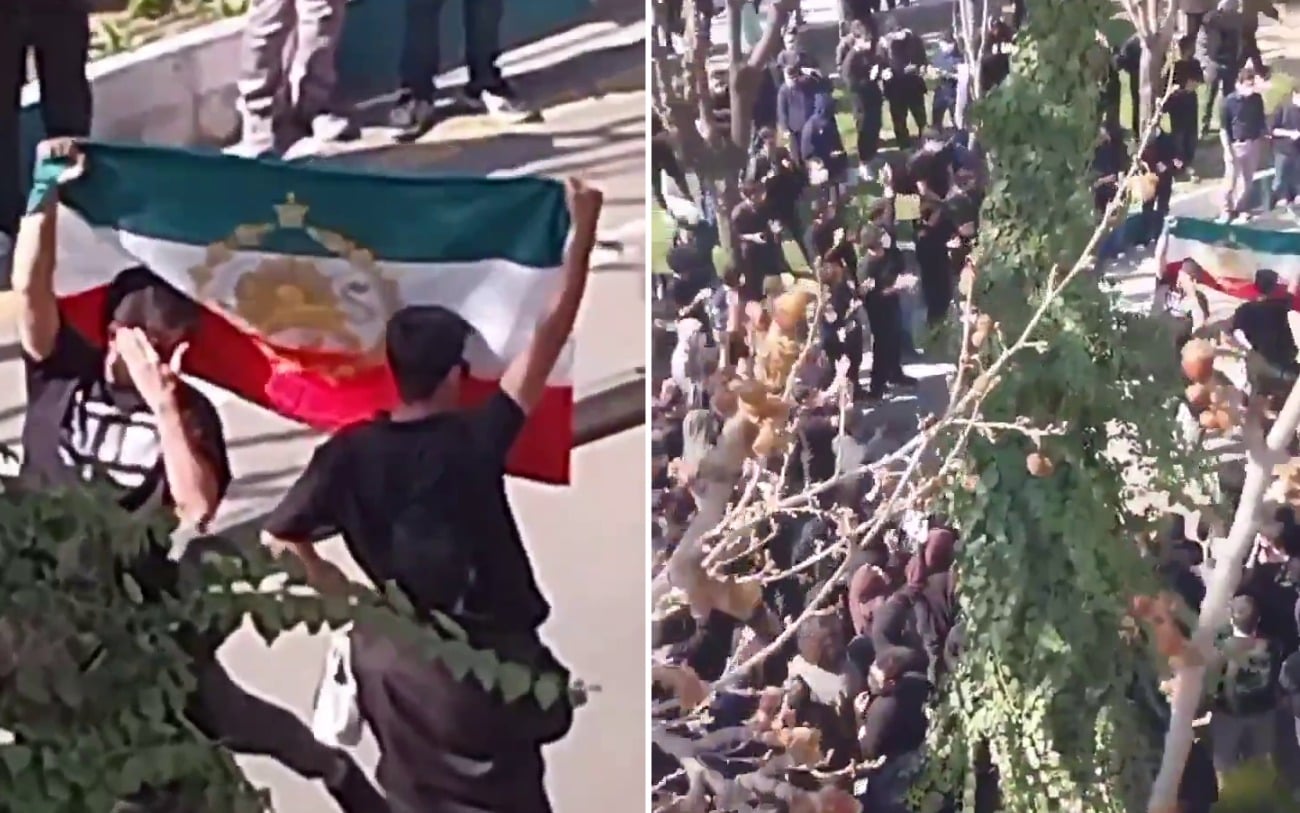
Crowds of Iranian university students in various schools protested for the fourth consecutive day on Tuesday, chanting against the regime, the opposition outlet Iran International reported.
Protests were held at schools in Tehran, Mashhad, Isfahan and Yazd, as well as other locations, it said.
In some places, regime-aligned Basij militia members reportedly responded by beating the protesters, though there were no reports of the kind of deadly gunfire that was used by security forces during mass public protests that rocked the country in January.
The Germany-based bne IntelliNews outlet reported that police with machine guns mounted on pickup trucks were seen gathering outside some university complexes later in the day. At the Khajeh Nasir University’s Vanak campus, Basij forces used tear gas and pepper spray against protesters, it said.
University students kicked off a new semester with gatherings over the weekend in which they revived slogans from nationwide protests against the country’s clerical leadership that peaked in January and were met by a deadly crackdown.
Iran International said it received footage from protests in which students could be seen chanting slogans against the regime.
At the University of Tehran, students reportedly shouted, “The shah is coming back to his country, the students are behind him,” a reference to the monarchy ousted by the 1979 Islamic Revolution.
Meanwhile, at Sajjad University in Mashhad, students proclaimed, “Until the mullah is shrouded, this homeland will not become a true homeland,” apparently a reference to Supreme Leader Ali Khamenei. Students also chanted “Javid shah” (“Long live the shah”). Calls to revive the Shah’s rule via his son, who lives in exile, are a common theme in anti-government protests.
Security forces responded violently, according to the report.
At an unnamed school in the northeast, students were seen chanting “Death to the dictator.” The footage was blurred, apparently to prevent identification of those present.
In Khajeh Nasir University, anti-regime protesters were seen facing off against pro-regime students.
Another video, also purporting to show a standoff between the two sides at the university, descended into a scuffle after an anti-regime protester grabbed a flag held by a pro-regime demonstrator.
Iran International also published a video which is said showed regime-aligned Basij militia members attacking students during a rally at Iran University of Science and Technology. There were similar clashes at Khajeh Nasir University, it said.
At Isfahan University of Technology, a drone was seen hovering in the sky, with Iran International suggesting it was being used by security forces to identify protesting students.
Earlier, Iran’s government spokeswoman said students have a right to protest but must “understand the red lines,” in the first official reaction to renewed anti-government rallies on campuses.
“Sacred things and the flag are two examples of these red lines that we must protect and not cross or deviate from, even at the height of anger,” government spokeswoman Fatemeh Mohajerani said.
She added that Iran’s students “have wounds in their hearts and have seen scenes that may upset and anger them; this anger is understandable.”
On Monday, the third consecutive day of the campus protests, videos geolocated by AFP showed students at a university in Tehran burning the Iranian flag, adopted by the Islamic Republic after the 1979 revolution that toppled the monarchy.
The initial wave of protests began in December, sparked by economic woes in the sanctions-hit country, but soon grew into nationwide demonstrations that crested on January 8 and 9, posing one of the largest challenges to Iran’s leaders in years.
The unrest prompted a violent government crackdown that killed thousands of people and included a lengthy total internet blackout.
The US-based Human Rights Activists News Agency (HRANA) has recorded more than 7,000 deaths, while warning that the full toll is likely far higher.
Iranian officials acknowledge more than 3,000 deaths, but say the violence was caused by “terrorist acts” fueled by the United States and Israel.
During the protests, the government had sought to walk a line between acknowledging protesters’ legitimate economic grievances while condemning so-called “rioters.”
Mohajerani on Tuesday said a fact-finding mission is investigating “the causes and factors” of the protests and will provide reports.
US pressure
The crackdown in January prompted US President Donald Trump to threaten to intervene militarily on the protesters’ behalf, though the focus of his threats soon shifted to Iran’s contentious nuclear program.
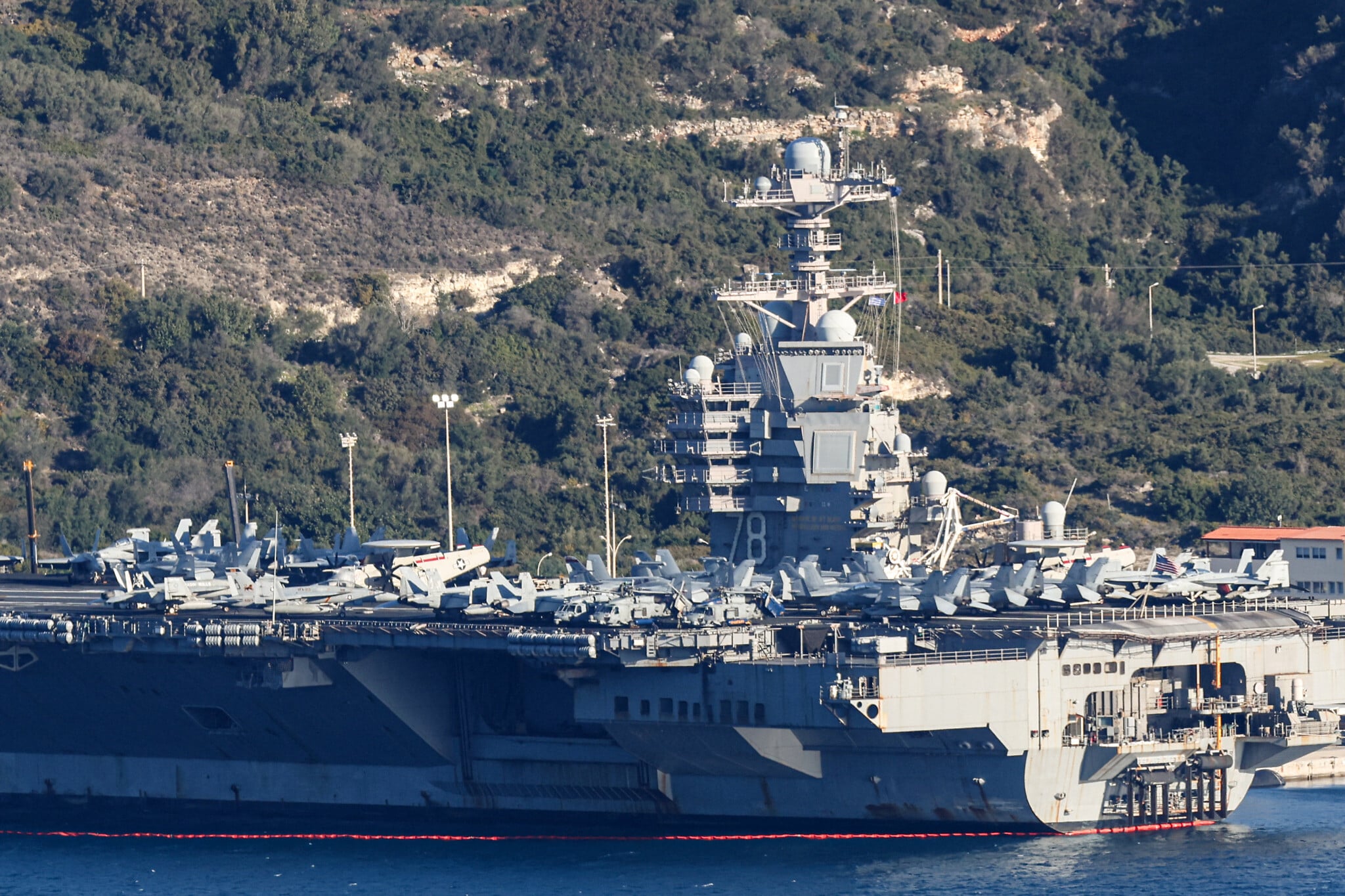
Since then, the US has carried out a massive military build-up in the Middle East aimed at pressuring Tehran into cutting a deal, even as the two sides pursue indirect negotiations, set to resume on Thursday in Geneva.
Iran, which vows to destroy Israel, insists its nuclear program is for civilian use, but the West believes it is aimed at building an atomic bomb. The Iranians have enriched uranium to a level that is a short technical step from weapons-grade and that has no civilian use.
Iran has vowed to retaliate “ferociously” against any attack from the United States, even a limited one, which Trump has publicly announced he is considering.