Closing Gaza border crossing shows Israel has no clear vision for the Strip
Residents of coastal enclave say they will hardly notice the lack of luxury goods like furniture and electronic equipment as they have no money for anything but food
Immediately after Prime Minister Benjamin Netanyahu announced Israel was closing the Kerem Shalom crossing into Gaza on Monday, Palestinian terror groups in the Gaza Strip issued a host of furious and threatening warnings. Hamas accused Israel of “crimes against humanity,” while Islamic Jihad went further and claimed that the new sanctions were “a declaration of war” against the Palestinians.
The Palestinian factions even announced an “emergency meeting” in Gaza Tuesday to coordinate their positions regarding the closure of the crossing.
Netanyahu made the move in response to the wave of incendiary kites and balloons sent over from Gaza, which have scorched thousands of acres of farm land and nature reserves.
And yet, at least now, it seems it is not time for war.
Firstly, it is important to clarify that the Kerem Shalom crossing, which is the main route for bringing goods into the coastal enclave, is not closed completely. Food, medicines, and other humanitarian aid will continue to go through the crossing. What won’t be let through are items defined as luxuries — for example, furniture, electronic equipment, and building materials.
Secondly, it is unlikely the immediate implications of this decision will be dramatic or critical for the people of Gaza. While Netanyahu and Defense Minister Avigdor Liberman received applause from Israeli ministers for the move, Palestinian merchants in the coastal enclave say the impact of the decision will hardly be noticed.
Basically, they say the situation in the Strip is so harsh that there is very little business in Gaza anyway, other than buying food.
“Who has money to buy electronic goods or new furniture in Gaza? Nobody even buys building materials, but if they do they get it from Egypt where it is cheaper. So what are we talking about? It’s bullshit,” a Gaza merchant explained.
“Your government had no strategy for Gaza and it seems as though it won’t have one in the future, and we will pay the price,” he said.
The despair in Gaza is so great, this man said, that any initiatives presented nowadays by the Egyptians, the Qataris, the United Nations, or anyone else, are met with a wall of skepticism and cynicism.
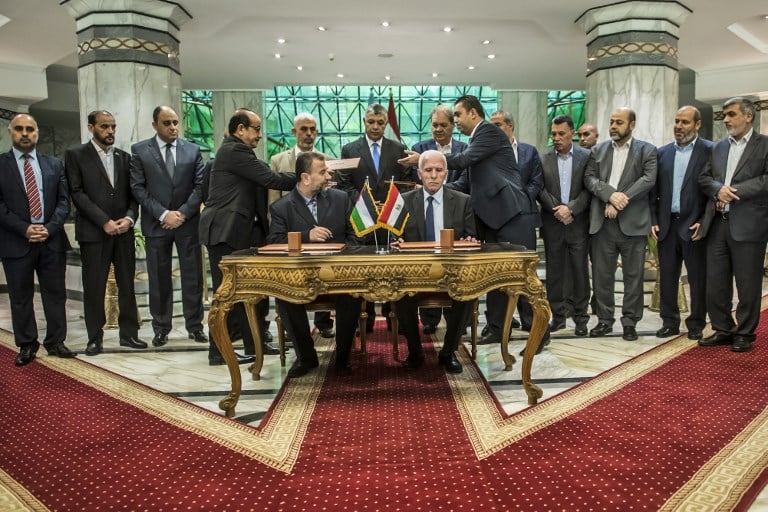
“On Wednesday Fatah and Hamas representatives will meet in Cairo to discuss reconciliation,” he said. “Do you understand? How many times have we heard that sentence? Everyone is laughing at us to our faces, but also at you. Your government doesn’t know what to do and doesn’t even know what it wants with Gaza.”
Palestinian Authority President Mahmoud Abbas “promised many weeks ago that he would begin paying full salaries again to PA employees — his people, Fatah people — but it hasn’t happened. Who should we trust?” he told this reporter.
He and others in Gaza are also negative towards Hamas, though the criticism is less scathing, perhaps out of fear for their lives. Their main complaint is the fact that Hamas is funding its military wing at the expense of civilian infrastructure.
Furthermore, the main reason for the status quo which currently holds between Israel and Gaza is the clear lack of desire by either side for war. Israel and Hamas do not want to see the collapse of the other: Hamas needs Israel to preserve its rule in Gaza, and Israel needs Hamas to keep the quiet.
The big question is: Will the dire economic situation in Gaza endanger Hamas’s control over the Strip in a way that will cause an end to the quiet?