Coalition-seeking parties antsy at Netanyahu’s dallying
Liberman accuses PM of wanting a unity government, Jewish Home's MK Ayelet Shaked says such a move would be 'corrupt'
Foreign Minister Avigdor Liberman on Monday accused Prime Minister Benjamin Netanyahu of delaying coalition negotiations with his Yisrael Beytenu party because the premier is pursuing a unity government with the Zionist Union party.
“It seems Netanyahu is dragging his feet on coalition negotiations, maybe in order to establish a unity government,” Liberman, who hopes to see his party included in the next governing coalition, told Israel Radio.
Liberman stressed, however, that he would not be part of a unity coalition. He added that the distribution of ministries had not been discussed in coalition talks thus far, and noted his joining the government was not dependent on “getting this or that portfolios.”
Rather, he said, “The government’s fundamental policy outlook will determine [whether his party agrees to join], and this means destroying the Hamas rule in Gaza and canceling VAT on basic products,” Liberman said.
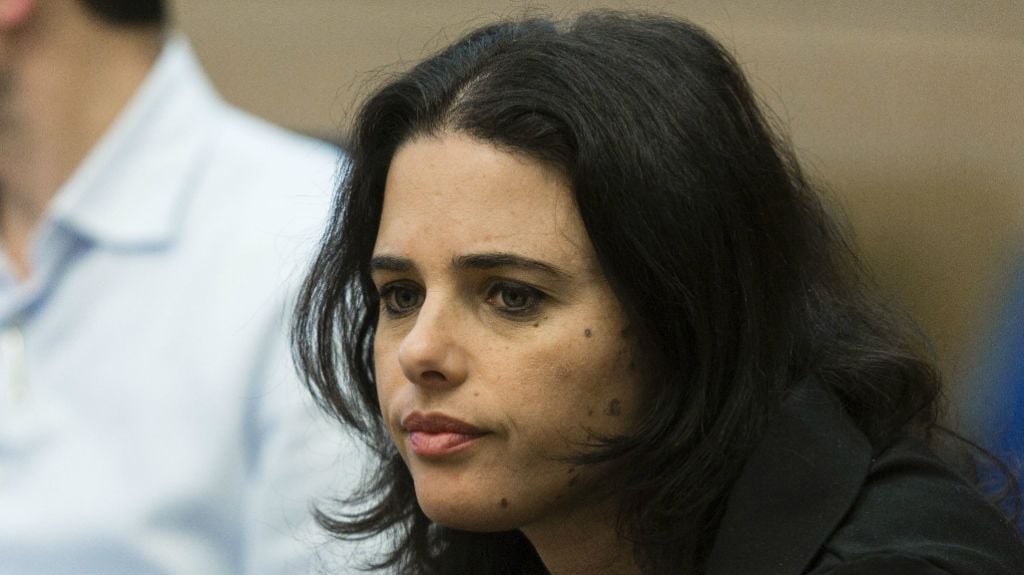
Jewish Home MK Ayelet Shaked told the radio station of her dismay at the prospect of a unity government.
Shaked, who was placed second on the party’s election slate, said that if Netanyahu “is thinking of establishing a unity government, it would be politically corrupt, and against all the promises he gave to those who voted for him.”
Likud representatives were expected to hold a meeting with representatives of the ultra-Orthodox United Torah Judaism party on Sunday, followed by talks with representatives of the national religious Jewish Home and ultra-Orthodox Shas party on Monday.
Communications Minister Gilad Erdan, from Netanyahu’s own Likud party, said the prime minister “more than hinted” at establishing a unity government during comments he made on Saturday, but added that the Likud “will first examine our options during coalition talks with our natural partners,” referring to right-wing bloc parties like Jewish Home and Yisrael Beytenu.
Erdan was referring to comments Netanyahu made the night before as took part in the post-Passover Mimouna celebration in the city of Or Akiva, where he cryptically talked of a unified Israel.
“Now that the dust of the elections has settled, we need to strengthen the unity of the people of Israel and that is what we will do,” Netanyahu said.
MK Yariv Levin, who is part of the Likud coalition negotiating team, painted a sobering picture of the talks in an interview with Israel National News radio.
“There are still significant gaps and it is not certain that it will be possible to bridge them in coming days,” he said. “We need to speed up the negotiations. I hope that we will discover among our partners willingness to reach a compromise because so far we have just seen a hunkering down behind demands that don’t enable an end to the negotiations as should have happened.”
In March’s election, Likud won 30 seats in parliament, Zionist Union 24, Jewish Home 8, Shas 7, United Torah Judaism scored 6, and Yisrael Beytenu 6 seats.
Under Israel’s electoral system, Netanyahu must cobble together a coalition comprising smaller parties by offering cabinet positions — including, possibly, some of the most senior posts in government — to factions whose support he requires if he is to cement a Knesset majority of at least 61 seats. Meanwhile, lawmakers within his own Likud party have also demanded top jobs, citing the party’s strong 30-seat showing, which makes the party the largest by far in the 20th Knesset.
Netanyahu has until May 7 to present his coalition to President Reuven Rivlin.
Jonathan Beck contributed to this report.