
|
|

|
Dear Times of Israel Community, Israel is not “a step away” from “total victory” over Hamas, and Prime Minister Benjamin Netanyahu knows it. As he has himself acknowledged, a quarter of the Hamas army is intact (in Rafah and central Gaza), as is most of its leadership, and 129 hostages abducted on October 7 are still held captive in Gaza. And Israel’s capacity to take the steps actually necessary to dismantle Hamas and return the hostages is increasingly limited. 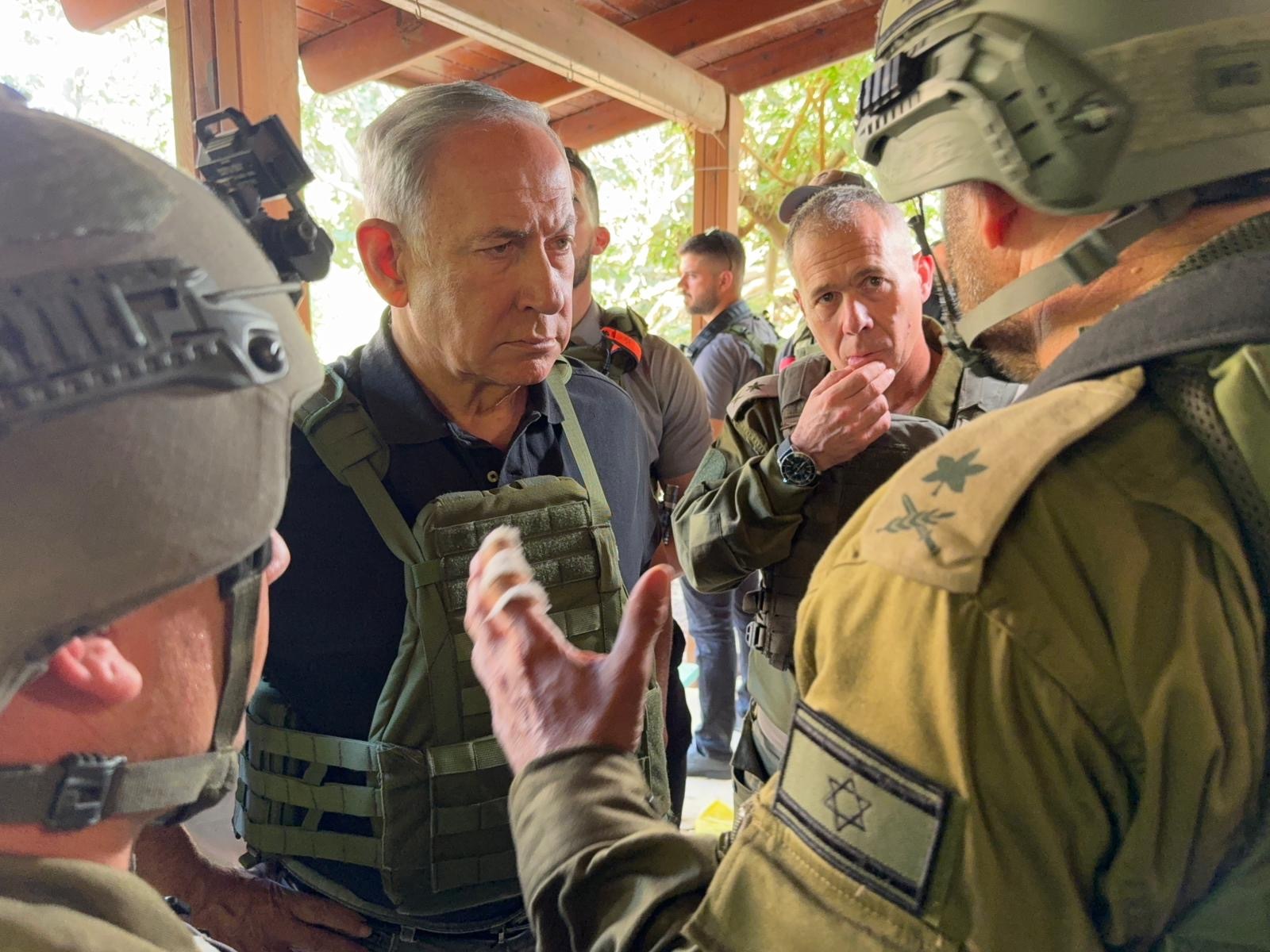 The IDF’s proposal for the evacuation of Gaza noncombatants from Rafah and the major ground operation to tackle Hamas’s last major stronghold — where four battalions, Yahya Sinwar and his would-be genocidal partners, and many of the hostages are located — has been rejected by the US as unworkable. Netanyahu claims to have set the date for the IDF’s entry into Rafah. But without US practical and diplomatic support, no such operation can or will go ahead. International public and political opposition to Israel’s entire resort to war has grown inexorably from almost immediately after Hamas’s invasion and barbaric massacre. There was diminishing tolerance almost from the get-go for the Jewish state’s right to take on the terrorist-army-government that had invaded Israel and slaughtered its civilians — an intolerance fueled by Hamas supporters and apologists, embraced by antisemites, fanned by dangerous fools, indulged by feckless politicians. And as the months have passed, the Biden administration has shifted its initial broadly supportive stance for Israel’s obligation to destroy Hamas to increasingly deep and overt frustration over the civilian death toll in Gaza (while acknowledging that Hamas cynically places those civilians in harm’s way), the humanitarian crisis in the Strip, the Netanyahu coalition’s refusal to so much as substantively discuss how Gaza might be viably governed post-Hamas, and the prime minister and his coalition’s rejection of the vision of a regionally integrated Israel. This is a vision that the administration is convinced is essential to Israel’s very survival, but one that requires at least a readiness in principle to advance toward a two-state solution with a “reformed” Palestinian Authority. Amid reelection stresses, and growing pressure from part of the Democratic base, that frustration has increasingly centered personally on Netanyahu. The administration’s hostility to and mistrust of him, its conviction that he is compounding the pre-October 7 refusal to recognize Hamas’s overt planning for the mass murder of Israelis with his mishandling of the post-October 7 war, has come to color its entire stance on the war. This was evidenced by the non-veto of the UN Security Council’s ceasefire resolution last month, Biden’s call for a unilateral temporary ceasefire after the IAF’s mistaken killing of seven World Central Kitchen aid workers last week, and the hints at limitations on vital munitions and other weapons supplies. As the prime minister who presided over years of a policy that tried to buy off Hamas even as the terror group built a war machine and publicly declared its every intention to use it, Netanyahu should of course have immediately acknowledged his responsibility for the worst catastrophe to befall modern Israel. He should, in the national interest, have set a timetable for a transition of power via a process designed, crucially, to minimize the disruption to the war against Hamas and to minimize political infighting inside Israel. But Netanyahu’s psyche evidently allows for no acknowledgment of failure. He is convinced that everyone is to blame but himself — the military and intelligence establishments that misled him over Hamas’s intentions in the years before October 7 and who failed to alert him in the weeks, days and hours before the invasion; the political adversaries who briefly unseated him for 18 months in 2021-2; the electorate that failed to adequately appreciate him and compelled him to then build a coalition with the messianic far-right; the media critics; the massed opponents of his legislative bid to radically constrain the judiciary; the defense minister who warned that the judicial overhaul was tearing apart Israeli society and emboldening Hamas and Israel’s other enemies… Therefore, as calls mount from within and without for Netanyahu to go, it remains a dismally safe bet that he will fight tooth and nail to do anything but. Instead, as has been his years-long strategy, he will brand anyone who questions his self-regarded peerless leadership as an enemy of Israel. The idea of a consensual move to early elections in September — as proposed by his oft-defeated rival Benny Gantz — is anathema to him. A handover to a capable ally? No longer in perfect health, he won’t even formally designate a deputy. And therefore, as was the case when he insisted on continuing to run the country while in the midst of a corruption trial, and as was the case when he pressed on with his assault on Israeli democracy and briefly fired that defense minister, so too, now, it falls to a potential few good men and women within his own coalition base to tell him that his presence is harming Israel, that his policies empowered and emboldened Hamas, and that far from being uniquely capable of ensuring Israel has the practical and diplomatic room to destroy Hamas, he is almost uniquely incapable of doing so. But not only must they tell him this. In contrast to the cynical, sheep-like self-preservation they demonstrated during the judicial overhaul crisis, they must protect and serve the electorate they represent by organizing an orderly transition of power. In a 64-56 coalition, it does not take many people of integrity to put the interests of the country above self-interest and fear of the pro-Netanyahu machine. Israel is in the midst of multiple crises — with a stalled war in the south; a potentially far worse conflict in the north, acute tensions in the West Bank, international hostility, no remotely competent public diplomacy, dysfunctional governance that continues to fail the citizenry at the most basic level, and an electorate riven over the Haredi community’s exclusion from national service and much more besides. Netanyahu is ultimately responsible for and undermines Israel’s capacity to tackle all these crises. Again, it would be best for Israel were he to initiate his exit — however unjust he may erroneously believe it to be. Knowing he was leaving in a few months, he might just be liberated from his terror of the far-right tiger he rode back to power, and perhaps could even put together a mainstream government capable of forging a genuine strategy for completing the war and enabling a post-Hamas Gaza. But if not by his own belated will, then, via due political process, his necessary departure needs to be achieved in a manner that helps Israel address what has been since October 7 a genuine existential crisis — a manner, in other words, that gives Hamas and Israel’s other circling enemies cause for concern and fear.
Docu Nation for ToI Community continuesOur new Israeli documentary film series Docu Nation — exclusively for The ToI Community — is receiving great reviews from Communty members, and with six more award-winning, inspiring films coming up, it’s definitely not too late to register for this one-of-a-kind experience. Stream specially curated, outstanding Israeli films, then join a live discussion where you can ask questions to the films’ creators. Our next film, ‘Picture of His Life’, will be available to watch for five days starting next Thursday, April 18th. This is an extraordinary, intimate account of the life and work of the legendary wildlife photographer Amos Nachoum. 10 years in the making, the documentary was shot on all corners of the world – from Antarctica to Botswana, Norway, the Amazon River and finally the Canadian Arctic. Press here for the trailer:
For more information and to register for the series if you haven’t already, please press here (requires signing into your ToI account): ** If you already registered for Docu Nation, you will receive email updates with a link to watch ‘Picture of His Life’ and join the webinar with the filmmaker as the dates approach. Have a question about the series? Email us. Have a technical issue? Email Docu Nation tech support.
ToI original video: “Jerusalem’s marathon ‘sleep-in’ protest”Over the course of the war, we’ve produced a series of short, original ToI editorial videos to chronicle Israeli life during these unprecedented, deeply challenging times. The latest: Jerusalem has recently been the site of marathon demonstrations as tens of thousands of Israelis rally for early elections and for the release of the hostages. In “Jerusalem’s marathon ‘sleep-in’ protest,” we explore the protest compound across from the Knesset, including the temporary tent city and parade-like atmosphere. Watch the video here:
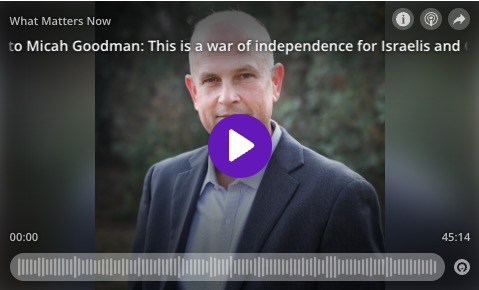
What Matters Now to Micah Goodman: This is a war of independence for Israelis and GazansAfter six months of war, the Jewish state is faced with only bad choices, but leaving Hamas in power in the Gaza Strip would be suicidal for both Israelis and Gazans, says author and philosopher Dr. Micah Goodman. On this week’s episode of ToI podcast What Matters Now, we revisit the raw conversation we had with Goodman six months ago, mere days after Hamas’s murderous attack, and see just how right Goodman’s predictions were.
🔔 Be sure to subscribe to What Matters Now on Apple Podcasts, YouTube, Spotify, or wherever you listen to podcasts.
🙋 Have something to share?We’d love to hear it! Join the discussion on our active ToI Community Facebook group. Keep tabs on new content and events on our Community Page. And please don’t hesitate to write to us with any suggestions, issues or questions. Thank you for your continued support of our independent journalism. ~ The Times of Israel Team
|


|
You are receiving this email because you are a member of The Times of Israel Community. If you would like to stop receiving community updates, please click below to unsubscribe.
|