Netanyahu’s bloc has a majority on Central Elections Committee. Can it stop Wednesday’s certification of the vote?
Not lawfully, and not for long: The committee’s only power is to verify the vote count, not to weigh Likud’s claims of irregularities, and Sohlberg has already refused the party’s bid for a delay
Israel’s official election results are set to be published on Wednesday and handed to President Isaac Herzog, triggering the process that will determine who gets the first chance to form the next government.
The Central Elections Committee convenes Wednesday morning to finalize the results. Committee chairman Noam Sohlberg, the deputy president of the Supreme Court, is then scheduled to deliver them to Herzog at the President’s Residence at noon. That handover, together with publication in the state gazette, constitutes formal certification of the election outcome.
Herzog will begin consulting the elected factions later the same day, asking each for its recommendation on who should be tasked with trying to build a coalition. In a departure from custom, he will meet the smaller factions first, starting with Religious Zionism at 5 p.m., followed by Shas and Yisrael Beytenu. The remaining factions are expected on Thursday, ending with Gadi Eisenkot’s Yashar and, finally, Likud on Thursday evening.
From the date of certification, Herzog has seven days — that is, until November 11 — to assign the task to one of the party leaders.
The challenge from Likud
Prime Minister Benjamin Netanyahu’s Likud and other outgoing coalition factions have sought to delay certification, citing two ongoing investigations into suspected election irregularities: a Shin Bet probe, now joined by the Mossad, into intelligence suggesting money from Qatar and other countries may have reached the Joint List through disguised donations, and a separate police investigation into alleged vote-buying in the Negev.
Earlier this week Likud argued that the “lack of clarity regarding their nature and scope” meant the committee should hold off on certifying the election results.
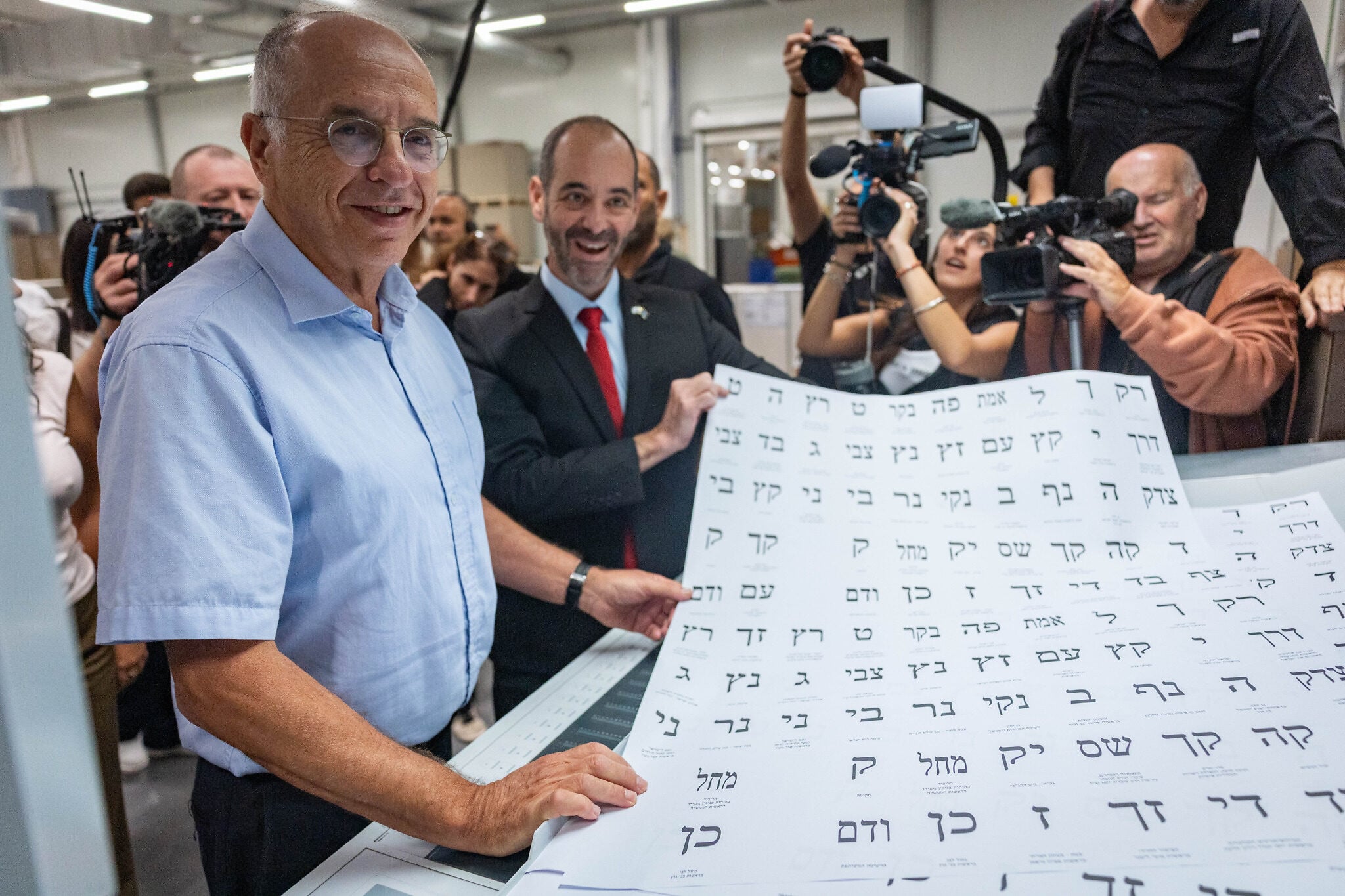
Sohlberg rejected the request, writing in a letter to a Likud lawyer that the committee has no authority to delay certification of the results based on information about investigations or law enforcement concerns.
He also noted that under Basic Law: The Knesset the results of the election must be published within eight days of the election, and that postponing publication would in effect extend the term of the outgoing Knesset — something that can only be done by a special majority of 80 MKs. Sohlberg has also said the investigations’ outcome will not have a material impact on the election results.
Could Likud block certification?
Netanyahu and his allies could attempt to block the committee’s certification, but not lawfully, and not for long.
The committee’s members are drawn proportionally from the factions of the outgoing Knesset, not the one just elected, so Netanyahu’s bloc holds a majority on it, and nothing physically prevents that majority from voting against certification on Wednesday morning. But such a vote would have no legal basis, and would be highly unlikely to survive scrutiny by the High Court of Justice.
The committee’s authority extends only to confirming the number of valid votes cast and their translation into Knesset seats — figures already determined by Sohlberg and his deputies from data transmitted by polling stations and regional election committees. Members may vote against if they identify errors in those calculations, and for no other reason. They cannot vote against in order to allow time to examine claims of irregularities, according to Nisreen Abo Asalh of the Israel Democracy Institute. Such challenges belong in the Jerusalem District Court sitting as a court for administrative affairs, she said, not in the committee.
A vote against certification on grounds outside the committee’s authority would constitute an “administrative failure.” Petitions could and doubtless would then be filed to the High Court, which would be expected to order the committee to certify the results on the basis of its actual legal mandate.
That kind of saga has never happened in Israel’s history — though in 2020, Likud representatives abstained and Shas representatives left the room during the committee vote confirming the results for the 23rd Knesset, over unsubstantiated claims of irregularities.
Presidential consultations
Likud was again the largest party in the October 27 vote, with 27 seats, but Netanyahu’s coalition of ultra-Orthodox and far-right parties lost its majority, taking 53 in all. The other 67 seats are divided between Jewish-led parties opposed to Netanyahu, with 48, and the Arab-led parties, with 19.
Neither the pro- or anti-Netanyahu blocs of Jewish-led parties has a clear path to a majority in the 120-seat Knesset. Hence the importance of Herzog’s consultations.