Cruz ends White House bid, clearing Trump path to nomination
After walloping in Indiana, Texas senator tells supporters: 'Voters chose another path'; Trump calls Cruz 'one hell of a competitor'
Texas Senator Ted Cruz is ending his presidential campaign, eliminating the biggest impediment to Donald Trump’s march to the Republican nomination.
Trump still must win about 200 more delegates to clinch the nomination. But his victory in Indiana — where he picked up at least 45 of the state’s 57 delegates — made it all but impossible for Cruz to block him from doing so.
Cruz, the conservative tea party firebrand who tried to cast himself as the only viable alternative to Trump ended his campaign on Tuesday after a stinging defeat in Indiana’s Republican primary.
“I’ve said that I will continue on as long as there is a viable path to victory. Tonight, I’m sorry to say that it appears that path has been foreclosed,” Cruz told supporters after the defeat.
“We gave it everything we’ve got, but the voters chose another path. And so, with a heavy heart, but with boundless optimism for the long-term future of our nation, we are suspending our campaign,” he said.
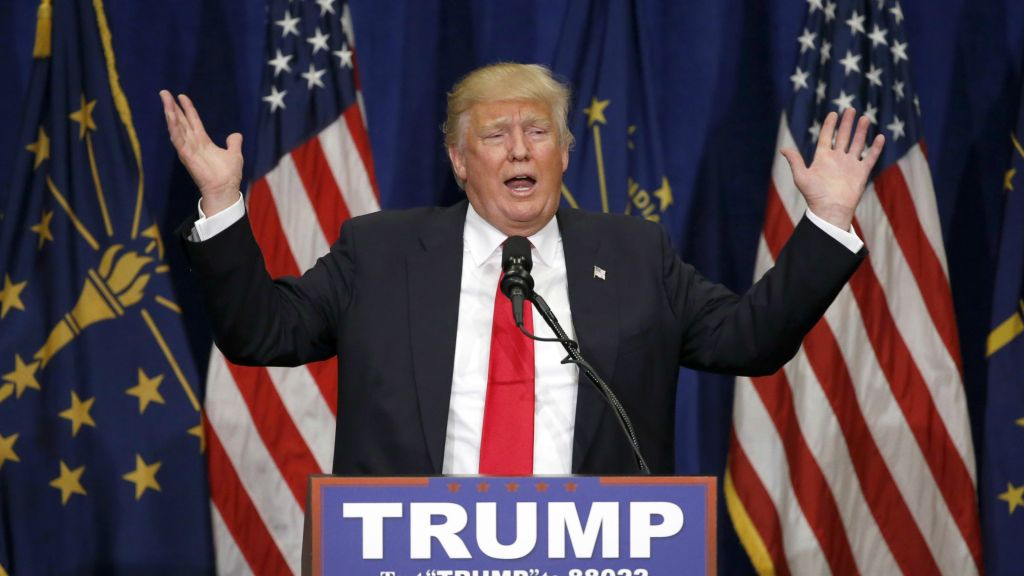
At his victory speech at Trump Tower in New York on Tuesday, Trump called Cruz “one hell of a competitor,” calling his decision to drop out of the race “brave.”
He said that while he wasn’t sure if Cruz likes him, he praised his former rival as a “smart” and “tough guy” who had an “amazing future” ahead of him.
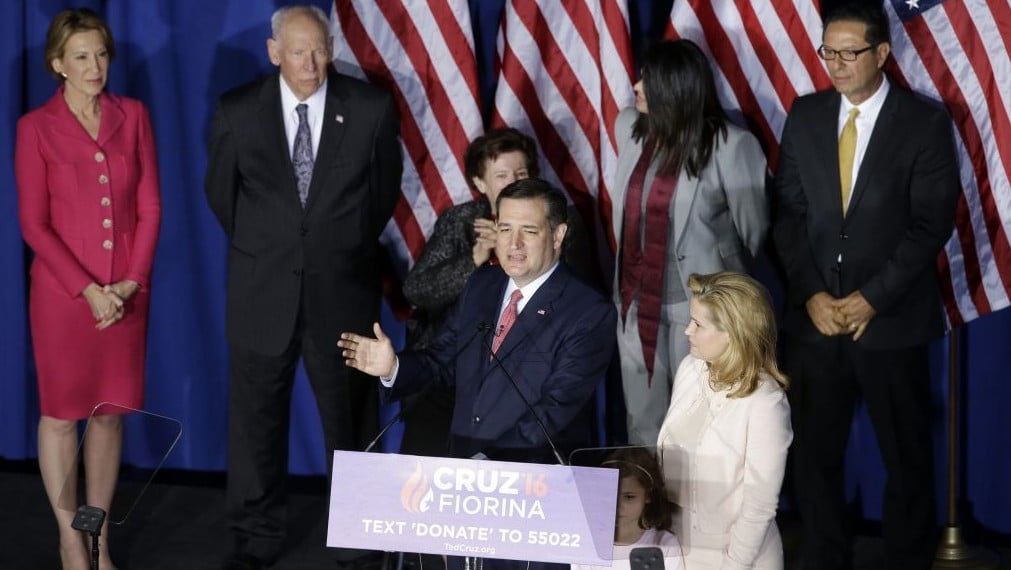
Had he succeeded in his quest, Cruz would have been the first US president of Hispanic descent, although he often downplayed his heritage on the campaign trail, instead, touting the need for tougher immigration laws, for a border wall along the border with Mexico, protecting gun rights, repealing President Barack Obama’s health care law and instituting a flat tax.
Cruz argued he was the only true conservative in the race, building on his reputation in the Senate where he clashed both with Democrats and members of his own party over his ideological stubbornness. Cruz railed against what he called the “Washington cartel,” trying to appeal to an electorate that is craving political outsiders.
But he ultimately couldn’t compete with Trump’s appeal among white, working class voters who were drawn to the billionaire’s outlandish approach to politics.
Cruz’s campaign placed its hopes on a data-driven effort to turn out conservative evangelical Christians who had opted out of recent presidential elections. Increasingly, he would modify his travel schedule to go where data showed there might be pockets of untapped supporters.
With the scale tipping increasingly in Trump’s favor, he announced an extraordinary pact in April with his other rival, Ohio Gov. John Kasich, in which the two would divide their time and resources based on states where they were each poised to do better.
Days later, he prematurely named former Hewlett-Packard chief executive Carly Fiorina as his running mate, hoping it would woo some of the female voters turned off by Trump’s brash rhetoric.
Trump’s appeal to evangelicals, though, and the New York billionaire’s popularity with the broader Republican electorate, proved too much.
Trump had repeatedly called on Cruz, and John Kasich to bow out.
Cruz’s exit leaves low-polling Kasich as Trump’s sole challenger.
Trump has now won seven straight primary contests and has 80 percent of the delegates needed to secure the GOP nomination. With his victory in Indiana, Trump now has at least 1,041 delegates.