Despite PA demands, Israel continues electricity supply to Gaza
Decision comes less than a week after COGAT head announced during an interview that Israel would reduce power supply
Israel was continuing to supply the Gaza Strip with electricity on Thursday despite a demand from the Palestinian Authority to reduce the power it supplies as the PA steps up its confrontation with the coastal enclave’s Hamas rulers.
The PA has been paying 40 million shekels ($11.3 million) a month for 125 megawatts, but recently said it was now only prepared to pay for 20-25 million shekels ($7 million) a month for electricity to Gaza.
If Israel had gone ahead with the electricity cuts, the hours of electricity supply in Gaza would have been reduced to about two to four hours a day instead of the current six.
Following the Palestinian decision, the Coordinator of Government Activities in the Territories (COGAT) Major General Yoav Mordechai had said he would cut the Gaza supply. But Energy Minister Yuval Steinitz’s stepped in to say that Israel would make the decision based on its own priorities and does not take orders from the PA.
Steinitz was set to meet with Mordechai in order to formulate a permanent position. Israel is concerned that further cutting electricity would further destabilize Gaza.
It is likely that Israel will continue to deduct the funds to pay for the electricity from tax revenues that Israel collects for the Palestinians.
It also comes amid an escalating struggle for dominance between the Islamic terrorist group Hamas and its West Bank-based rival, the PA of internationally backed President Mahmoud Abbas.
Abbas, whose government pays Israel for the electricity, has stepped up financial pressure on Hamas in recent weeks by by withholding funds to loosen the Islamists’ grip on power.
Gaza residents have adapted to worsening hardships with ingenuity and stoicism.
In some apartment buildings, residents have pooled resources to buy communal generators. Most Gazans buy food daily because they can no longer use refrigerators. Formerly routine activities such as showering or running a washing machine are done at odd hours, when power is on.
Gaza hasn’t had full-time electricity in more than a decade, largely because of the international isolation of Hamas, an Islamist terror group that seeks to destroy Israel. Israel and Egypt, which border the coastal strip, imposed a blockade on the territory after Hamas’s takeover in 2007, to prevent Hamas from importing weaponry. Since 2008, Israel and Hamas have fought three cross-border wars.
Since April, Gaza’s power crisis worsened, in part because of Abbas’s new aggressive strategy. After years of failed reconciliation efforts, he began cutting back Gaza support payments to pressure Hamas. The group says it will not yield.
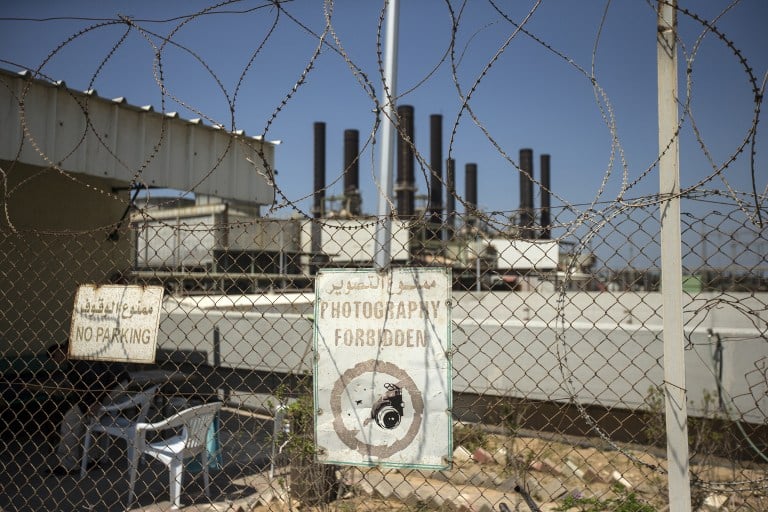
Gaza’s sole power plant stopped working in April, after it ran out of fuel that had partially been paid for by Qatar and Turkey, one-time regional backers whose support appears to have cooled off.

Hamas said it could not afford to buy new fuel, leaving Gaza with 10 power lines from Israel as the main source of electricity — about 30 percent of the territory’s needs.
Dov Lieber and Jacob Magid contributed to this report.