Despite the horrors of Oct. 7, the political loyalties of many Gaza border residents have not changed
3 years after unprecedented massacre, residents who lost homes, neighbors and family say Hamas's onslaught altered their worldview -- but they might not bring newfound fears and distrust to the polls
Three years ago, Zamir Haimi, 56, barricaded himself with his family inside the bomb shelter of their home in Kibbutz Nir Yitzhak, as the community’s security team battled Hamas terrorists who had infiltrated the kibbutz during the October 7, 2023, invasion of southern Israel.
For hours, the family remained trapped inside, surrounded by the sounds of rockets and gunfire, without food, water, or access to a bathroom, instead using a bucket as a makeshift toilet.
“The first thing that came to my mind was my mother’s stories,” he recalled. Both of Haimi’s parents were Holocaust survivors who immigrated to Israel and helped found Nir Yitzhak, where he has lived his entire life. “Although we didn’t go through exactly what they did… there was a strong connection between my mother’s stories and what we went through that day.”
For Haimi, a farmer and father of four, the nightmare did not end when the Israel Defense Forces regained control of the kibbutz at 3 p.m., nearly nine hours after the day’s first rocket siren.
His nephew, Tal Haimi, who led Nir Yitzhak’s security team, was killed fighting the terrorists and his body taken hostage to Gaza. For two years, his remains were held there before being returned to Israel on October 20, 2025, for burial.
Three years later, Haimi said October 7 has also left its mark on the politics of his community. Nir Yitzhak, like most Gaza border kibbutzim, has historically leaned toward the center-left, but the attack had pushed some residents in a different direction, Haimi attested.

“There are people who have moved more toward the right and adopted more radical views towards the Palestinians,” he said. “On the other hand, we are still people of peace.”
As Israel heads into its first election since 2022, the October 7 attack, ensuing wars and an ongoing fight over accountability have weighed heavily on Israelis deciding who they will vote for.
Nowhere is the impact more immediate than in the Gaza border communities that bore the brunt of the 2023 invasion, where residents saw their towns overrun, neighbors killed or abducted, and long-held assumptions about their security collapse.
A July 2025 survey of Gaza border region residents by Atid Laotef, a group dedicated to rebuilding the area, found that nearly 80 percent of respondents said the attack had changed their security outlook toward Gaza, with more than half saying their perception had shifted significantly.
Haimi said October 7 made him “less naive” — about Israel’s government and military, but also about Gaza and its residents. Before the attack, he had welcomed Gazans into his own home when they received permits to work in Nir Yitzhak.

Still, he said the experience had not fundamentally changed his own left-leaning politics.
“I’m going to vote for the Democrats headed by Yair Golan,” said Haimi, who has become heavily involved in activism for the left-wing party, ahead of the upcoming election. He described the Democrats as a party of “people whose hearts are in the right place,” which he said was a major reason for his support.
Indeed, alongside newfound misgivings regarding the intentions of Gazans, the attack has also inspired a deep erosion of trust in the current national government: 76.8% of respondents to the Atid Laotef survey said they had little or no trust in it, compared with 69% who expressed trust in their local authorities.

Atid Laotef said the disparity showed that “residents of the [Gaza] envelope trust what is close, proven and present, not what is distant, institutional, and disconnected.”
That emphasis on proximity also surfaces in how some Gaza envelope residents describe their political choices: ahead of the October 27 election, many appear drawn to politicians who have visited their communities and stood alongside them in the three years since Hamas’s October 7 onslaught.
“For the most part, the Knesset members and politicians who have come belong to the [left-wing] camp,” Haimi said, citing Naama Lazimi and Gilad Kariv of the Democrats, who have often visited the Gaza border region and taken part in anti-government protests since October 7.
A second Gaza area resident, who asked to remain anonymous amid heightened tensions ahead of the election, echoed that sentiment. She plans to vote for the Democrats, but also spoke positively of B’Yachad chairman Naftali Bennett, who recently visited the Nova festival site near her hometown of Kibbutz Re’im to mark the attack’s third anniversary, alongside other opposition leaders.
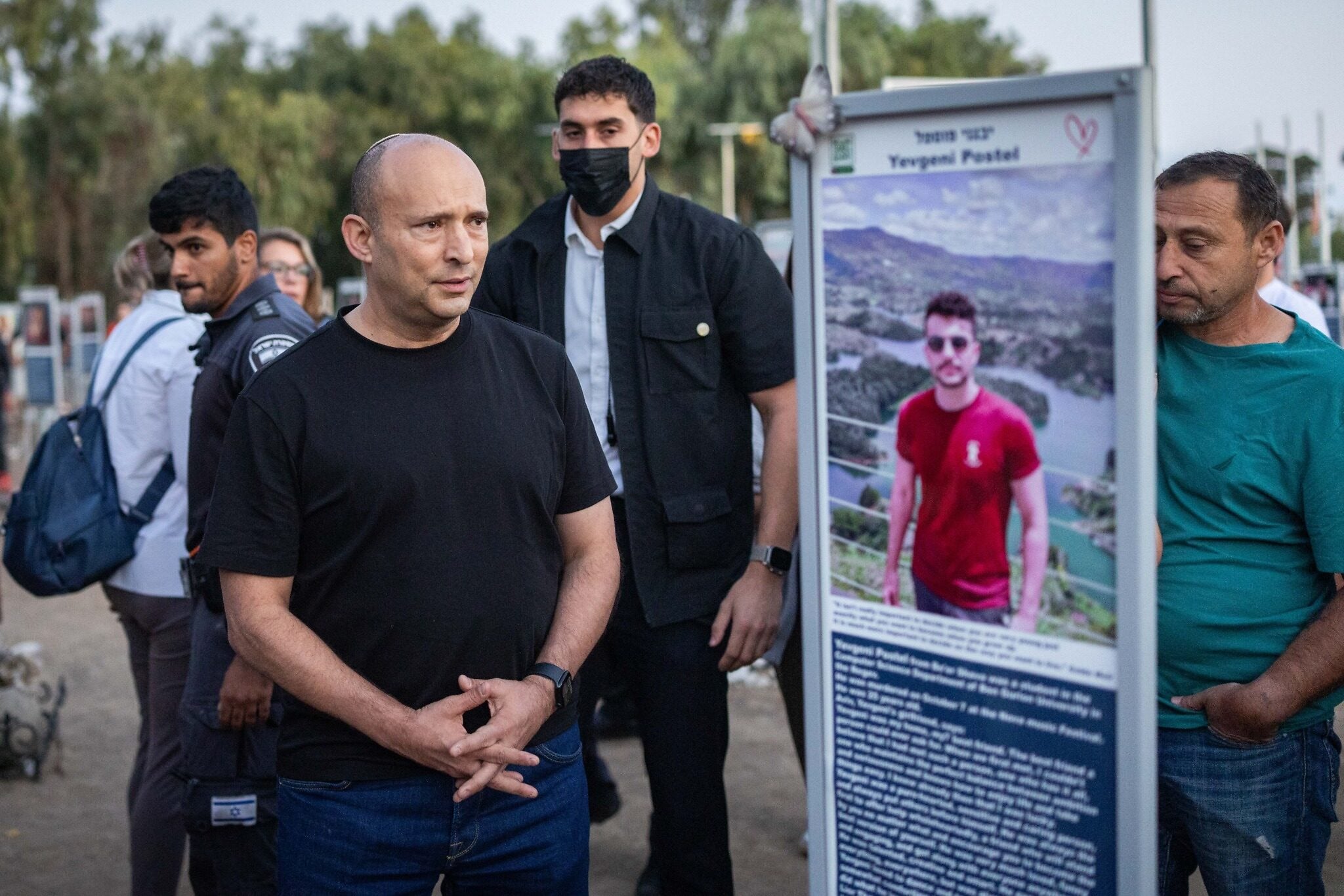
Meanwhile, Prime Minister Benjamin Netanyahu skipped memorial events on October 7 itself, attending only state ceremonies two days earlier. His direct outreach to the hardest-hit kibbutzim has been limited since October 7: he toured Be’eri and Kfar Aza shortly after the attack and spoke with soldiers there, and later toured Nir Oz, but has largely avoided meeting directly with area residents.
The Re’im resident recalled spending October 7 locked in her shelter with her family, like Haimi and countless others who survived the attack. She called it a “stroke of luck” that the terrorists who infiltrated the kibbutz did not break into her home.
She and her family have yet to return to Re’im, and now live in central Israel. Lingering security fears have left her unsure whether they will ever go back.
“I’m certain it will happen again,” she said of the October 7 onslaught, the deadliest in the nation’s history. “It’s just a question of when.”

After the attack, her community was evacuated to Eilat, where they spent two months. She said no government representative or Knesset member came to visit them during that time.
“The only people who worked and functioned were civilian actors and volunteers,” she said, adding that politicians on “both the right and the left” had left her disappointed, with her trust in the government having since significantly deteriorated.
Loyalty runs deep, but dissent surfaces
A September survey by the Israel Democracy Institute (IDI) found that 68% of Jewish Israelis polled said October 7 would be a central factor in deciding which party to vote for on October 27, though polls show that many deep-seated political divisions remain as they were before the attack.
Politically, the Gaza border region has long been divided. In contrast to the largely secular center-left kibbutzim, nearby towns and cities such as Sderot and Ashkelon have been strongholds of Likud and the broader right.
That divide was clear in the 2022 election. The IDI classified kibbutzim as center-left strongholds, while larger southern cities gave clear majorities to the right-wing bloc.
Netanyahu and Likud have long campaigned heavily in cities where they enjoy strong support. Ahead of Rosh Hashanah, Netanyahu visited a hesder yeshiva in Sderot, where he was greeted with an overwhelmingly warm reception.
שדרות, תודה על האהבה! pic.twitter.com/0gA1c9FFBn
— Benjamin Netanyahu – בנימין נתניהו (@netanyahu) September 3, 2026
Three years after Hamas terrorists overran the city, a bastion of Likud support, many residents still plan to vote for Netanyahu.
“Our city is a right-wing city,” said local Yehuda Gosman, 64, at a neighborhood cafe.
Outside, Likud campaign signs lined the streets alongside posters for far-right candidates National Security Minister Itamar Ben Gvir of Otzma Yehudit and Finance Minister Bezalel Smotrich of Religious Zionism.
Asked whom he planned to vote for, Gosman said, “Netanyahu and Likud, of course.”
“I’ve been right-wing since I was little,” he explained. “For me the [political] right means security.”
From his conversations with other residents, Gosman estimated that roughly 90% of the city was also right-wing.
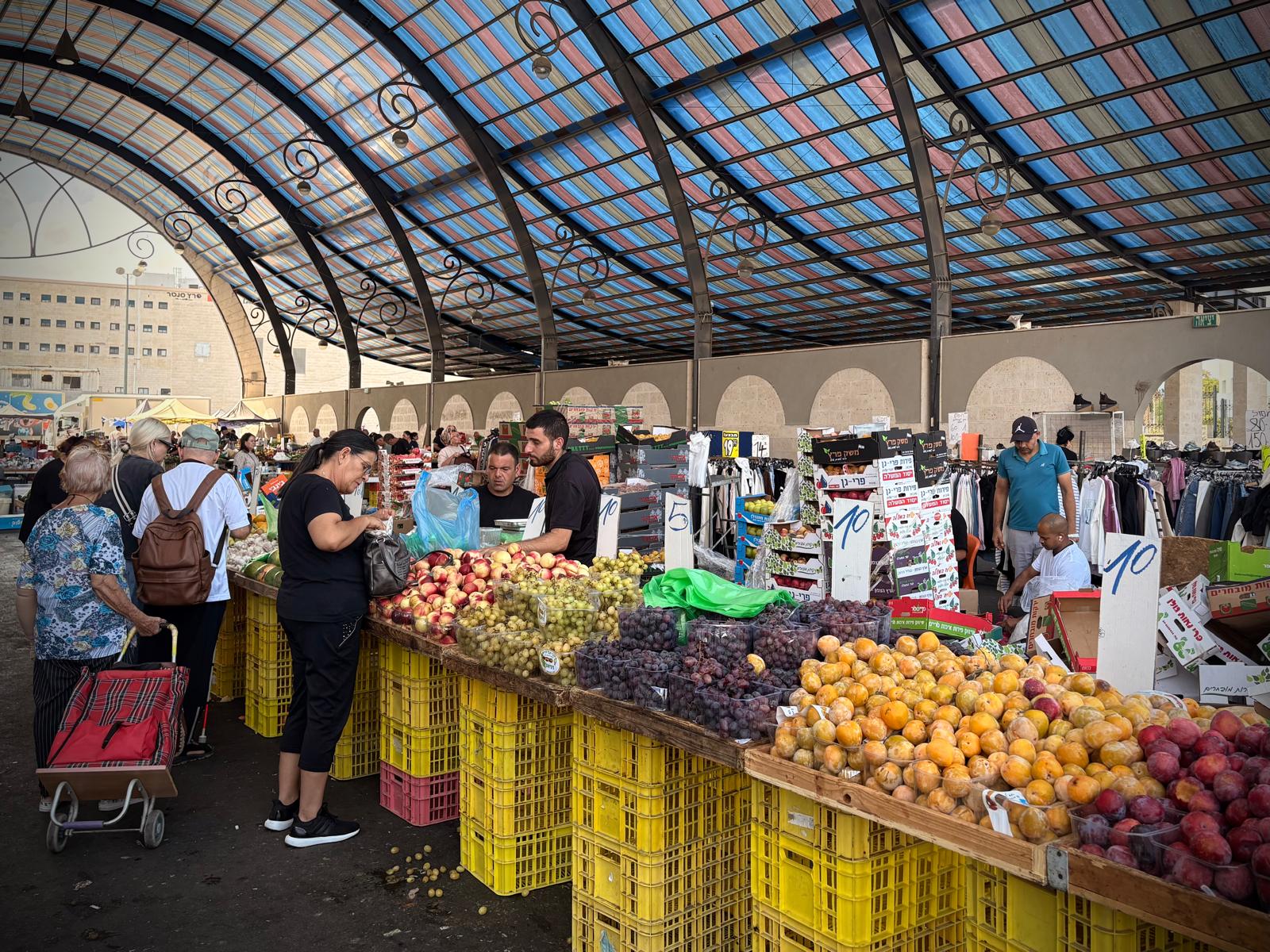
In 2022, over 40% of Sderot residents voted Likud, with another 25% going for Religious Zionism.
Rifts are visible, however.
At a fruit stand, a vendor needed only two words to sum up his politics: “Only Bibi,” the prime minister’s nickname.
Most of the customers gathered around his stand and nodded along. Then one pushed back.
“All he’s brought us is disaster,” the customer said, hinting that he planned to vote for front-runner Gadi Eisenkot of the centrist Yashar party.
“So what, you want the Arabs to take over?” the vendor replied, echoing claims by Netanyahu and his allies that Eisenkot would need Arab parties to form a government.
The argument ended as quickly as it began. Before turning back to his customers, the vendor tried to recruit this reporter to help reelect Netanyahu come election day.
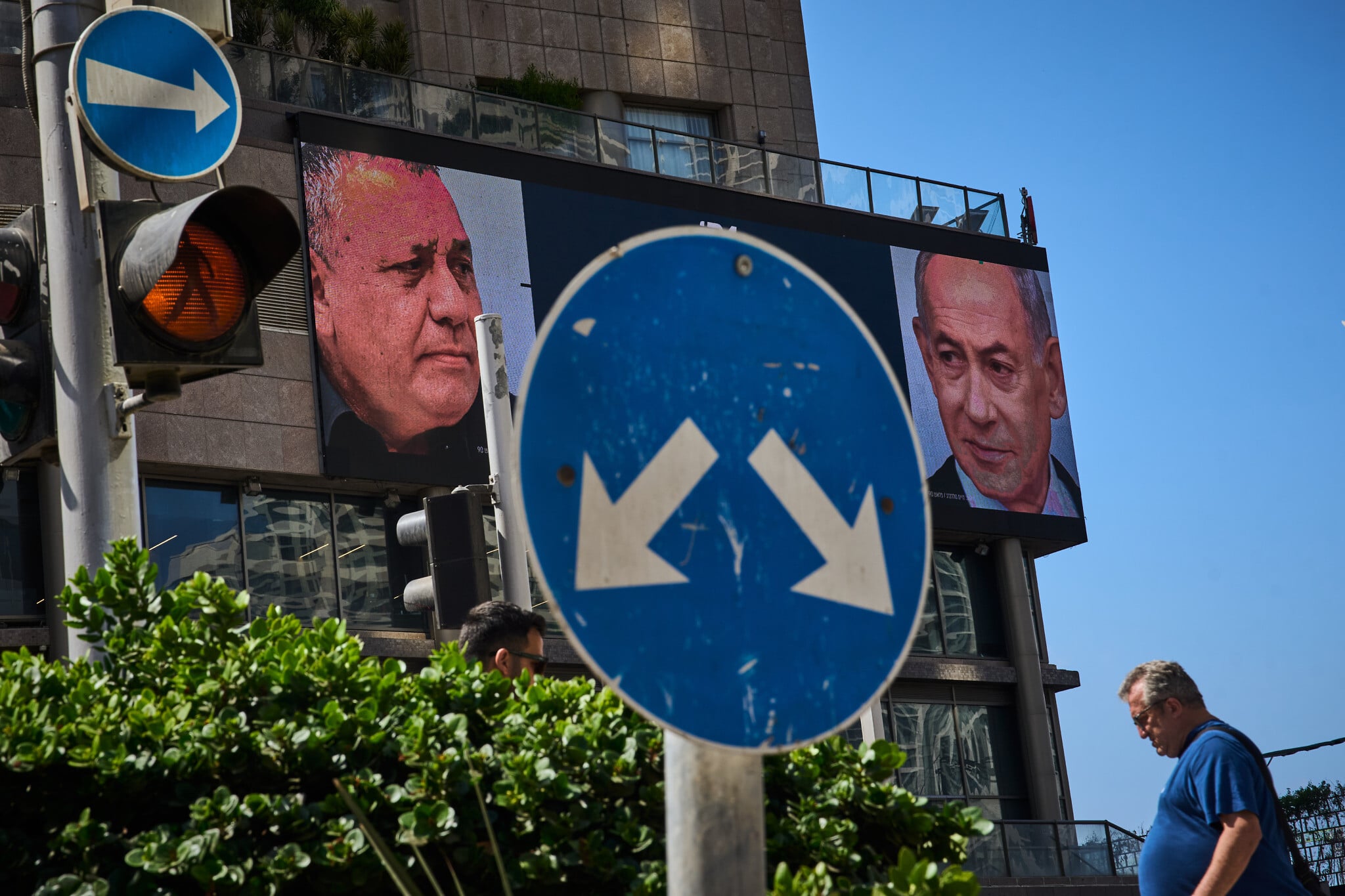
A short drive away from Sderot sits the city of Ashkelon, which came under heavy Hamas rocket fire on October 7 and in the days that followed. Less than two weeks into the war, the government officially designated it a frontline community, despite it being outside the official border zone.
There, residents were more hesitant to speak openly about their politics.
At the central bus station, a wall was covered with stickers bearing the faces of people killed in Hamas’s October 7 onslaught and soldiers who fell in the war that followed — a familiar sight at bus and train stations across Israel. A woman who asked to remain anonymous stood before the makeshift memorial.
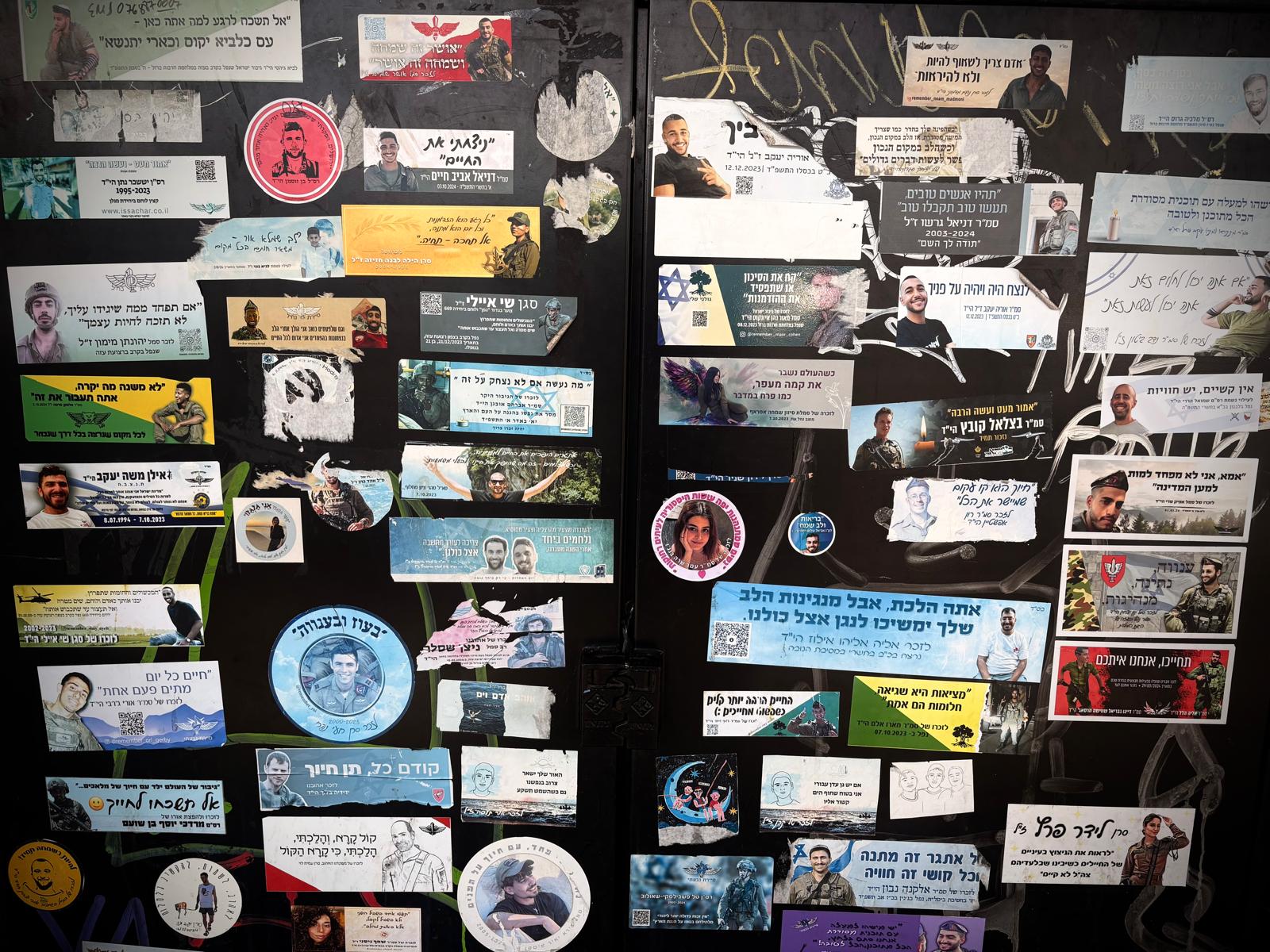
“It breaks my heart,” she said, her gaze moving across the smiling faces.
She told The Times of Israel she had yet to decide whom to vote for. But on one point, she was certain.
“Anyone but Bibi,” she said. “I’m not satisfied with anything he’s done in the past few years.”
Betrayed by ‘Mr. Security’
That sentiment is not unusual in longtime Likud strongholds around the Gaza border, where even some of Netanyahu’s most loyal voters have turned against him since the Hamas-led October 7 attack.
Einav Zangauker, mother of former hostage Matan Zangauker and one of the most outspoken advocates for the captives’ release, voted for Netanyahu for her entire adult life.
“I’m the one who voted for him from the moment I had the right to vote; I believed in him,” Zangauker, a native of Ofakim, a traditionally right-wing city near the Gaza border, said of the premier earlier this year.

But her fight to secure her son’s release after October 7 convinced her that “politics in the State of Israel is rotten to the core” and that politicians “don’t act in the public interest.” She described ousting the current government as her “life’s mission.”
During Matan’s captivity, she regularly assailed Netanyahu at protests she helped organize around the country. Since his release, she has continued to criticize the government and demand a fully independent, wide-ranging investigation into the failures surrounding October 7 — a step Netanyahu and his allies have resisted.
Zangauker has also remained the target of death threats and online attacks from supporters of the prime minister, whom she has accused of being directly responsible for a smear campaign against her and other hostage families.
Her campaign against Netanyahu has extended beyond the ballot box. In January, she said she was considering entering politics to help “send home everyone who had their hand on the wheel on October 7, first and foremost, Netanyahu and the Likud party.”

Zangauker had expected to be given a reserved spot on The Democrats party slate, but Golan ultimately gave up his power to reserve candidates, leaving her off the list. She said it was his decision and that she was “obviously disappointed.”
In a recent Channel 13 interview, Zangauker described the moment her faith in Netanyahu began to unravel, recalling a meeting with hostage families that she said Sara Netanyahu attended with her stylist.
“The prime minister focused, for the whole meeting, on talking about how great he was, how great of a fighter he was,” she said. “He spoke of his brother Yoni [who was killed in the 1976 raid on Entebbe] and his heroism.”
“I saw the disrespect of the prime minister and his wife,” she said. “This crazy PR stunt that was being done on the backs of the [hostage] families. It wasn’t easy to realize that [this was] the person I believed in and thought of as ‘Mr. Security.’ I felt betrayed.”