Down the drain
Like every year, central Israel is flooded with the first rains, and pundits wonder if Israel 'shall forever live by the puddle'
With massive floods hitting central Israel on Wednesday, turning the streets into murky brown canals, the Hebrew papers are awash with moaning about Israel’s lack of drainage and general inability to deal with wintry weather.
“The flood,” reads Yedioth Ahronoth’s headline. “Floating in problems,” Israel Hayom’s headline says. The papers are filled with photos of disgruntled Israelis walking though waist-deep water, and some cheerful teenagers with surfboards taking to the suburban streets.
“They say that lightning doesn’t strike twice in the same place, but try telling that to the residents of the Sharon region,” writes Israel Hayom.
“A short while after the electric company announced excitedly at noon that only one building in Herzliya remained cut off from power after the big storm, it turned out their joy was premature and the skies had other ideas. In just one hour, no less than 70 millimeters of rain fell on Raanana and Kfar Saba, and results were discouraging. Entire streets were flooded, infrastructure collapsed, and the power cuts returned. The number of those cut off quickly climbed from one building to 20,000 people (and went down by last night to 180 households), but the big story was the floods. In many places, the water reached 80 centimeters high and buried beneath it any possibility of continuing in our routine.”
Over in Yedioth, columnist Raanan Shaked paraphrases Prime Minister Benjamin Netanyahu’s reported comments that Israel will “forever live by the sword” and says the real problem is not the sword, but the puddle.
“I was pretty astonished by this defeatist response, but meanwhile that question has become almost marginal compared other, much more pressing questions: shall we forever live, each and every winter, in a giant puddle that cannot be crossed? Shall we forever live without power for large periods of time? Shall Israeli cities forever flood with the first rains?… I presume that just like our sword, the answer is yes, yes and yes. And I presume that just as there is no partner, there is no infrastructure, no drainage, no responsibility, no lessons learned or conclusions and most of all, no chance or hope that anything will ever change,” he writes.

Over in Haaretz, the daily writes that police received hundreds of calls for help throughout Wednesday. “We dealt with streets where the waters were a meter-and-a-half high,” a cop tells the paper. “People were stuck in their cars or their houses and couldn’t get out.”
And if Israelis didn’t have enough reason to detest the electric company already, a State Comptroller report released Wednesday indicated that the public had paid NIS 4-6 billion from 2008 to 2013 toward extra workers employed at the electric company.
Haaretz’s leads its coverage with a report that Netanyahu is considering creating a special court for security matters.
The prime minister announced the proposal in Monday’s Knesset Foreign Affairs and Defense Committee meeting, it reports, citing two Knesset member who were present. The Prime Minister’s Office confirmed the report, but would not elaborate.
“MKs present at the meeting assessed that Netanyahu seeks to have this special court deal with cases of administrative detention, revoking citizenship and residency from terrorists, house demolitions, and acts of terror, funding [terror] and [terror] accomplices,” it reports.
The paper also reports that a new contested pyramid high-rise building planned for the Jerusalem skyline will be downsized.
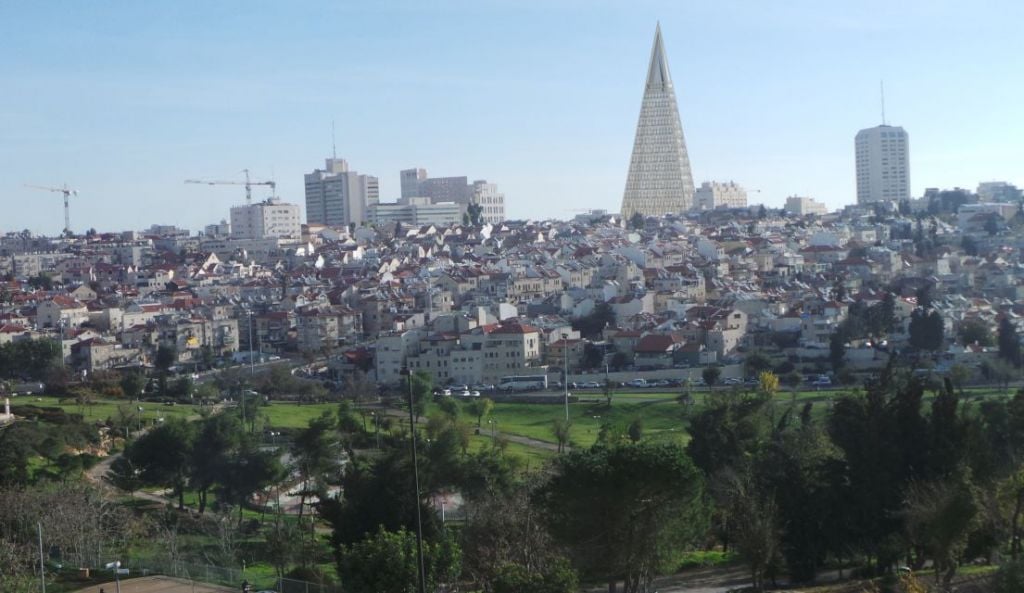
“A Jerusalem municipal committee this week significantly curtailed plans to construct a pyramid-shaped skyscraper in the capital’s center. The committee reduced the height of the planned building, known as the Eden Tower, from 165 meters to 118, following objections by architects, preservation experts, environmentalists and the public. The tower was designed by architect Daniel Libeskind. The developers of the building will now have to decide whether to preserve the pyramid form and reduce it significantly or change the structure,” it reports.