Syrian Druze have more to fear from Nusra than Islamic State
The besieged minority worries that rebels will fill a vacuum if the regime collapses in their region
One of the pillars of the secretive Druze religion is hafiz al-ikhwan – to be your brother’s keeper. Perhaps this is the reason Israeli Druze in the Galilee and Golan mobilized so quickly to raise awareness of the fate of their Syrian brethren, under the gun of advancing jihadi rebel group.
Yet, despite various reports published in Israel and throughout the Western world over the weekend focusing on the threat from Islamic State, a careful analysis of developments on the ground indicates the 450,000 or so Druze in the southern Daraa province, informally called Jabal al-Druze or Mount Druze, are not in any immediate danger from IS.
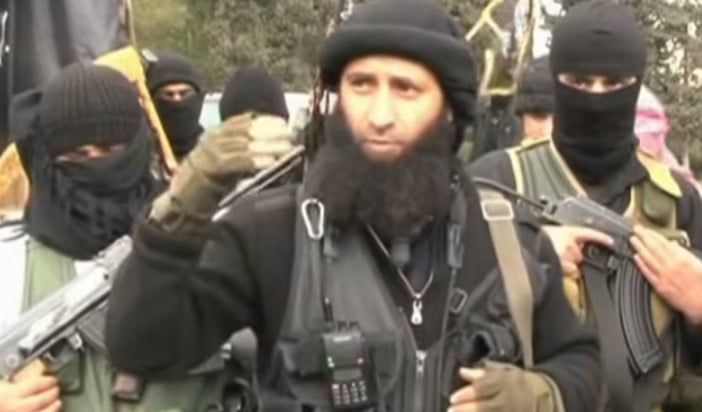
This does not by any means imply that Druze have no cause for concern. The threat is not necessarily from IS, but from the al-Nusra Front, al-Qaeda’s affiliate in Syria which until now has been often considered more tolerant toward minorities than Islamic State.
But last week’s massacre of some 25 Druze by Nusra gunmen in the northwestern Syrian province of Idlib has become a watershed moment for Israel’s community.
The local Nusra governor Abu Muhammad al-Tunisi (who is actually Libyan) seized the home of a local Druze family in the village of Qalb Lawzeh, leading to a shootout in which two dozen people were killed.
Reports of the incident spread like wildfire, quickly reaching Druze in Israel and prompting demands to intervene in order to prevent a massacre of their Syrian kin.
The Lebanese Druze political leader Walid Jumblatt described the event in as a one-off incident, a “local event.” For now, he seemed to say, there did not seem to be any persistent ill will on the part of al-Nusra toward the Druze. Nusra has even issued an uncharacteristic formal apology over the massacre.
But the more significant potential threat stems from developments in Daraa.
Bashar Assad’s forces suffered a resounding defeat there last week when it lost one of its most important military bases to the rebel Southern Front (SF). Understanding his forces faced a rout, he ordered a retreat and redeployed the 52nd mechanized brigade based there to the outskirts of Damascus in order to consolidate his hold on the capital.
No shortage of spoils fell into rebel hands, including heavy arms like Russian anti-aircraft batteries.
The abandonment of such a prestigious base has left the area under the domination of the SF, a consortium of opposition groups who often work in tandem with Nusra.
With the major Druze city of Sweida nestled inside the Daraa province, residents worry Assad may abandon the Druze enclave altogether in order to ensure his regime’s survival. It should be stressed that in Idlib, Daraa and al-Khader (another Druze enclave in the Syrian Golan Heights which is a bastion of support for the regime), there is tension between Druze and the non-IS-affiliated opposition.
Such an event could mean that Nusra, were it to take over Daraa, might take revenge on Druze for supporting Assad over the course of the war.
In such an event, no one would be able to come to their aid.
For now at least, IS is about 200 kilometers away from the area. It is also preoccupied now by the progress of Syrian Kurdish forces (YPG) in the north at the border city of Tal Abyad. The Kurds have successfully conquered a number of towns around the city, cutting off supply lines from Turkey to the Islamic State’s capital in al-Raqqa.
But while this news is encouraging to IS’s enemies elsewhere, it is doubtful if it can allay the concerns of the Druze, who fear retaliation by other rebels or a future IS push westward into areas that the Syrian army cannot hold.