Dublin hotel canceled bookings for antisemitism conference, Jewish leader charges
The city's Herbert Park Hotel nixed reservations for 70 guests after learning that the conference would focus on fighting Jew-hatred, official says
A Dublin hotel canceled a reservation for 70 rooms for delegates attending an international conference on combating antisemitism after learning the purpose of their visit, according to a senior representative of Ireland’s Jewish community.
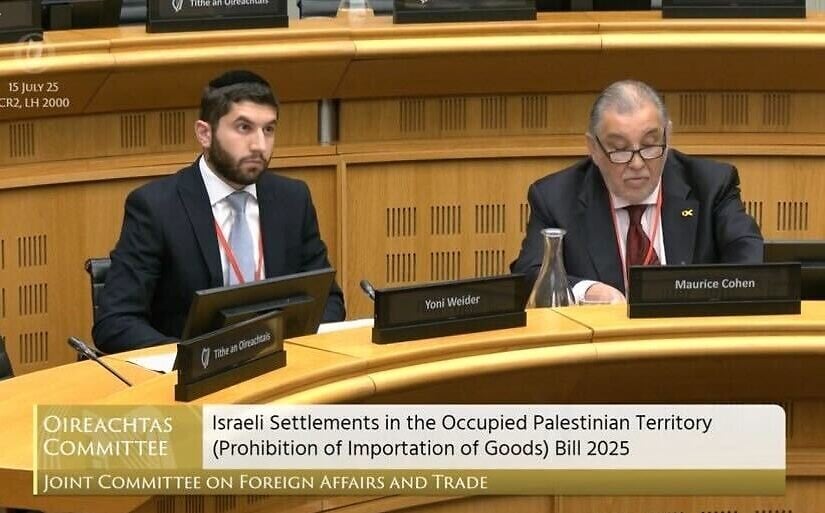
Maurice Cohen, chairman of the Jewish Representative Council of Ireland, disclosed the incident at a reception at the Irish Foreign Ministry Tuesday night marking the opening of a meeting of the Special Envoys and Coordinators Combating Antisemitism (SECCA), a group supported by the World Jewish Congress and the European Commission.
In an address shared with The Times of Israel, Cohen said the Herbert Park Hotel, in Dublin’s Ballsbridge neighborhood, initially accepted the booking for delegates representing the European Union’s 27 member states, but later withdrew it.
Cohen described meeting with the hotel’s general manager after the room reservations were confirmed. After he explained the gathering’s purpose, “I noticed her manner change. There was a tension that had not been there before.”
Cohen said she then asked if the IDF would be involved with the gathering, a question that took him by surprise.
“We were talking about a conference in Dublin on antisemitism, attended by Jewish community representatives, diplomats, civil servants and government officials,” Cohen said. “Nothing I had said had anything whatsoever to do with the Israeli army, yet somehow that was where the conversation had gone.”
After that, Cohen said, the manager said she would have to check with owners to see if the guests would be permitted to stay there. A day later, she came back with an answer: They could not.
“There is an uncomfortable irony in organizing an international conference to discuss antisemitism and finding that, before the conference has even begun, you have already encountered something that forces you to ask exactly the questions the conference was created to address,” Cohen said. “How quickly does the word ‘Jewish’ change a conversation? How easily does a gathering about antisemitism become associated with the Israeli army?”
Delegates were eventually put up in a different hotel in Dublin, and the meeting took place as planned.
The Herbert Park Hotel told The Times of Israel it would not comment on the report.
“That is the danger of antisemitism today: not only that it excludes Jews, but that it makes their exclusion appear reasonable,” Cohen said in his speech. “It begins by treating Jewish identity as evidence of political allegiance. It turns Jewish people into representatives of a foreign state, Jewish gatherings into security concerns, and ordinary acts of welcome into decisions requiring special permission.”
The decision was surprising for the hotel, which is quite familiar with Jewish guests, Ireland’s Chief Rabbi Yoni Wieder commented.
“To the best of my knowledge, there’s never been any problem in the past, so it’s a particular shame coming from the Herbert,” Wieder said. “Sadly, these things don’t come as much of a surprise anymore.”
The event was held in Ireland as the country holds the Presidency of the Council of the European Union, Cohen noted. Part of its purpose was to underscore the country’s commitment to the International Holocaust Remembrance Alliance’s working definition of antisemitism.
The three-day gathering included a meeting with Ireland’s head of government, Micheál Martin, visits to the European offices of TikTok and Meta, and other high-level discussions.
The incident comes amid growing concerns among Irish Jewish leaders over antisemitic incidents and anti-Israel sentiment in the country. Ireland’s community of approximately 2,200 Jews recorded 143 antisemitic incidents between July 2025 and January 2026, according to Cohen.