Egypt’s president praises 2011 uprising, urges patience
Sissi says uprising that toppled Mubarak revived 'noble principles,' and that 2013 protest ahead of coup 'corrected' hijacked protest movement
CAIRO — Egypt’s president paid tribute on Sunday to the country’s 2011 uprising that toppled longtime ruler Hosni Mubarak, saying that protesters killed during the 18-day revolt had sought to revive “noble principles” and found a “new Egypt.”
President Abdel-Fattah el-Sissi delivered his remarks via a televised speech on the eve of the fifth anniversary of the uprising. A recent spate of arrests and a heightened security presence in the capital Cairo have made clear Egyptian authorities’ determination that the occasion will not be marked by popular demonstrations— or armed attacks.
Sissi said the 2011 uprising had deviated from its course and was forcibly hijacked for “personal gains and narrow interests.” That was a thinly veiled reference to the Muslim Brotherhood, which has been banned and declared a terror group after Sissi, as military chief, led the ouster in July 2013 of Islamist President Mohammed Morsi, who hails from the Brotherhood.
The “June 30 revolution” — a reference to the day in 2013 when millions of Egyptians demonstrated on the streets against the rule of Morsi and his Muslim Brotherhood — corrected the course of the 2011 uprising, Sissi said.
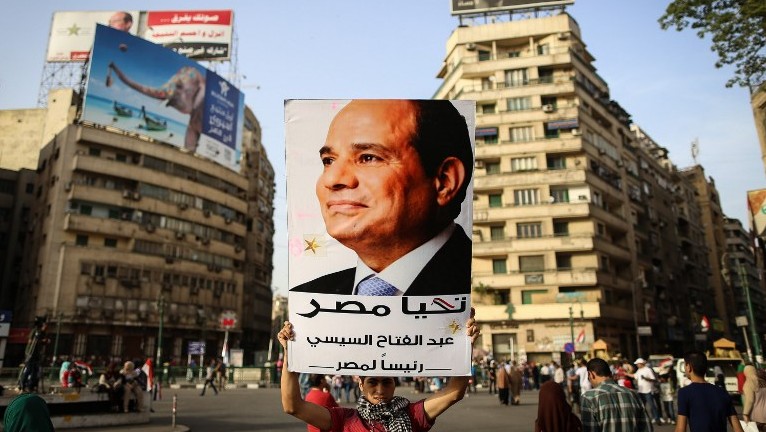
The June 30 revolution, he said, took place to “restore the free will of Egyptians and continue to realize their legitimate aspirations and deserved ambitions.”
Sissi, who came to office in 2014 after a landslide election win, cautioned against high expectations for democracy and freedoms.
“Democratic experiences don’t mature overnight, but rather through a continuing and accumulative process,” he said, before emphasizing the need to exercise “responsible freedom” to avoid “destructive chaos”— rhetoric harking back to Mubarak’s 29-year authoritarian rule, when he repeated assertions that gradual democratization ensures stability.
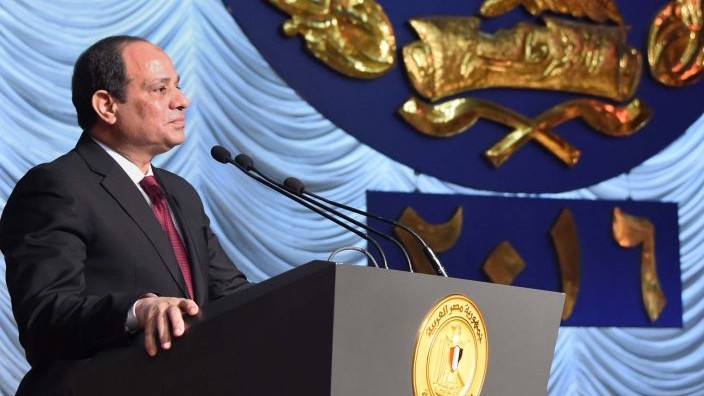
“Egypt today is not the Egypt of yesterday, we are building together a modern, developed and civilian state that upholds the values of democracy and freedom,” he said of the 2 ½ years since the removal of Morsi, Egypt’s first freely elected president.
Sissi has since presided over one of the harshest crackdown seen in Egypt in decades, detaining thousands of Brotherhood leaders and supporters as well as scores of the liberal, pro-democracy activists who fueled the 2011 uprising.
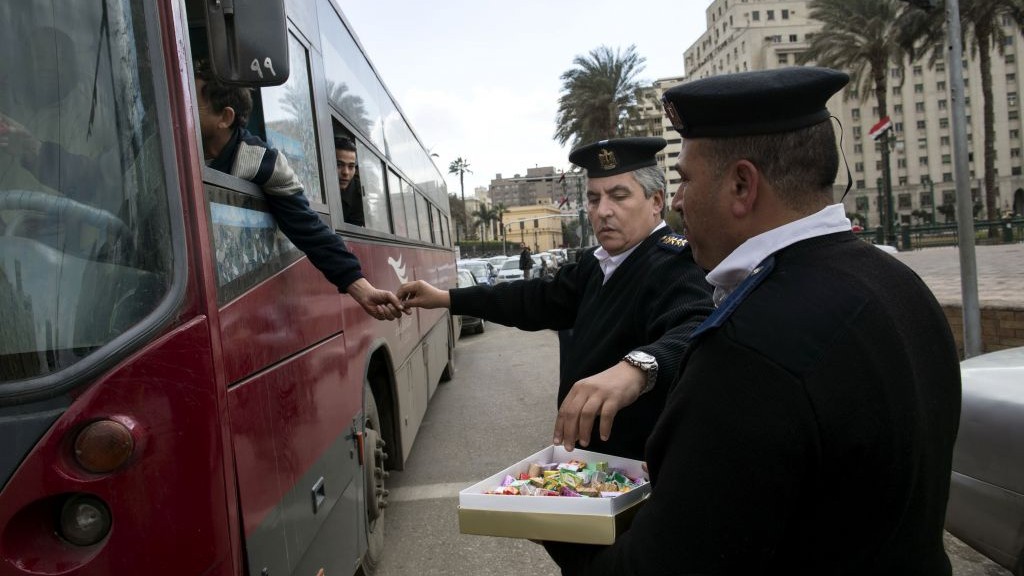
Under Sissi, rights activists say, the country’s highly militarized police have resumed the Mubarak-era practices that played a large part in igniting the uprising, including torture, random arrests and, more recently, forced disappearances.
Sissi supporters, however, say the ex-general has tirelessly worked to spare Egypt the chaos and bloodshed roiling regional neighbors like Libya, Syria and Iraq.