Eisenkot challenges Netanyahu to a televised debate before national election
Yashar party says leadership candidates owe the public 'full, direct and honest answers'; latest poll shows Eisenkot's faction predicted to receive 23 seats to Likud's 21
Yashar party chief Gadi Eisenkot called on Sunday for Prime Minister Benjamin Netanyahu to face him in a televised debate ahead of the October 27 election.
In an official letter, Yashar wrote that “anyone seeking to lead [the country] is obligated to give full, direct and honest answers to the voters.”
“In 23 days, Israel will hold what is the most consequential election in its history, at a critical crossroads for the security and future of the State of Israel,” the Yashar party added. “On October 27, three years after the October 7 failure — the gravest failure in Israel’s history and the most devastating disaster the country has ever experienced — the people of Israel will choose a leader.”
The party set out terms that would see the debate moderators be journalists selected by the country’s TV news networks; a format that allows “substantive and comprehensive answers” and will be broadcast by all Israeli news outlets; and for the rules of the format and allocation of speaking time to be determined jointly by the campaigns and the moderators.
Netanyahu has avoided debates in previous election cycles, and is seen as unlikely to agree to take part in one this year.
Eisenkot followed up the call on Sunday evening with a post on X reading: “What are you afraid of?”
Netanyahu’s Likud party responded to Eisenkot’s post, writing: “The government that you will establish with [Ra’am chief Mansour] Abbas, [Joint List MK Ahmad] Tibi, Yair Golan and [Avigdor] Liberman. We won’t let that happen.”
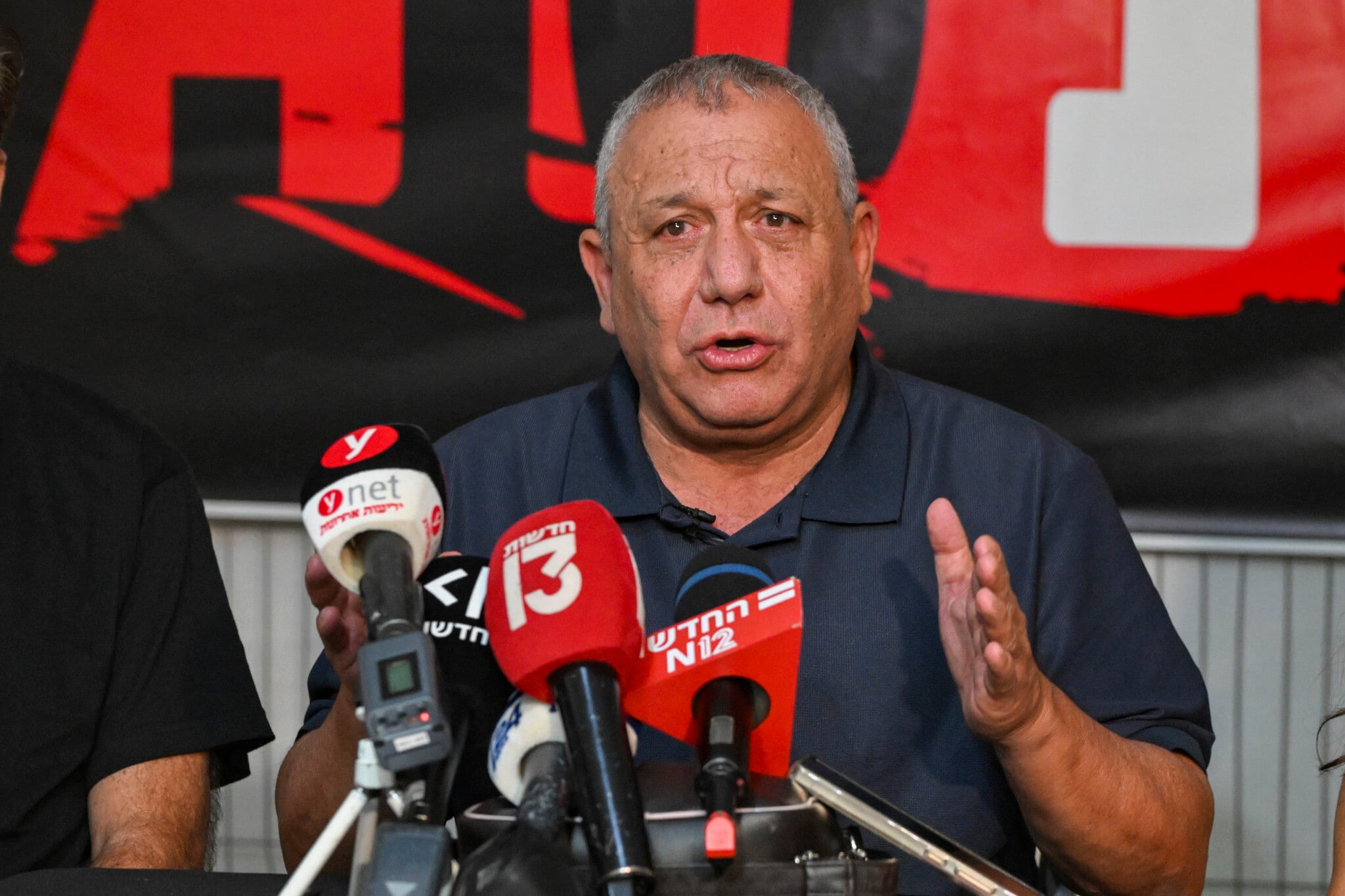
Most polls in recent months have predicted that Yashar will be the largest party following the upcoming national election, positioning Eisenkot as a potential future prime minister.
A Kan public broadcaster poll published Sunday evening projected 23 seats for Yashar, compared to 21 for Netanyahu’s Likud.
The B’Yachad slate headed by former prime ministers Naftali Bennett and Yair Lapid would get only 12, while Avigdor Liberman’s Yisrael Beytenu would receive nine and The Democrats would get eight seats.
The poll predicted eight seats for Otzma Yehudit, Shas, United Torah Judaism and the Joint List. The Religious Zionism party was projected to get six seats, Ra’am five and the coalition of Yoaz Hendel and Yaron Zelekha’s factions would receive four.
Ofer Winter’s People of Israel party would fail to pass the electoral threshold, the poll showed.
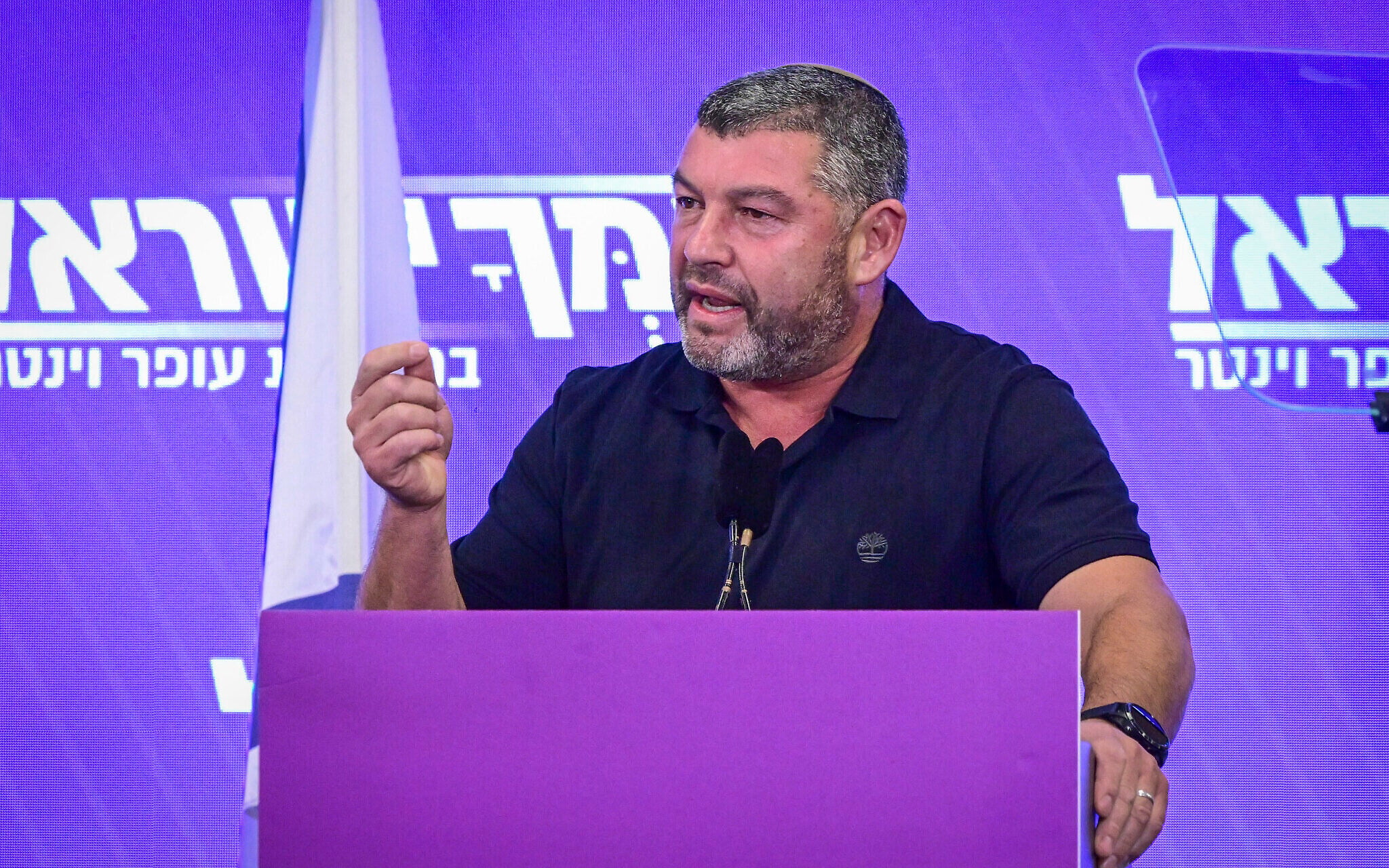
Such an outcome would leave the supposed pro-Netanyahu bloc with 51 seats and the so-called “change bloc” with 52 seats, with 13 seats going to Arab parties and four to the uncommitted Hendel-Zelekha party. Some party leaders in the “change bloc” have expressed support for forming a government with the Abbas-led Ra’am party, while others have ruled out doing so.
The survey of 553 respondents was carried out by Kantar Israel and had a margin of error of ±4.2%.
While horse-race polls are an almost daily occurrence in Israel in the months leading up to elections and are not seen as overly reliable, taken together the surveys can often serve as a general gauge of the political climate and where the vote may be headed.