Eisenkot edges closer to government as his party announces coalition deal with Democrats
Yair Golan’s left-wing party to get 4 portfolios; Abbas predicts Ra’am will be included; Bennett continues unity government talks with Likud, but doesn't explicitly rule out relying on Arab-led parties
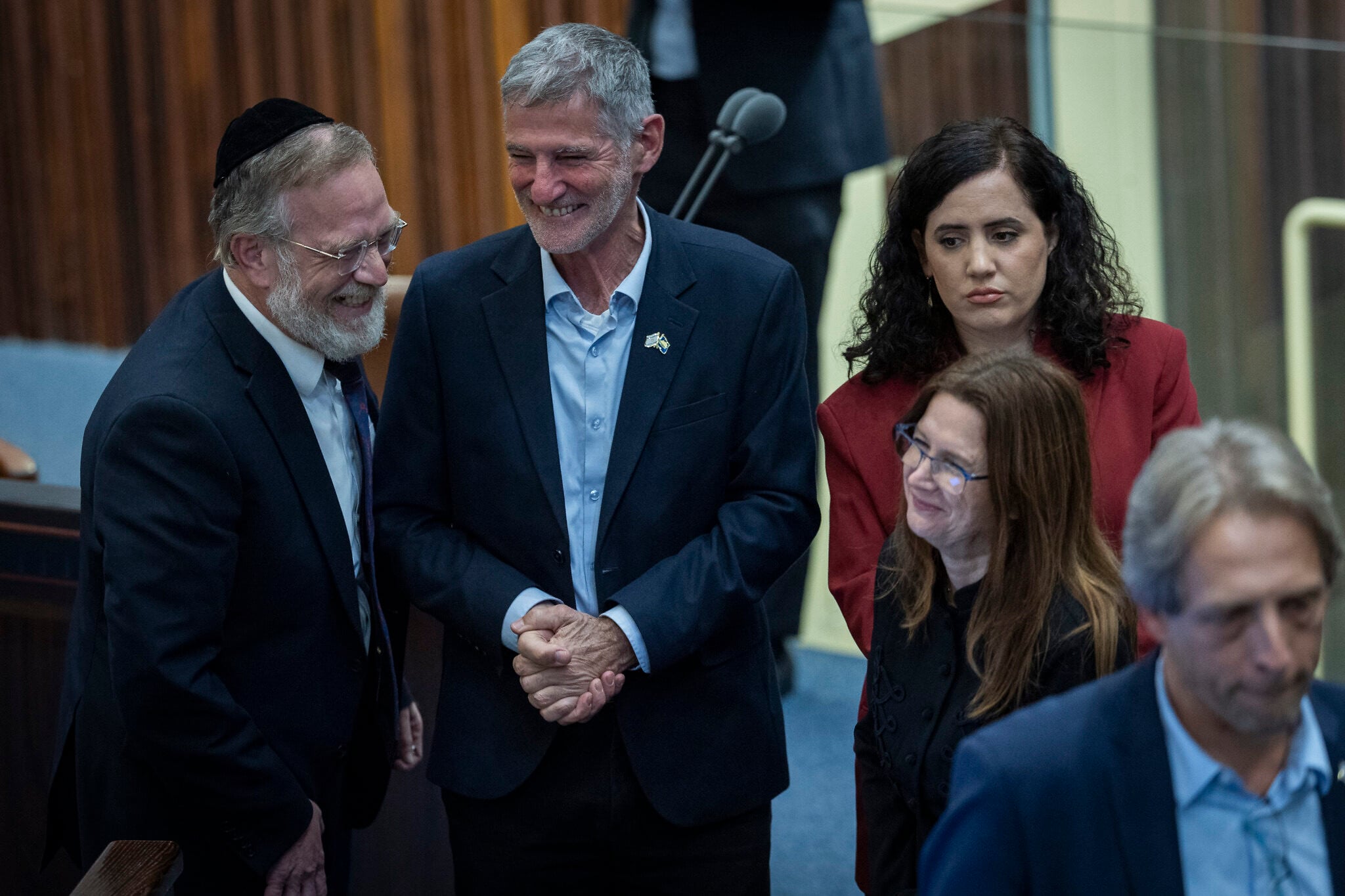
Gadi Eisenkot’s Yashar party and Yair Golan’s Democrats announced in a joint statement Thursday that they had agreed to sign a coalition deal, with the left-wing party set to receive four ministerial portfolios, just two days after Golan froze negotiations in protest of Yashar’s ongoing negotiations with Prime Minister Benjamin Netanyahu’s Likud over the formation of a possible unity government.
The breakthrough brought Eisenkot closer to locking down his four-party bloc as he races to assemble a government expected also to be based on the Arab Ra’am party and the Haredi United Torah Judaism (UTJ).
Yashar has already reached an agreement with Avigdor Liberman’s Yisrael Beytenu, while talks with Naftali Bennett’s B’Yachad and informal negotiations with United Torah Judaism remain ongoing.
According to The Democrats’ statement, the four portfolios are an “expanded” national security portfolio; labor and welfare — currently two separate ministries slated to merge as part of the Eisenkot-led bloc’s plans to slash the number of ministries; communications; and culture and sports, with the latter encompassing “a new democracy directorate.”
The party said it will also oversee the Social Equality Ministry, though the wording of the statement suggested that the ministry, too, will be merged into one of the four portfolios, most likely labor and welfare.
The national security portfolio currently belongs to the far-right Itamar Ben Gvir, who reacted to the news by claiming that “terrorists are rejoicing, Jews are crying.”
The merger of labor and welfare comes as the Eisenkot-led bloc reportedly plans to shrink the next government from 31 ministries to 24 or fewer by closing or consolidating several portfolios.
This would be the smallest number of ministries in an Israeli government in two decades, since Ehud Olmert in 2006 had 22 ministries. No government formed since Netanyahu returned to power in 2009 has had fewer than 28.
Former state comptroller Matanyahu Englman warned in a May report that Israel had up to three times as many ministries as comparable European countries, which undermines government effectiveness, disrupts public services and wastes millions in taxpayer funds.
Notably, The Democrats will not receive the education portfolio, despite earlier Hebrew media reports to the contrary, suggesting it might be retained by Yashar, nor will it receive the justice portfolio, which it also campaigned for and is expected to be given either to Avigdor Liberman’s Yisrael Beytenu or kept by Yashar.
The party acknowledged seeking the justice portfolio but said their commitment to establishing a government of change and their “national responsibility require us to act swiftly, reach agreements and demonstrate a willingness to compromise.”
The party said the agreement includes “a commitment to fully repeal the judicial overhaul, safeguard the independence of the judiciary and secure important achievements for Israeli society, Israeli democracy and Arab society.”
“In doing so, we are paving the way for ending the Netanyahu government and saving Israeli democracy,” the party said, adding that the sides are working to finalize the remaining details ahead of signing the agreement.
The party will also chair the Knesset Constitution, Law and Justice Committee, have a representative on the Judicial Selection Committee and receive the post of minister liaising between the government and the Knesset.
The agreement came only hours after Yashar announced that negotiations with The Democrats had resumed. Golan had frozen negotiations on Tuesday over Yashar’s continuing unity talks with Likud and what his party described as a stalemate in coalition negotiations.
Eisenkot turns to Haredi parties
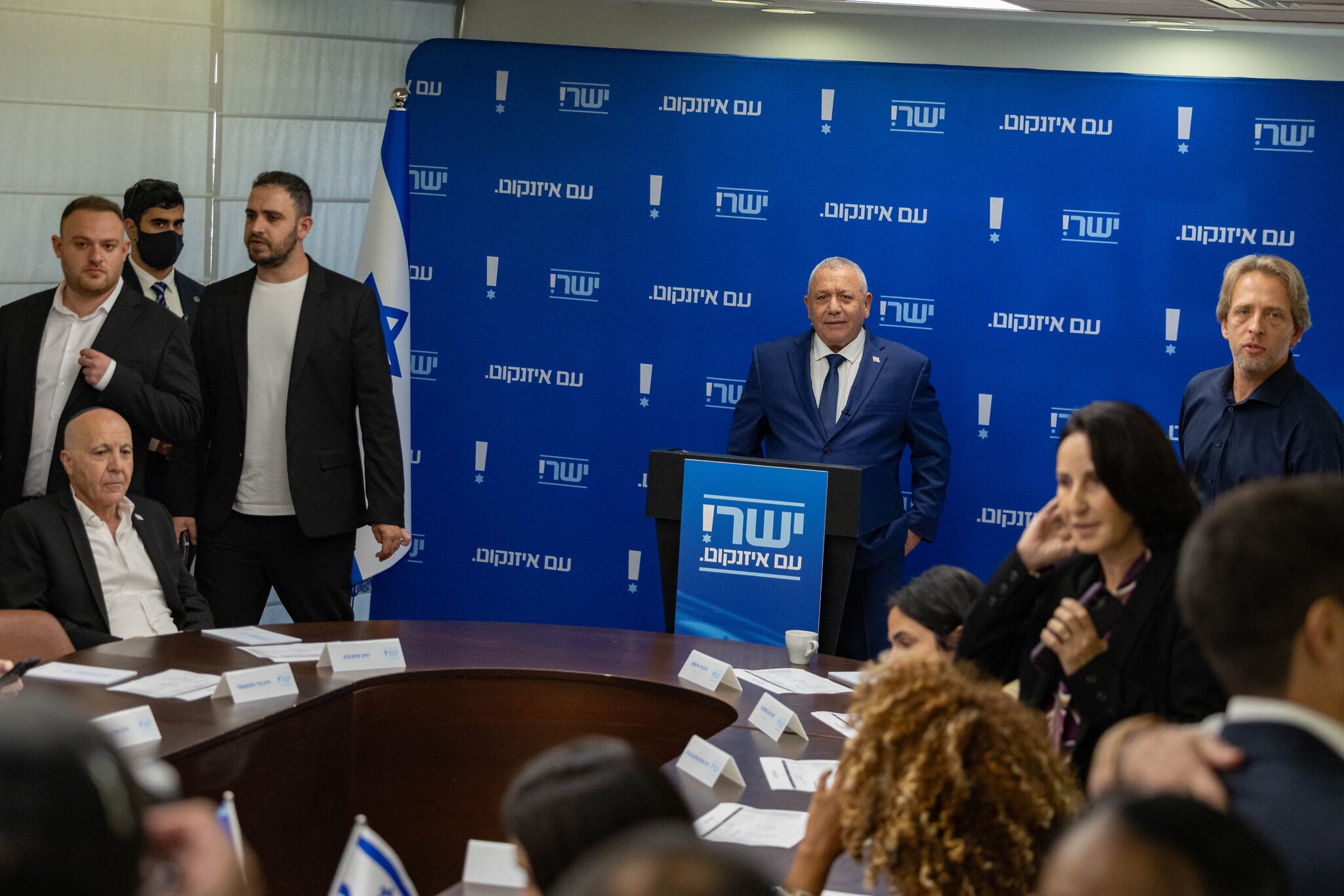
Eisenkot has signaled that he is determined to swear in a government as early as next week, even though his path to assembling a majority remains muddled amid negotiations with UTJ, a longtime partner of Netanyahu’s Likud, which the Eisenkot-led bloc looks to bring into the fold.
While formal coalition talks with UTJ have yet to start, Thursday reports suggested that the intensive, informal negotiations are close to bearing fruit, with some saying that the sides are already discussing cabinet appointments, which UTJ denied Thursday, according to Ynet, as well as the potential joining of the other Haredi party Shas to an Eisenkot-led government at a later date.
According to the Ynet news site, Eisenkot is looking to nail down coalition agreements within his four-party bloc by the weekend through finalizing the distribution of cabinet posts. Once secured, he will focus on bringing in partners from outside his bloc, including the ultra-Orthodox, to gather enough support for a governing coalition.
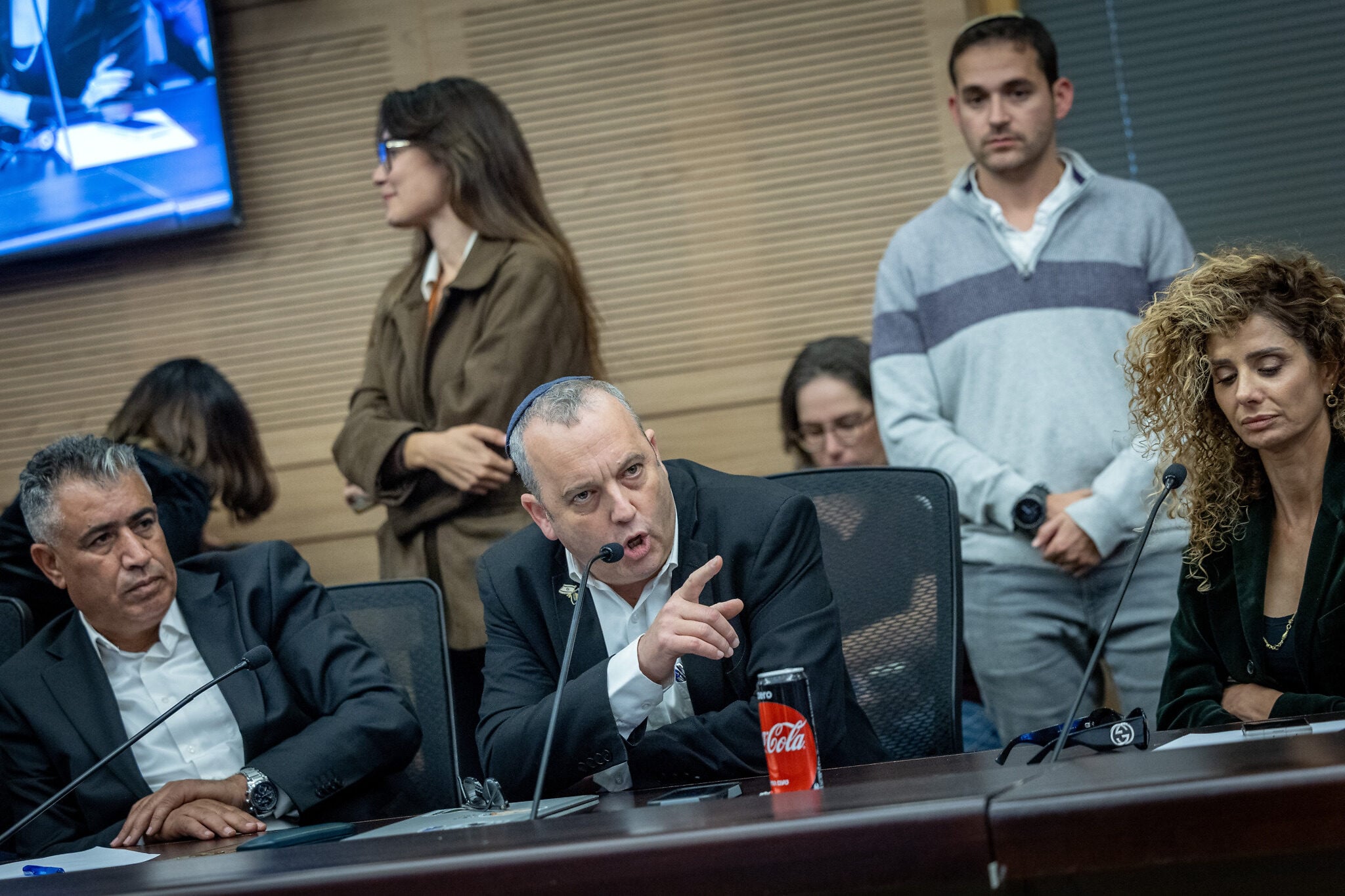
In a move that contradicts the latest news of the Yashar-Democrats agreement, UTJ had reportedly said prior to the announcement that it would veto the appointment of Democrats MK Gilad Kariv as education minister in a prospective government, on the grounds that he is a Reform rabbi.
“It was agreed that Kariv would not serve as education minister. It simply won’t happen. They understood that we have an absolute veto on this,” a senior official in UTJ’s Degel HaTorah faction told the Haredi news site Kikar HaShabbat.
The report said Eisenkot, who is trying to hash out ministerial appointments among the parties in his bloc, has agreed to the demand while reserving four ministerial portfolios for UTJ and fellow Haredi party Shas.

But UTJ on Thursday denied negotiating possible cabinet posts with Eisenkot.
The inclusion of the Haredi parties in a potential coalition became possible earlier this month, when Liberman walked back years of vocally opposing them and started talks with UTJ.
UTJ MK Yitzhak Goldknopf said Thursday that Liberman had apologized to him for past remarks, including saying Haredim would be sent “with Bibi on one wheelbarrow to a good garbage dump.”
“He asked for forgiveness,” the former UTJ leader told Kol Hai radio. “If he is now submitting to the words of the great Torah sages, then whether he said it or didn’t say it [doesn’t matter].”
Goldknopf also criticized his partners in Netanyahu’s bloc, saying: “Some people have treated us like doormats for four years.”
Yashar is engaged in intensive though informal negotiations with UTJ over a military draft framework that would effectively preserve sweeping exemptions for ultra-Orthodox yeshiva students. Rabbi Moshe Hillel Hirsch, one of Degel HaTorah’s leading spiritual authorities, has also demanded that any future government preserve the religious status quo, which grants Orthodox Judaism a monopoly over key aspects of religious life in Israel and does not recognize non-Orthodox streams.

In a further indication of the priority Eisenkot is placing on securing Haredi support for his government, he is reportedly reserving the health and housing portfolios for UTJ and the interior and religious services portfolios for Shas, despite the latter’s repeated refusal to join an Eisenkot-led coalition.
Pressure builds on Shas to break with Netanyahu
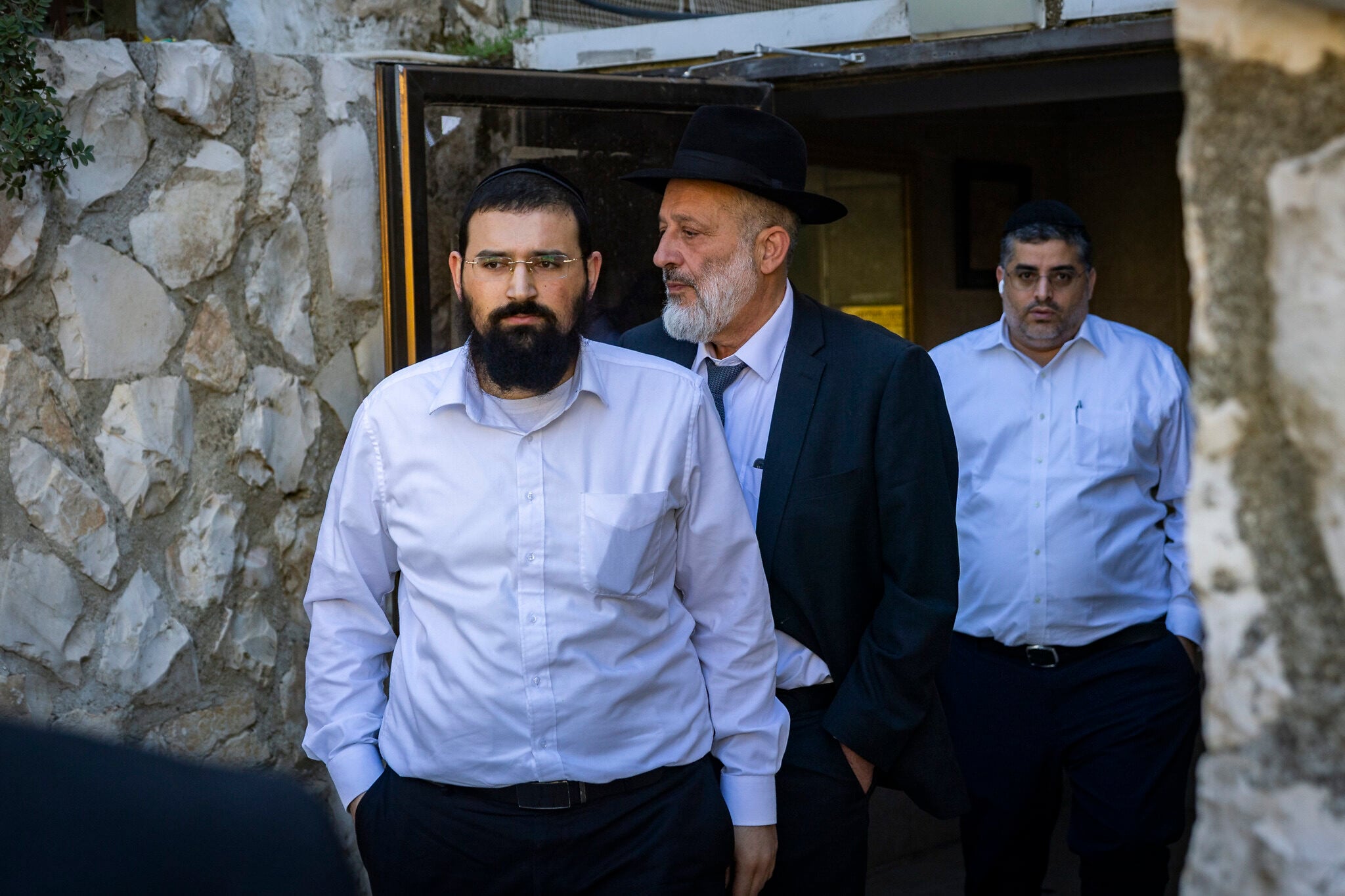
While Yashar is not engaged in coalition negotiations with Shas, the decision to reserve portfolios for the party appears to reflect hopes that it will join the government after its formation, should UTJ enter the coalition first. Shas chairman Aryeh Deri, a longtime close ally of Netanyahu, is reportedly facing growing pressure from within his party’s rabbinic leadership to follow UTJ’s lead.

Unlike UTJ, Shas has thus far insisted that it will continue its years-long alliance with caretaker prime minister and Likud leader Netanyahu.
But tensions are mounting within the party over whether to support the formation of a government led by Eisenkot, with several members of the party’s ruling Council of Torah Sages and heads of Sephardic yeshivas expressing support for such a move in recent days, according to a Channel 13 news report.
“We don’t understand his insistence on sticking with Netanyahu,” a senior member of the sages council said of Deri. “If Rabbi Lando and the Hasidic spiritual leaders approve a government with the ‘change bloc,’ we will immediately demand that the Council of Torah Sages convene. Everything must be done to save the Torah world.”
While Deri has repeatedly ruled out joining an Eisenkot-led government, previous reports have indicated that Shas would be unlikely to oppose its formation if the spiritual leaders of fellow Haredi party United Torah Judaism give their approval.
UTJ lawmakers are reportedly seeking permission from their rabbinic leaders, including Lando, the leading authority of the party’s non-Hasidic Degel HaTorah faction, to formally open coalition negotiations.
According to Channel 13, Deri said Wednesday morning that “if the Shas rabbis force us to support a new government, it will be very difficult for me to remain in politics.”
The remarks came weeks after the Council of Torah Sages rejected Deri’s request to resign as party chairman following Shas’s dismal showing in the October 27 election, which saw its parliamentary representation shrink from 11 seats to six. Much of the party’s electoral support is thought to have shifted to Likud and the far-right Otzma Yehudit.
Abbas predicts coalition with Ra’am and UTJ, backed by Joint List
Ra’am party chairman Mansour Abbas, meanwhile, predicted Thursday that Eisenkot would ultimately form a government comprising the four parties in his bloc, UTJ and Ra’am, with outside support from the Joint List.
“A government will be formed comprising the parties of the change bloc and United Torah Judaism, with Ra’am’s participation and the support of a parliamentary safety net provided by the Joint List,” Abbas told Kan’s Arabic-language Makan radio station. Ra’am has repeatedly expressed interest in joining a government, while the Joint List has said it could provide outside support to a coalition replacing Netanyahu without joining it.
Joint List chief Yousef Jabareen promised in a statement Thursday that his alliance “will do everything possible” to prevent Netanyahu and Ben Gvir from remaining in power or returning to power, “and enable the formation of a government that will replace them.”
It was a further indication of the Arab-led party’s willingness to provide a safety net to a potential Eisenkot-led government.
Jabareen demanded that the next government combat rampant crime in Arab society, stop home demolitions in the community and “fight incitement and racism,” alongside a multi-year investment plan in education, infrastructure, healthcare, housing and employment.
Bennett keeps unity talks with Likud alive
Against this backdrop, B’Yachad’s Bennett was reportedly operating a secret negotiation channel with Netanyahu without informing other partners in the Eisenkot-led bloc, according to a Haaretz report.
The channel involved Bennett’s confidant Shalom Shlomo and Netanyahu’s representative Michael Rabello, Haaretz said.
While Eisenkot had been working to establish a coalition with the ultra-Orthodox parties, Bennett’s representative was reported to have been speaking with Netanyahu’s aide about a unity government with Likud.
Haaretz said Rabello had offered seven slots on Likud’s next Knesset slate to members of the Eisenkot bloc willing to defect in order to establish a coalition with Netanyahu.
Bennett responded to the report by insisting that it is false and that other reporters looking into the supposed secret channel chose not to publish about it upon learning that it is not true.
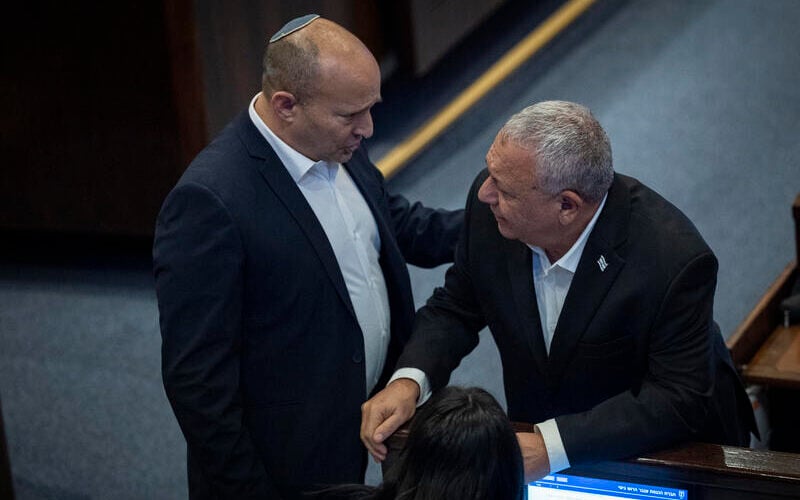
Separately, Bennett has also been holding direct talks with former strategic affairs minister Ron Dermer, one of Netanyahu’s closest confidants, in an effort to form a unity government with Likud, Ynet reported Thursday. Bennett subsequently confirmed on X that he had been speaking with Netanyahu and his associates, saying the talks were taking place with Eisenkot’s knowledge.
Bennett said he still viewed a unity government led initially by Eisenkot as the preferable option, arguing that the alternative — a government formed with UTJ and reliant on outside support from the Arab-led parties — would require major concessions on Haredi conscription and dependence on non-Zionist Arab parties.
While calling such an arrangement a “worse alternative,” Bennett stopped short of ruling it out.
“That is why I am working with all my might to establish a government based on an alliance of those who serve. The candle is still burning,” he said.
Bennett stressed that B’Yachad would under no circumstances defect to Netanyahu’s bloc and said he would not allow the unity talks to be used to run down Eisenkot’s mandate to form a government.