Eisenkot vows not to fold on service for all, as potential UTJ allies insist on draft exemptions
Eisenkot promises new government ASAP, though obstacles remain, with Haredi party demanding preservation of religious status quo and Liberman dismissing reliance on Arab parties
Yashar party chief Gadi Eisenkot, who is tasked with forming the next government, on Tuesday vowed that he would not give up on his commitment to national service for all, even as the ultra-Orthodox United Torah Judaism party, which rejects such a principle, said it was in negotiations with him to form a government.
In a faction meeting ahead of the swearing-in of the 26th Knesset, Eisenkot said that Israel is at a “security, strategic, economic, international” watershed, “perhaps among the most challenging days for Israel since its founding.”
He said he is committed to creating a “national emergency government as soon as possible” without compromising on his principles.
Eisenkot stressed his party “has a deep commitment to its compass” of a Jewish, democratic, liberal, egalitarian Israel, and promises to “work together with our partners — B’Yachad, The Democrats and Yisrael Beytenu.”
Eisenkot said his arm is outstretched to any party willing to accept his coalition’s principles, but promised that he will not give up on his determination that there be “service for all — for all Israeli citizens. Military service, national service, civilian service. We will not fold that flag.”
Eisenkot did not specifically mention Haredi or Arab parties.
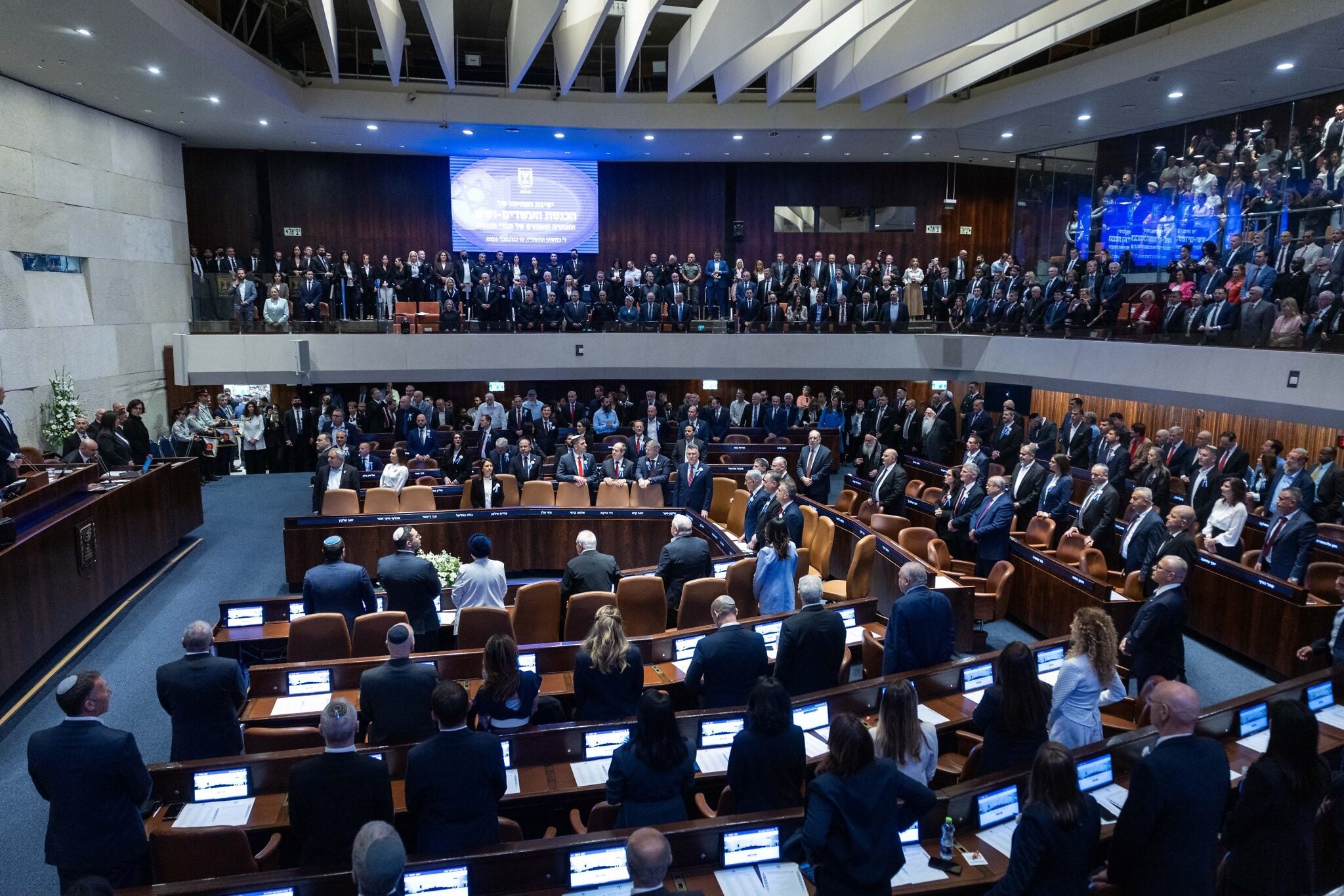
He promised to investigate every possible path to expanding his coalition in order to create “a national consensus as broad as possible.”
Eisenkot additionally said his party is committed to achieving the goals of the war in Gaza that have not yet been achieved — “the destruction of Hamas’s military and civil capabilities.”
He stumbled as he listed the three branches of government, pausing with a smile until he remembered the judicial branch. “One must not forget the judicial branch,” he said, as he discussed the proper balance between them.
Eisenkot’s bloc, which won 48 seats in last month’s election, ran on a platform of universal military service, which the Haredi parties staunchly oppose. But UTJ, a longtime ally of Prime Minister Benjamin Netanyahu, has also been frustrated with him for not passing legislation exempting yeshiva students from the draft, and declined to back him for another term. Shas has remained in Netanyahu’s camp.
Amid Eisenkot’s commitment to mandatory service, UTJ head Ya’akov Asher told the Haredi Kikar Hashabbat news site that the party won’t join any coalition unless it meets its demands on conscription, funding for unregulated education and preservation of ultra-Orthodox hegemony over certain aspects of public life.
Asher said military conscription exemptions for yeshiva students and those in other Jewish learning institutes must be “worked out,” albeit without providing details about the sort of arrangement he wants to see. “Without that there won’t be anything,” he said of the matter, which he called the most important.
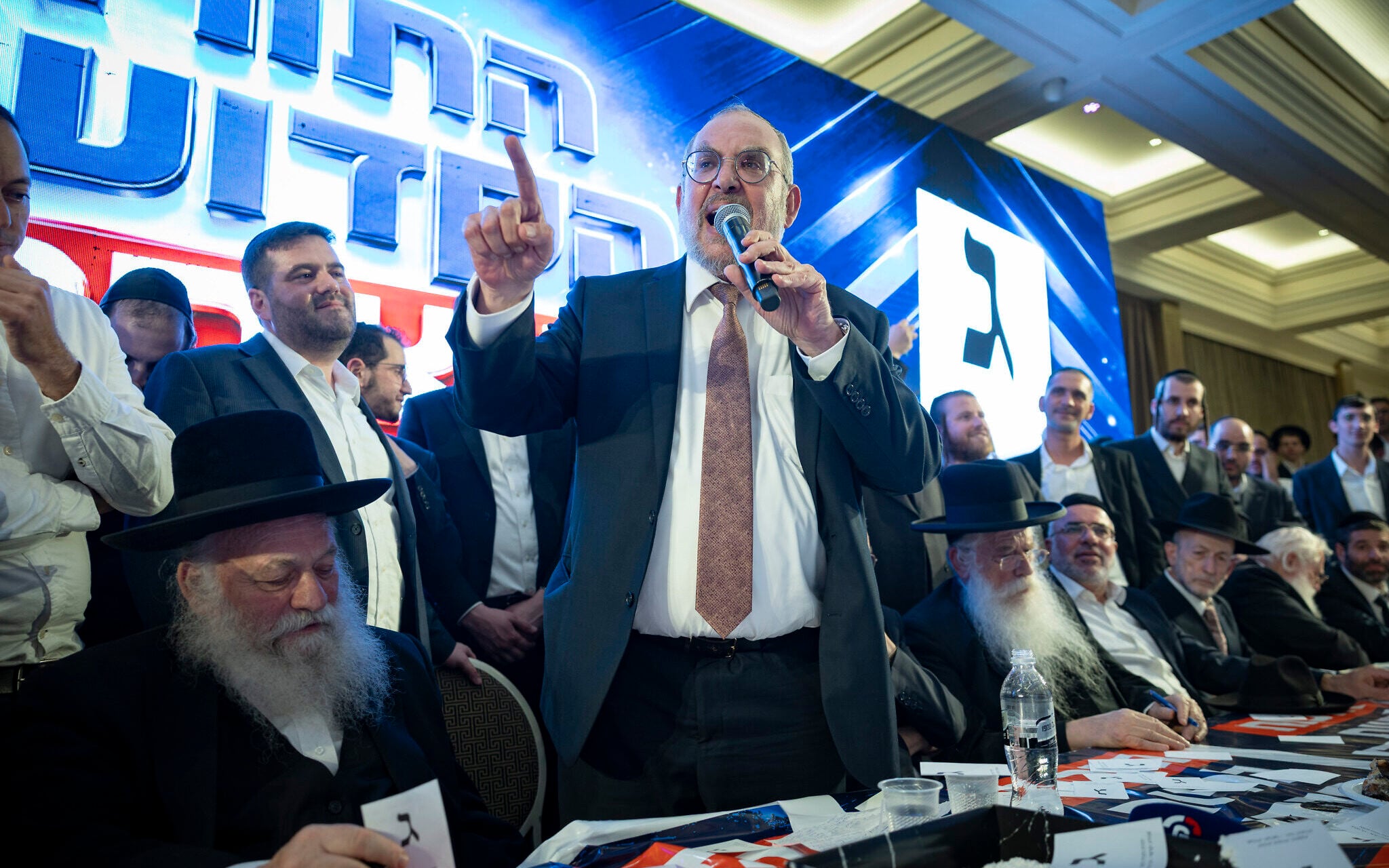
Asher also said that UTJ will only support a coalition that commits to leaving money for Haredi schools untouched and does not attempt to condition funding on meeting core curriculum requirements. “Nobody should try to think that they will [be the ones to] educate our kids,” he said.
His third demand is maintenance of “the status quo between religion and state,” referring to policies in place that impose Jewish halachic rules on aspects of public life, such as prohibiting commerce on Shabbat.
“It’s our responsibility to preserve the image of the entire state, not just Bnei Brak or the Haredi neighborhoods of Jerusalem, but… everything,” the head of the Haredi party said.
Asher presented the three demands as nonnegotiable, saying his party won’t join any coalition that doesn’t agree to all three.
Meanwhile, fellow UTJ lawmaker Yitzhak Goldknopf told Channel 12 that discussions are already underway with Eisenkot’s camp.
“Eisenkot knows what we want. There have been preliminary contacts, and there is room for negotiations,” he said, adding that Netanyahu is also in talks with the party, but “that doesn’t mean anything.”
Striking a different tone, the ultra-Orthodox Shas party said it is not entertaining the idea of defecting from Netanyahu’s bloc, seeking to quash speculation that its support could be up for grabs alongside UTJ.
“Shas continues to support Netanyahu and is not in talks with any other player,” it said in a statement.
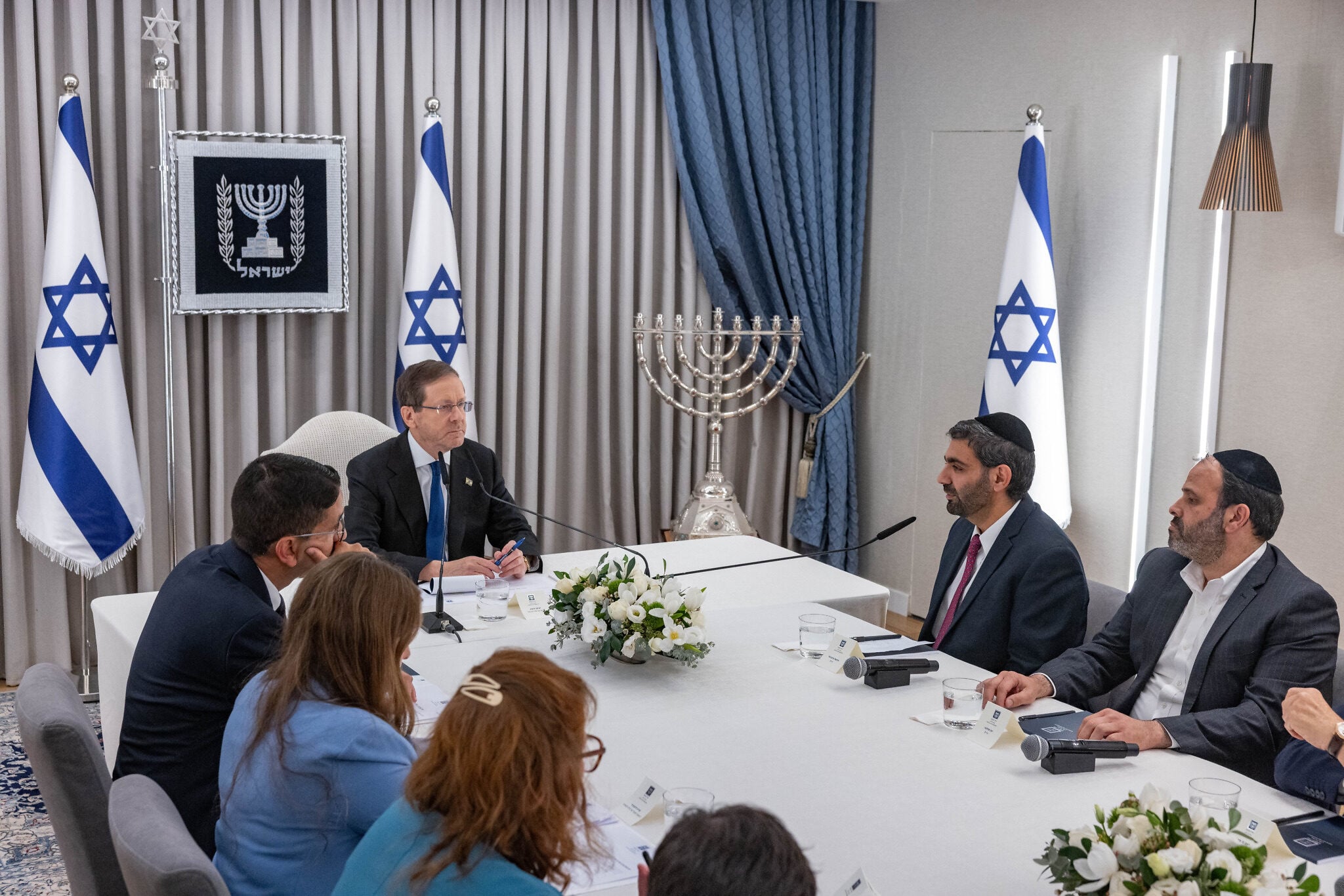
The party noted that its rabbinic steering council instructed party lawmakers to recommend Netanyahu for premier “after he committed to passing a law regulating yeshiva students,” referring to legislation enshrining Haredi military draft exemptions in law.
Meanwhile, Finance Minister Bezalel Smotrich urged the Haredi parties to reject reported negotiations with Eisenkot’s bloc and called on Yashar MK Matan Kahana to refuse the Knesset speakership if elected with the support of Arab parties.
“My Haredi brothers, don’t be lured into this trap,” Smotrich said at a press briefing at the Knesset. “They’ll dump you the moment they’ve finished using you to oust Netanyahu and the right and seize power.”
He said an appointment secured with the votes of “Israel’s enemies” is “illegitimate” and called it “moral bankruptcy,” urging Kahana not to accept the position while it depends on parties that, he said, view Israel’s establishment as a catastrophe and undermine its right to exist.
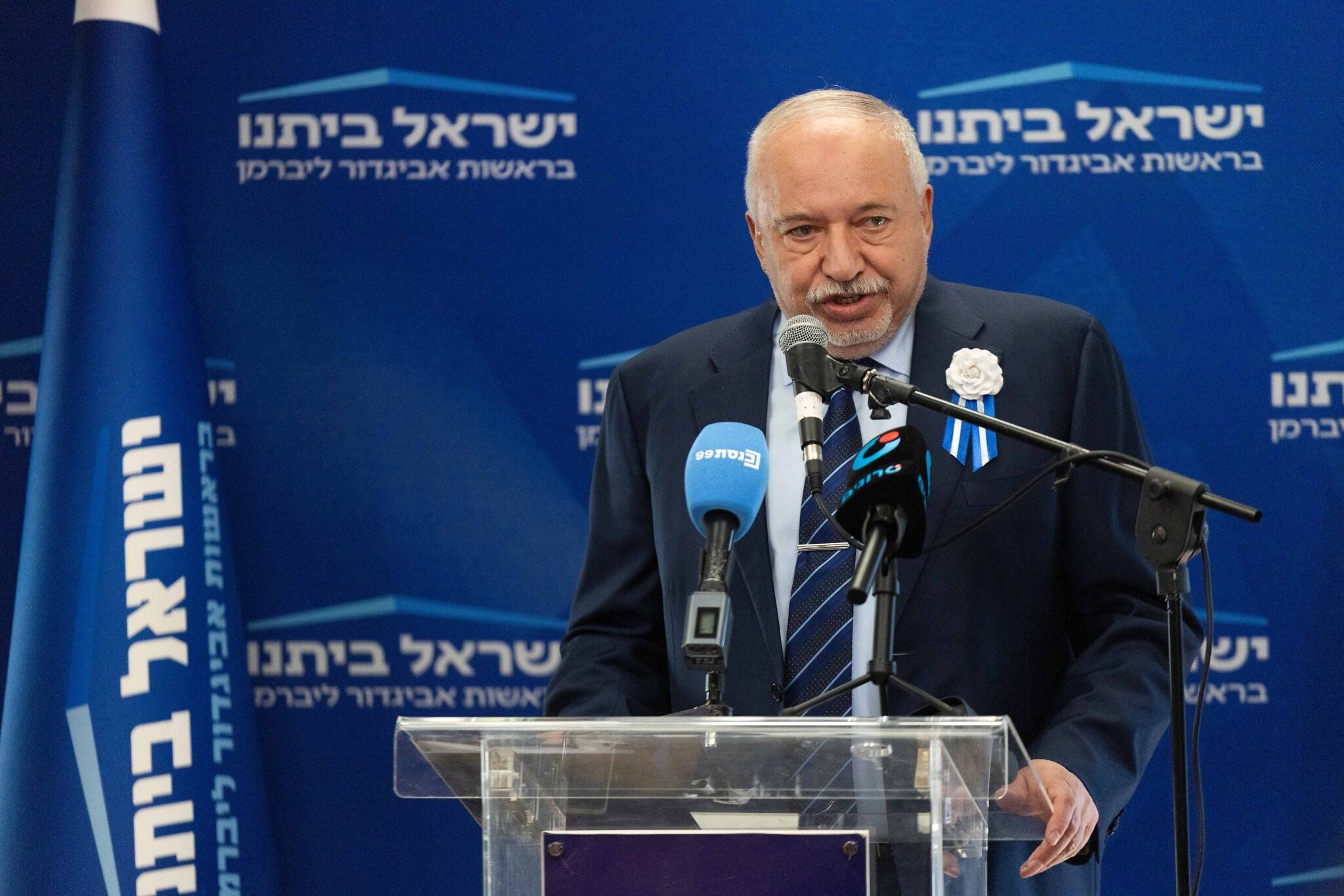
Also speaking in the Knesset, Yisrael Beytenu chair Avigdor Liberman insisted he stands fully behind Eisenkot’s candidacy for prime minister but rejected any reliance on the two Arab parties, warning that a minority government would quickly restore Netanyahu to power.
“I am working to put an end to the rule of Netanyahu — once and for all. Not a temporary end,” he said. “Any minority government will ultimately, quickly, return him to power [after a new election], with 70 seats, for another four years. So anyone who is talking about a minority government, that means crowning Netanyahu for another full term.”
He said a minority government “cannot function” and would quickly collapse, and that he would “not lend a hand” to a coalition reliant on the Arab parties.
Islamist Ra’am won seven seats in the Knesset, while its fellow Arab-majority party, the Joint List, has 12. The Joint List has expressed its commitment to ousting the Netanyahu government and providing a safety net of votes for a new coalition.
Ra’am chair Mansour Abbas, who sat in a previous coalition under Naftali Bennett and Yair Lapid in 2021-2022, is reportedly ready to go further and is prepared to explicitly recognize Hamas as a terrorist organization in exchange for “genuine partnership,” in what could mark a significant step toward cooperation between the Arab party and the bloc in building a new government.
But Liberman on Tuesday ruled out even a temporary reliance on Arab parties if only UTJ comes aboard. He specified that his envisaged 61-strong coalition means the Eisenkot-led bloc’s 48 seats, plus the two ultra-Orthodox parties’ 13 — UTJ seven and Shas’s six.
Liberman stressed that his declared goal in the election was also to build a coalition without the ultra-Orthodox parties, “but we only got 48 seats.”
“So we had to reassess, and find compromises and flexibility,” he said.
“We talked about… conscription for everyone. Today it’s clear that we’ll have to go with a different model… a conscription law that survives the High Court test. That is currently the best model that can be implemented without all the mess, without blowing everything up, and without going to a new election.” The challenge, he said, will be to find a formula that satisfies both the court and UTJ spiritual leader Rabbi Dov Lando.
Liberman also denounced “the sheer volume of lies and fabrications” about him and his intentions. “We were very, very clear throughout the campaign, during the election and after the election. We recommended Gadi Eisenkot immediately, without any conditions, as the candidate for prime minister, and forming a government rests on him. He leads, he’s responsible, and I stand at his side.”
Regarding first priorities in the Knesset, he listed “first of all, replacing the Knesset speaker, appointing the state comptroller, a law limiting the prime minister’s tenure to two terms, and immediately after that… [dealing with] the judicial overhaul [laws].”
He added that the first government decision will be to establish a state commission of inquiry into the October 7, 2023, massacre.
He said he is “confident a government with a clear majority of 61 can be formed within a very reasonable time — and really rebuild all the ruins, overcome the rift, the cracks in Israeli society, and also restore the State of Israel’s international standing.”
Answering questions, Liberman said that, as the incoming chair of the Foreign Affairs and Defense Committee, he will summon Shin Bet chief David Zini, IDF Chief Eyal Zamir and Mossad chief Roman Gofman.
He said he will ask Zini about the probes into alleged election fraud and foreign interference, noting the wide gulf between what the Shin Bet chief has alleged and what law enforcement figures have said.
Liberman said he’ll ask the other security chiefs about claims regarding Iranian chemical weapons and “efforts to carry out actions” against Iran — referring to Netanyahu’s reported attempt to carry out an operation against Iran on the eve of the elections.
“There is no effective [parliamentary] oversight of the security establishment,” he fumed.

In contrast to Liberman, Democrats chairman Yair Golan urged his partners not to rule out including Arab parties in the next government and called for a government to be formed as quickly as possible.
“I call on all my colleagues in the change bloc — let’s form a government quickly. Do not rule out the Arab parties, and do not rule out the Arab public,” Golan says at a press briefing ahead of his faction’s meeting at the Knesset.
“Anyone who can treat our wounded sons and save their lives deserves, has the right and is capable of sitting alongside us in the Israeli government,” he added, referring to Arab citizens who serve in Israel’s healthcare system.
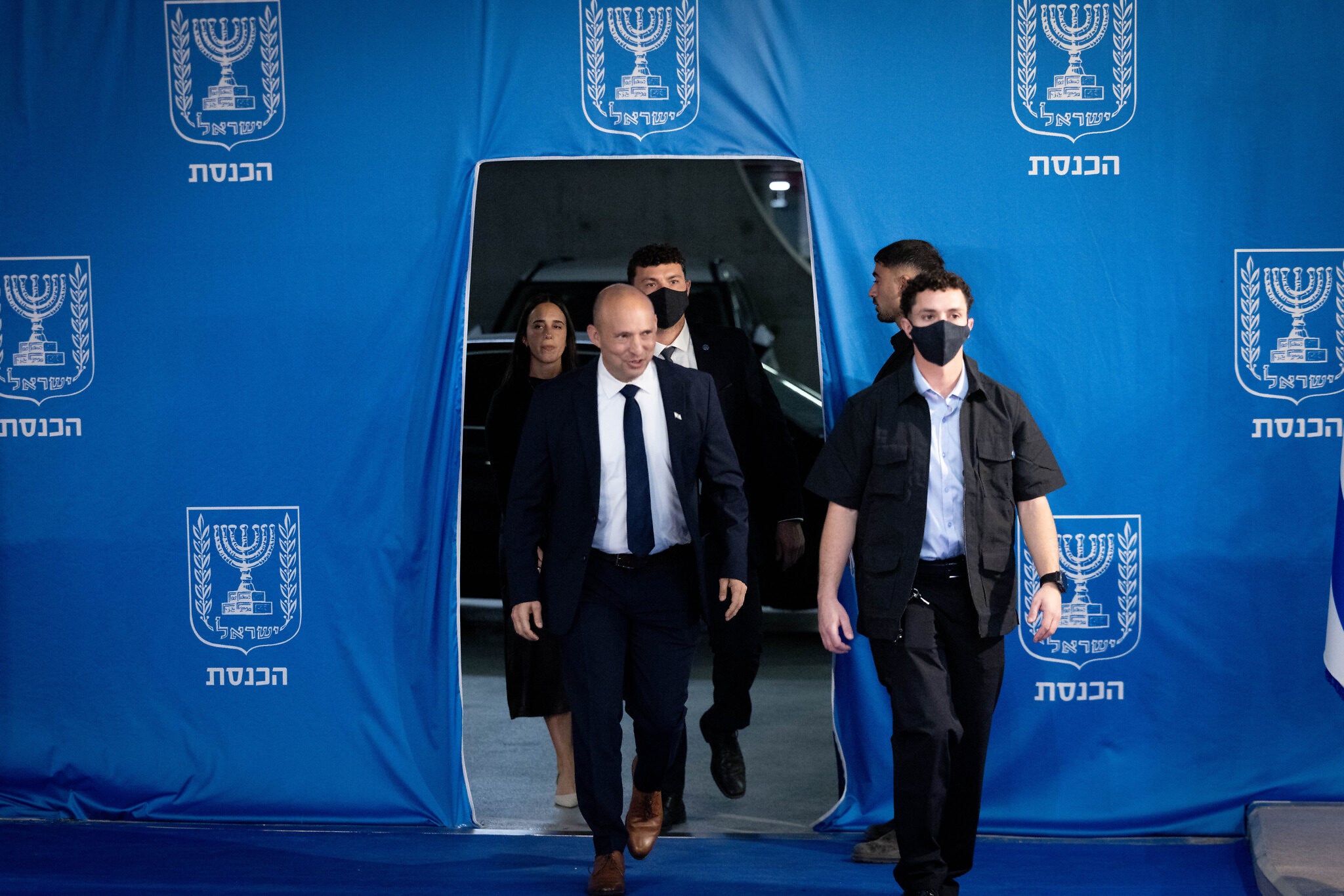
In a leaked message to supporters, Bennett, whose B’Yachad party won 12 seats, said his party is working to help Eisenkot build a Zionist coalition to replace the current government, without offering details.
“Quietly, we are doing everything, everything, to help Eisenkot to create a Zionist government of repair, in order to bring about as quickly as possible a changing of the guard, and so be able to fix Israel,” Bennett said in the message, according to a recording published by a Kan reporter.
Bennett, who repeated his message to reporters upon entering the Knesset, said the change in leadership is aimed at bringing relief to overburdened reservists, indicating opposition to answering Haredi demands for continued military draft exemptions.
Ahead of Tuesday’s scheduled swearing-in of the new Knesset, leaders of the Zionist opposition said they would nominate former minister Matan Kahana, No. 5 in Gadi Eisenkot’s Yashar party, to be Knesset speaker, following days of negotiations.