Eisenkot vows to advance draft law, Oct. 7 inquiry despite slim coalition prospects
Golan meets Eisenkot, Lapid and Mansour Abbas in coalition push; Ra'am leader says minority government unlikely; Liberman keeps distance from opposition partners; opposition chiefs vow fraud probe won't delay new Knesset
Gadi Eisenkot, the leading opposition candidate, vowed Thursday to begin advancing key campaign pledges as soon as the next Knesset is sworn in, even as he faced uncertain prospects of forming a governing coalition.
Eisenkot said his centrist Yashar party was already preparing legislation to establish universal military and national service, establish a state commission of inquiry into the October 7 massacre, reform the state budget mechanism and prioritize Israelis who serve.
He said the measures would be brought to a vote when the Knesset opened on November, in coordination with his political partners.
The anti-Netanyahu parties won 67 seats in the 120-member Knesset, potentially giving them enough votes to advance legislation even before the shape of the next government is settled.
Netanyahu’s opponents are split between Jewish-led parties, which will hold 48 seats, and Arab-led parties, which will hold a record high of 19. Netanyahu’s supporters will hold 53 seats, short of a 61-seat majority in the 120-seat Knesset.
Several Jewish-led opposition leaders held meetings on Thursday to discuss a path forward, but most have said they will not join a coalition with Arab parties, so such a government appears unlikely even if they manage to pass legislation. Mansour Abbas, chair of the Arab-led Ra’am party, acknowledged that a minority government, led by Eisenkot and supported by Arab lawmakers, probably would not take shape.
However, moving ahead with the measures put forth by Eisenkot, which Prime Minister Benjamin Netanyahu strongly opposes, would also signal that Eisenkot is sticking to his repeated insistence that he will not enter a unity government with the prime minister.
Eisenkot stressed that “no spin” would change the fact that the Israeli public had voted against “the government of October 7 and draft evaders.” Acknowledging that Israel faced “a complicated political situation,” he called on the public to show “composure and restraint.”
“Remain patient; there is hope. We will bring it about. I give you my word,” he said.
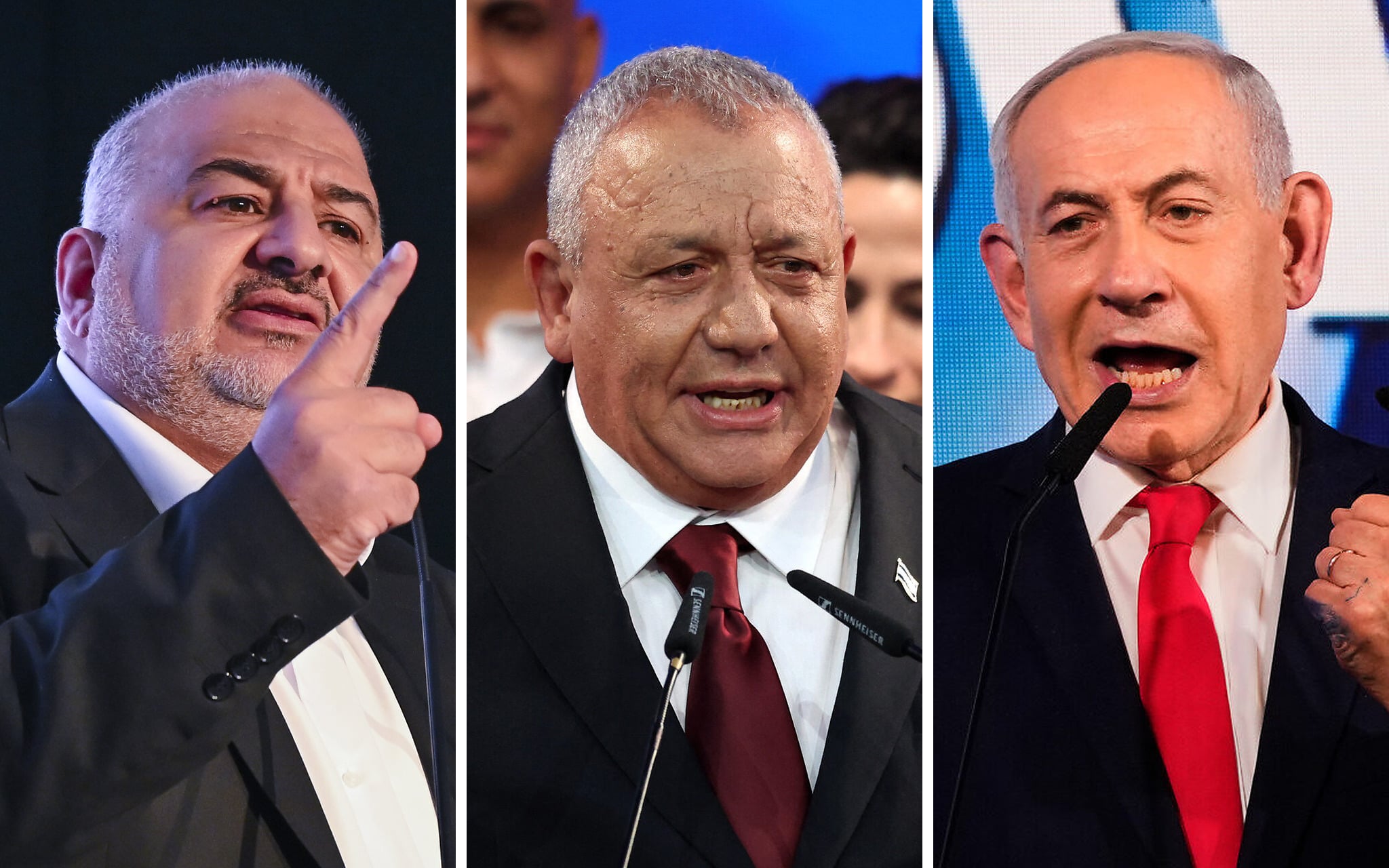
Opposition leaders hold post-election talks
Despite the seemingly tall odds for the establishment of a government, several opposition chiefs met separately on Thursday to discuss pathways to forming a coalition, though their statements after the meetings provided few details.
Eisenkot met B’Yachad chairman Naftali Bennett, a former prime minister, at Bennett’s home in Ra’anana. The two discussed efforts “to establish a good government in Israel as quickly as possible,” according to a joint statement.
And Yair Golan, chair of the left-wing Democrats, met Opposition Leader Yair Lapid, the No. 2 in the B’Yachad party.
“I am determined to make every effort, to turn over every stone and act with our partners in order to save Israel,” Golan wrote on X. “We will continue to work in tandem. We won’t give up on the opportunity for change.”
יוצא מפגישה טובה עם חברי, יאיר לפיד.
אני נחוש לעשות כל מאמץ, להפוך כל אבן ולפעול עם כל שותפינו כדי להציל את ישראל.
נמשיך לעבוד בתיאום. לא נוותר על ההזדמנות לשינוי.
נעשה ונצליח ???????? pic.twitter.com/jQLZgv69Iz
— Yair Golan – יאיר גולן (@YairGolan1) October 29, 2026
Hours after meeting Lapid, Golan met Eisenkot.
“The two of us dedicated long years to Israel’s security, and the two of us understand all too well the magnitude of the responsibility now placed upon us. Saving Israel is on the line,” Golan wrote on X. “We are partners on this path and in the commitment to ensure a better future for Israel.”
מוקדם יותר היום נפגשתי עם חברי גדי איזנקוט.
שנינו הקדשנו שנים ארוכות לביטחון ישראל, ושנינו מבינים היטב את גודל האחריות המוטלת עלינו כעת. הצלת ישראל מונחת על הכף.
אנחנו שותפים לדרך ולמחויבות להבטיח לישראל עתיד טוב יותר.
אני נחוש לעשות כל מה שנדרש, באומץ ובאחריות, כדי לממש את… pic.twitter.com/CwIVAIrzQr
— Yair Golan – יאיר גולן (@YairGolan1) October 29, 2026
Golan also met Abbas amid efforts to establish a new government. Golan was the only member of the Jewish-led anti-Netanyahu bloc to openly support forming a coalition with Ra’am. Other members of the bloc opposed relying on the party to form a government.
Abbas, however, said he believes the chances for the establishment of a minority government led by Eisenkot, with the outside support of Arab parties, are slight or impossible, Channel 12 reported Thursday evening.
Abbas reportedly expressed the feeling in a meeting with party members.
היום נפגשתי עם יו״ר רע״ם, מנסור עבאס, כדי לקדם במהירות ממשלת שינוי ולממש את רצון הבוחר הישראלי.
זו שעת מעשה. האחריות שלנו היא לא להחמיץ את ההזדמנות לשינוי והצלת ישראל. pic.twitter.com/WGv4g5hNYw
— Yair Golan – יאיר גולן (@YairGolan1) October 29, 2026
No ‘Bibi or Tibi’: Liberman rules out government with Netanyahu or Arab parties
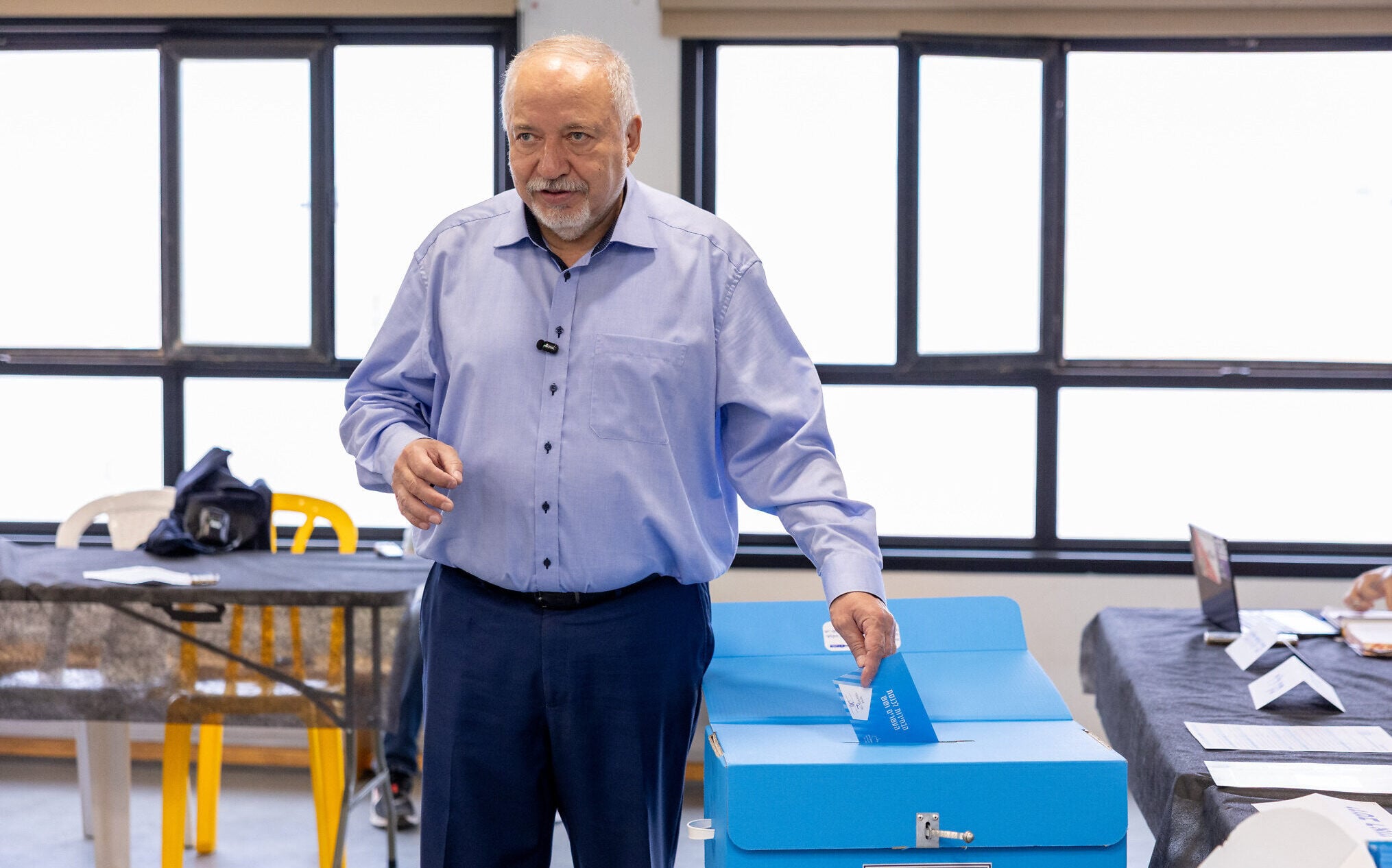
Yisrael Beytenu chairman Avigdor Liberman reiterated Thursday morning that he would not join a government with either Netanyahu or the largest Arab-led party, the Joint List.
“What we said before the elections is even more true after the elections. We will not sit with Bibi or with Tibi,” he told party activists, adding that he would “wait for the dust to settle and consider the steps forward.”
Channel 12 previously reported that Liberman had largely cut off contact with his opposition partners and was not answering calls from Eisenkot or B’Yachad leader Naftali Bennett.
The report said he still opposed both a Netanyahu-led government and a minority government reliant on Arab parties, and expected pressure to build on Eisenkot to join a unity government with Netanyahu.
Opposition leaders vow Knesset will be sworn in as scheduled despite fraud allegations
Eisenkot also accused Netanyahu of conducting a campaign to delegitimize the election results and vowed not to allow any obstruction of the Knesset’s swearing-in. His comments came as the Shin Bet investigated allegations of foreign election interference, prompting Netanyahu’s Likud party to say the election was “stolen.”
Eisenkot denounced foreign interference but stressed that the investigation was ongoing. It is reportedly focused on Qatar, which has long hosted Hamas’s leaders.
“I met earlier with the Shin Bet chief and the head of the Central Elections Committee. I was updated by them on the situation. It is too early to understand what happened and if it happened at all. We must allow the relevant professionals to complete their investigation without any political interference,” Eisenkot said.
“Foreign interference in Israel is unacceptable and grave, all the more so when it involves a state that funds terrorism and supports the terrorist organization Hamas, and which has managed, in recent years, to infiltrate the office of the Prime Minister of Israel,” he said, in reference to the Qatargate affair, in which several Netanyahu aides have been investigated over allegations that they carried out public relations work for Qatar while employed by the Prime Minister’s Office.
“It is essential to investigate whether they tried to exert influence, and through whom they sought to do so,” Eisenkot added.
“What is already clear is that Likud and Netanyahu have embarked on an orchestrated and organized campaign to delegitimize the election results,” Eisenkot charged. “Their statements and talking points were ready. They are doing this because they lost. They do not have a majority. The State of Israel is governed by the rule of law. I will not allow even a centimeter’s deviation from the swearing-in of the Knesset as planned.”
Lapid, meanwhile, said he had been briefed on the allegations of foreign election interference and indicated that they were not serious enough to justify challenging Tuesday’s election results or delaying the swearing-in of a new Knesset.
“I spoke today with [Central Elections Committee chief] Judge Noam Sohlberg’s representatives at the [Central Elections Committee], and met with Shin Bet chief David Zini. Based on my familiarity with the material and the opinion of authorities dealing with the matter, there is no risk or [reason to] challenge the election results, and there is no impediment to swearing in the Knesset,” Lapid wrote on X.
PA’s Abbas hopes new government will revive peace talks
Palestinian Authority President Mahmoud Abbas, meanwhile, expressed hope that the election of a new Israeli government would allow for a resumption of peace talks, which haven’t taken place at length in over a decade.
“For many years now, we have been extending a hand to the Israeli side in order to achieve peace with them, so that Israel and Palestine may live in security, stability and peace,” Abbas said during a meeting with Cypriot President Nikos Christodoulides in Nicosia.
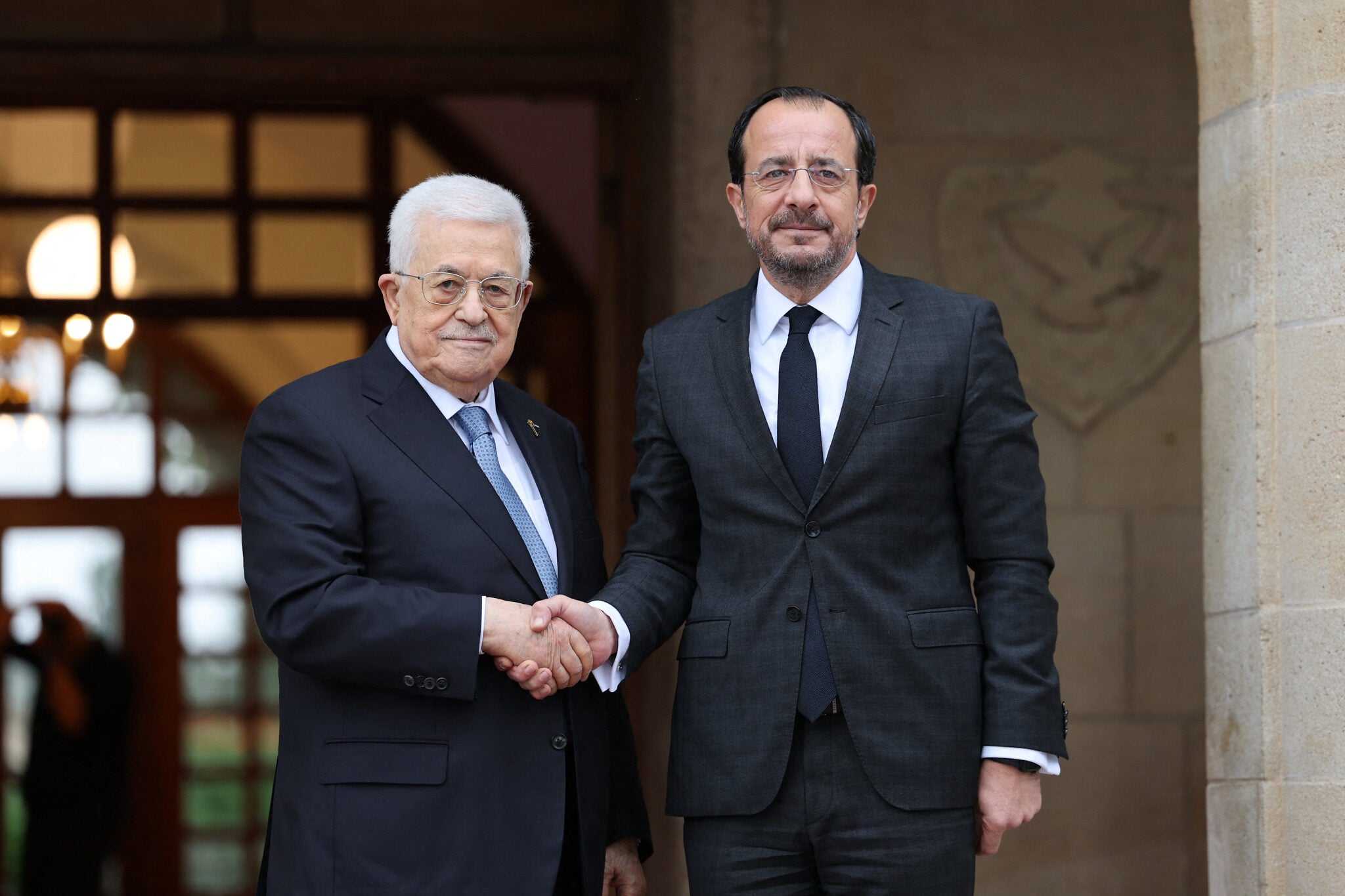
“We hope that, immediately after a new Israeli government is formed, we will be able to engage in dialogue together,” Abbas added.
Peace talks are unlikely no matter the shape of the next government, as support for negotiations toward a two-state solution has all but been dropped from Israel’s mainstream political agenda, and the vast majority of Jewish Israelis oppose the establishment of a Palestinian state. Abbas, who hasn’t stood for election in decades, has also long been deeply unpopular among Palestinians.