Eisenkot warns at campaign rally: Netanyahu will ‘stop at nothing’ to stay in power
Winter's rabbi stands by his People of Israel party, hopes it passes threshold; UTJ holds mass rally as party head urges voters to turnout to prevent draft dodger arrests
Two days before polls open, opposition frontrunner Gadi Eisenkot warned on Sunday that Prime Minister Benjamin Netanyahu “will stop at nothing to stay in power” and will not blush at using extreme measures to retain his position.
“I see the polls, I know the data, and I know Netanyahu,” Eisenkot, who chairs the Yashar party, said at a Tel Aviv campaign rally, as quoted by Haaretz. “He’ll stop at nothing — no lie, no extreme measure — to stay in power.”
Eisenkot urged the crowd to go out and vote, and not to take Netanyahu’s defeat for granted. Polls show that neither the premier’s supporters nor his opponents are expected to win a majority in the Knesset.
Eisenkot beseeched Netanyahu’s voters to abandon the premier, warning that Israel cannot survive another four years under his leadership.
“I appeal from here to Likud supporters and all coalition voters who serve their country and work hard: I know how difficult it is to vote differently, but this time, it is not you who are choosing a different path — it is Likud that has strayed from its path,” Eisenkot said, addressing Likud voters. “Deep down, you know too that Israel cannot go on like this. Israel needs change. Look me in the eye. You can trust me.”
“Anyone who thinks our Israel can survive another four years like these is living under a dangerous misconception,” he warned. Referring to the outgoing government’s efforts to enshrine blanket exemptions to military service for Haredi men, he added, “Draft evasion, failure, negligence, and lies — that is the path of the government of draft dodgers.”
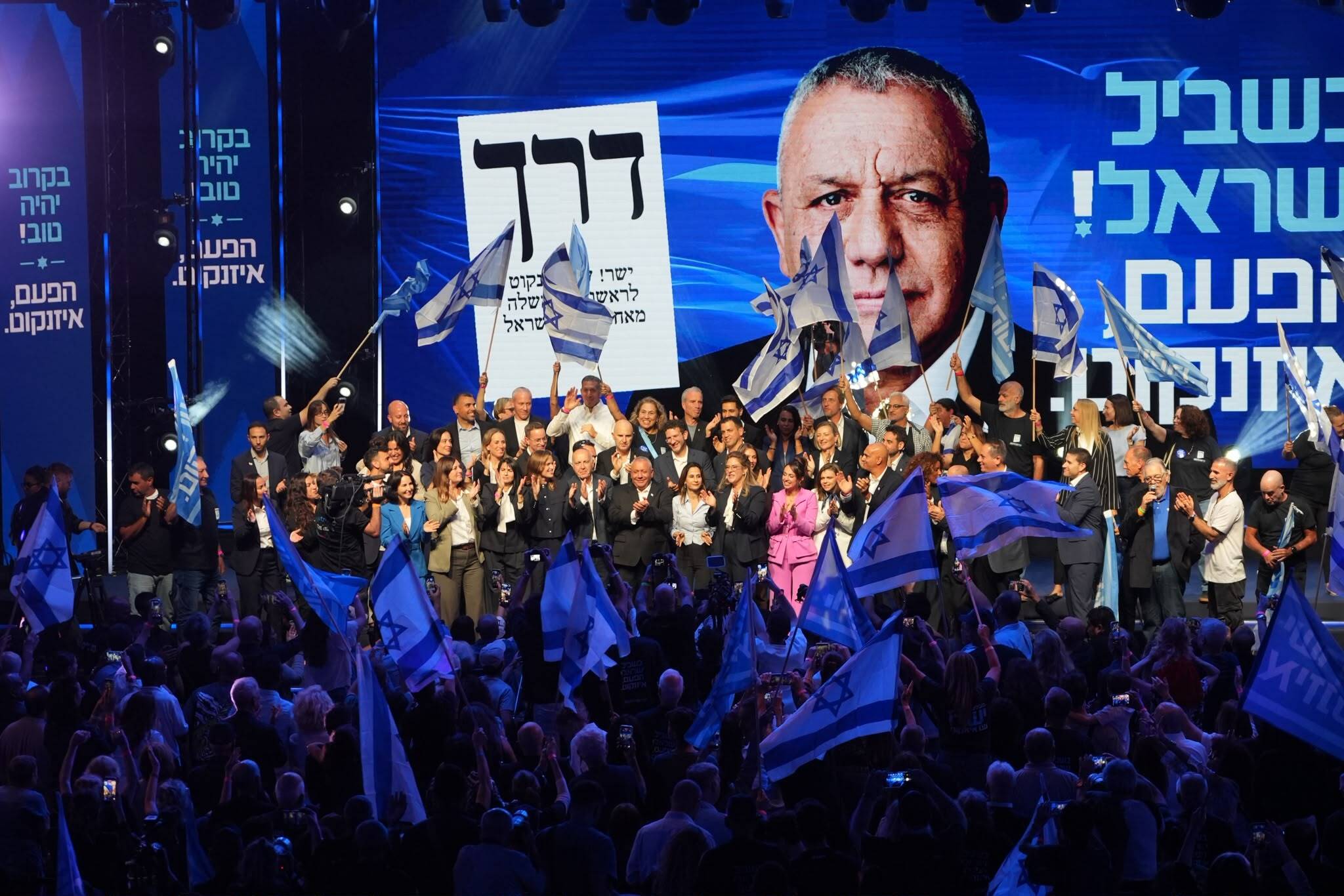
He continued, “If we continue down this path, Israel will very soon cease to be the country we know. This is the final wake-up call.”
With Tuesday’s election expected to be closely fought, Eisenkot urged supporters to ensure that Yashar emerges significantly larger than Likud, arguing that a narrow victory would not be enough to unseat Netanyahu.
“Netanyahu wants a tie. Only then will he be able to claim that he needs to remain in office,” he said. “On Tuesday, Netanyahu must go home. That will happen only if Yashar wins significantly more seats than Likud.”
Under Israel’s electoral system, the president tasks the lawmaker deemed most likely to form a governing coalition with doing so, rather than automatically awarding the mandate to the leader of the largest party. A decisive lead over Likud could nevertheless strengthen Eisenkot’s claim to receive the first chance at assembling a government, particularly if neither supporters nor opponents of Netanyahu win a majority.
Meanwhile, Rabbi Eli Sadan, the spiritual mentor of Ofer Winter, stood by the right-wing politician, despite a request from Netanyahu for the rabbi to push Winter to end his campaign.
Netanyahu and his Likud party have repeatedly attacked Winter and pushed for him to drop out, claiming that he will not support Netanyahu’s reelection and will join the premier’s opponents. People in Netanyahu’s camp are also worried that he will fail to get 3.25 percent of the vote, the threshold for entering the Knesset, which would mean that all of his party’s votes would be wasted.
Netanyahu and Finance Minister Bezalel Smotrich met with Sadan last week to ask him to pressure Winter to drop out. In response, Winter vowed to stay in the race through Tuesday’s election.

In a recording aired on Sunday on Channel 12, Sadan praised Netanyahu, but said he hopes Winter’s party, People of Israel, exceeds the 3.25 percent threshold of votes needed to enter the Knesset.
“I strive not to get involved in elections,” said Sadan, who heads the right-wing pre-military academy in the West Bank settlement of Eli. “Benjamin Netanyahu was an excellent prime minister. I would really want him to continue being prime minister. I assume that he’ll get through this election successfully as well.”
He added, “I hope for Ofer Winter to pass the electoral threshold. Only then will Bibi have a fully right-wing government.”
Winter has said that he will not join a Netanyahu government unless it passes legislation mandating universal military service, something Netanyahu’s longtime ultra-Orthodox partners staunchly oppose.
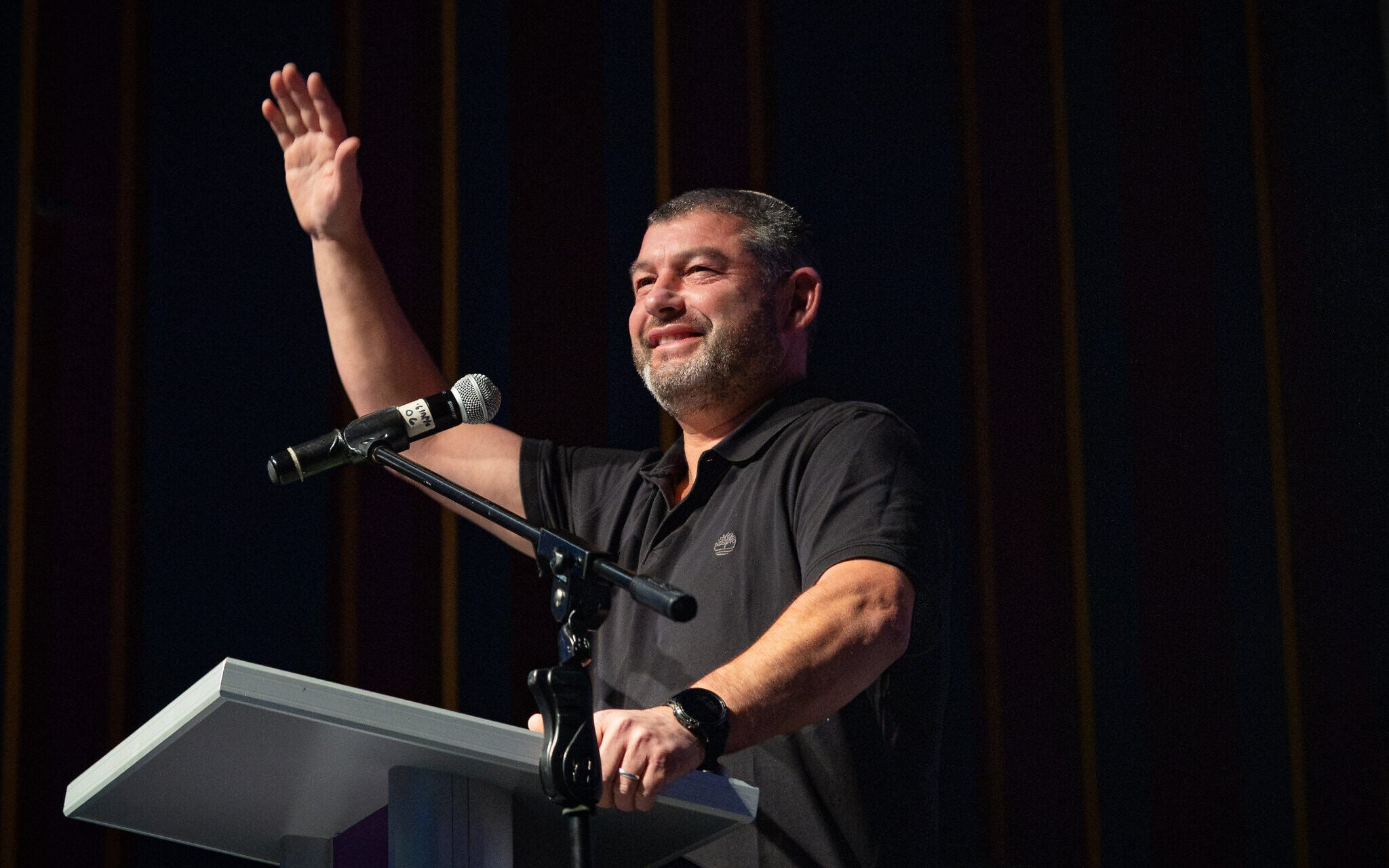
Meanwhile, the ultra-Orthodox United Torah Judaism party held a rally for tens of thousands of its supporters near Bnei Brak on Sunday evening, where party rabbis and politicians emphasized the importance of the vote to oppose military service.
UTJ chairman Ya’akov Asher told the crowd their vote was crucial to prevent further attempts to arrest Haredi draft evaders.
“When you stop young men on the street whose only sin is studying Torah – it is a disgrace to Torah and theology,” Asher said, emphasizing the community’s rights to study religious texts.
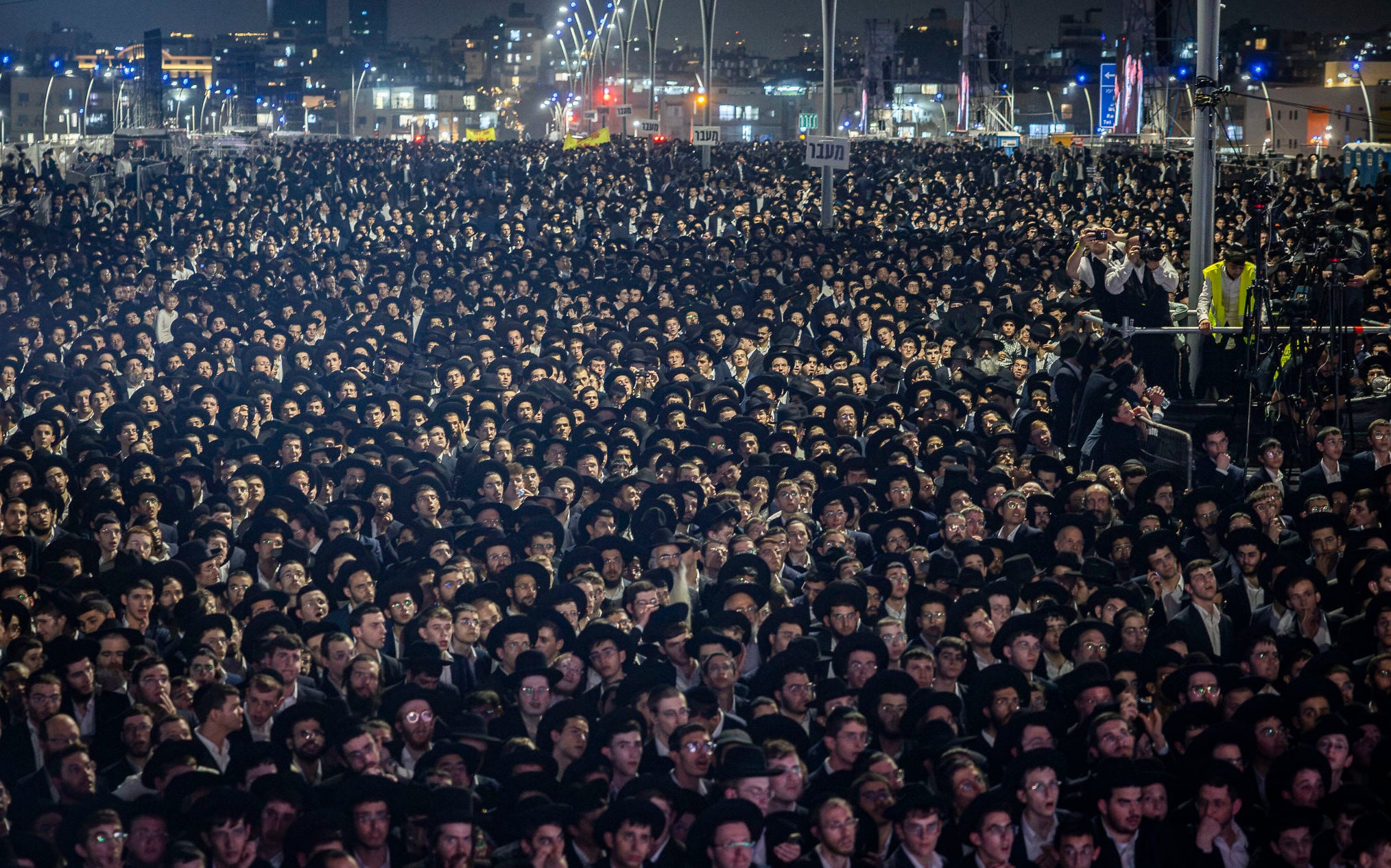
Moshe Maya, a senior member of Shas’s ruling Council of Torah Sages, said Haredi voters should form a bloc to maximize how much they will be able to demand in coalition talks following Tuesday’s election, in remarks during an educational conference in Jerusalem.
At present, the Haredi parties, Shas and UTJ, are close allies of Netanyahu and have been members of successive governments of his. They are often aligned in their policies, including staunch opposition to requiring Haredi men to serve in the military.
Maya suggested that, rather than committing to Netanyahu, Haredim of different backgrounds and ideologies unite to form a bloc that could act as a kingmaker in the election. He specified that such an alliance should include the extremist Jerusalem Faction, which organizes street protests against Haredi enlistment.
“Including the Jerusalem Faction, we’ll be 25 seats [in the Knesset]. We won’t enter any government,” he said. The Haredi parties are collectively polling at 15 to 17 seats in the 120-seat parliament.
“You don’t go with anyone, not Bibi and not Eisenkot,” he continued, referring to Netanyahu and opposition frontrunner Gadi Eisenkot. “Whoever will give more.”
With polls opening in some 36 hours, it is unlikely that Maya’s speech will have a significant impact on the Haredi vote.

Election panel says Hesder students can’t campaign, but doesn’t penalize parties
Central Elections Committee Chairman and Deputy Supreme Court President Noam Sohlberg decided on Sunday not to penalize the Religious Zionism and Likud parties, or the Union of Hesder Yeshivas and the Union of High School Yeshivas, following a petition by the Israel Education Watch organization over concerns that the parties’ campaigns will use students at the publicly funded yeshivas, or take advantage of other public resources.
Sohlberg said the petitioners did not demonstrate that yeshiva students had participated in election campaign activities or that the yeshivas had used public funds in election campaigns.
Sohlberg noted, however, that Hesder yeshiva students, who combine yeshiva study with military service, are indeed considered to be soldiers throughout their service, and are therefore not permitted to engage in election campaigning.
The CEC chairman ordered Israel Education Watch to pay the respondents’ and the state’s legal fees, because the CEC rejected another petition by the same organization just four days before its latest petition was filed, which he said was based on “many of the claims” of the first petition.
Israel Education Watch filed the petition against the backdrop of a declaration by Likud and Religious Zionism to send 2,000 activists to polling stations in Arab communities, which the group claimed would include Hesder yeshiva students.