El-Sayed and Rogers face off in Michigan race which tested Democrats’ ties with Jews
Heated midterm elections come to a head, with Democratic candidate's pledge to oppose US aid to Israel and criticism of Jewish state pushing many Jewish voters to back GOP rival
DETROIT, Michigan (JTA) — The US Senate race in Michigan, a deeply contentious contest that has strained Jewish relationships with the Democratic Party, drew to a bitter close Tuesday as voters headed to the polls in a race that could shape which party controls the chamber.
At its center is Abdul El-Sayed, the former county health director and Democratic nominee whose anti-corporate, Medicare For All candidacy has become a rallying cry for the national progressive movement.
His uncompromising stances on Israel have also made him a target among pro-Israel groups, including AIPAC, which has spent heavily against him in both the primary and general election. AIPAC’s rare entry into a general election race came to support El-Sayed’s opponent, Republican former congressman Mike Rogers.
One of El-Sayed’s positions on Israel — to end all US military aid — was once thought a far-left pipe dream. But that has changed. On Election Day morning, US President Donald Trump announced that, under his watch, nearly $4 billion in annual US military aid to Israel would wind down by the end of the year. Trump said Prime Minister Benjamin Netanyahu was in agreement with the need to end aid and deny Democratic critics a point of attack.
In his announcement of the plan, Trump cited El-Sayed.
“Why should we suffer the slings like lunatics like an El-Sayed when they don’t need it?” Trump said on Fox News, referring to Israel’s financial strength.
Representatives for the El-Sayed and Rogers campaigns, and for the Republican Jewish Coalition, did not immediately return requests for comment on Trump’s new pledge. It is unclear whether it will be straightforward for the White House to halt the funding by the end of 2026, given that the existing memorandum of understanding that governs it extends through 2028.
El-Sayed’s campaign has galvanized young voters and a range of other constituencies, and he pulled ahead in the polls in the race’s final stretch. But his questioning of Israel’s existence as a Jewish state and whether it or Iran posed a greater threat to the United States, as well as his prior associations with figures such as Hasan Piker, the streamer who has spread extreme rhetoric about American Jews, have sparked concern among Jewish Michiganders.
So, too, did comments the candidate made following the March terror attack on Temple Israel, a major synagogue in the state, in which El-Sayed appeared to link the attack to Israel’s war in Lebanon after reports that the attacker lost family in an Israeli strike. Hostile behavior from some of El-Sayed’s supporters toward pro-Israel Democrats, most prominently on display at the state party’s spring convention, has also alarmed Jews. El-Sayed has pledged to stand up to antisemitism.
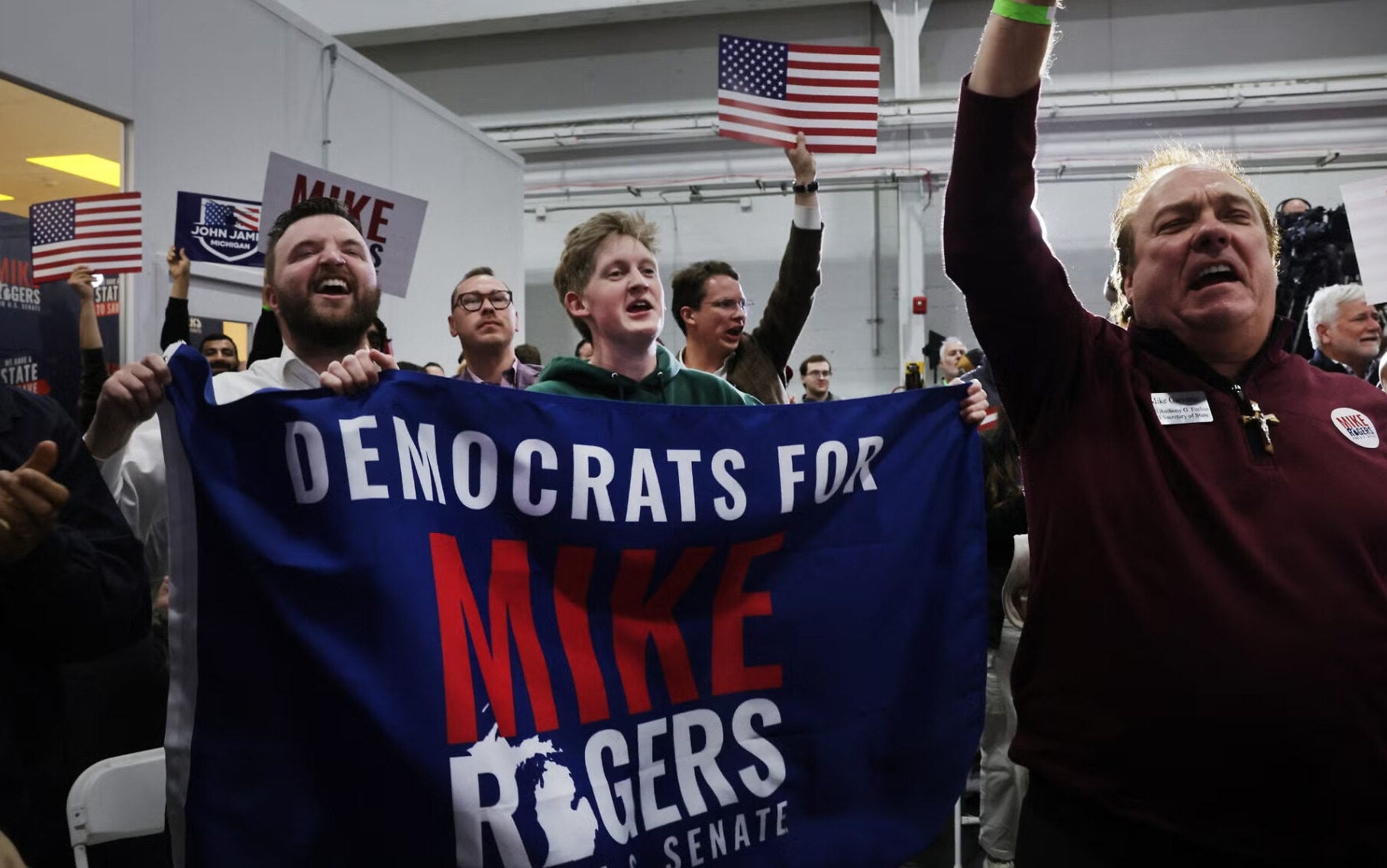
Some Jews who had long considered themselves Democrats, including several local Jewish leaders, have cited such controversies in pledging to vote for Rogers. In some Michigan Jewish neighborhoods, yard signs proclaim that a vote for Rogers is a vote “against antisemitism.”
Accordingly, Rogers has made a play for the Jewish vote. He told the Jewish Telegraphic Agency in October that his opponent is “anti-Jew,” while running ads that played up El-Sayed’s tenuous family associations with the Muslim Brotherhood.
Top Republicans have seized on the narrative, with Trump calling Jews “crazy” if they back El-Sayed, and Texas Sen. Ted Cruz calling him a national security threat. A Trump administration event to address antisemitism was held at a Michigan synagogue weeks before the election, though El-Sayed’s name was not mentioned there.
Jewish Democrats who had broken with El-Sayed found major validation in the race’s dramatic closing days. Democrat Haley Stevens, a strongly pro-Israel congresswoman who had narrowly lost to El-Sayed in the primary, flipped sides to endorse Rogers days after her Jewish fiancé, a Democratic megadonor, did the same.
The surprise move, which Jewish Democratic leaders joined many other prominent Democrats in criticizing, came after days of back-and-forth between Stevens and El-Sayed as she sought to publicly pressure him to condemn a PAC ad that had linked rising grocery prices to US aid to Israel.
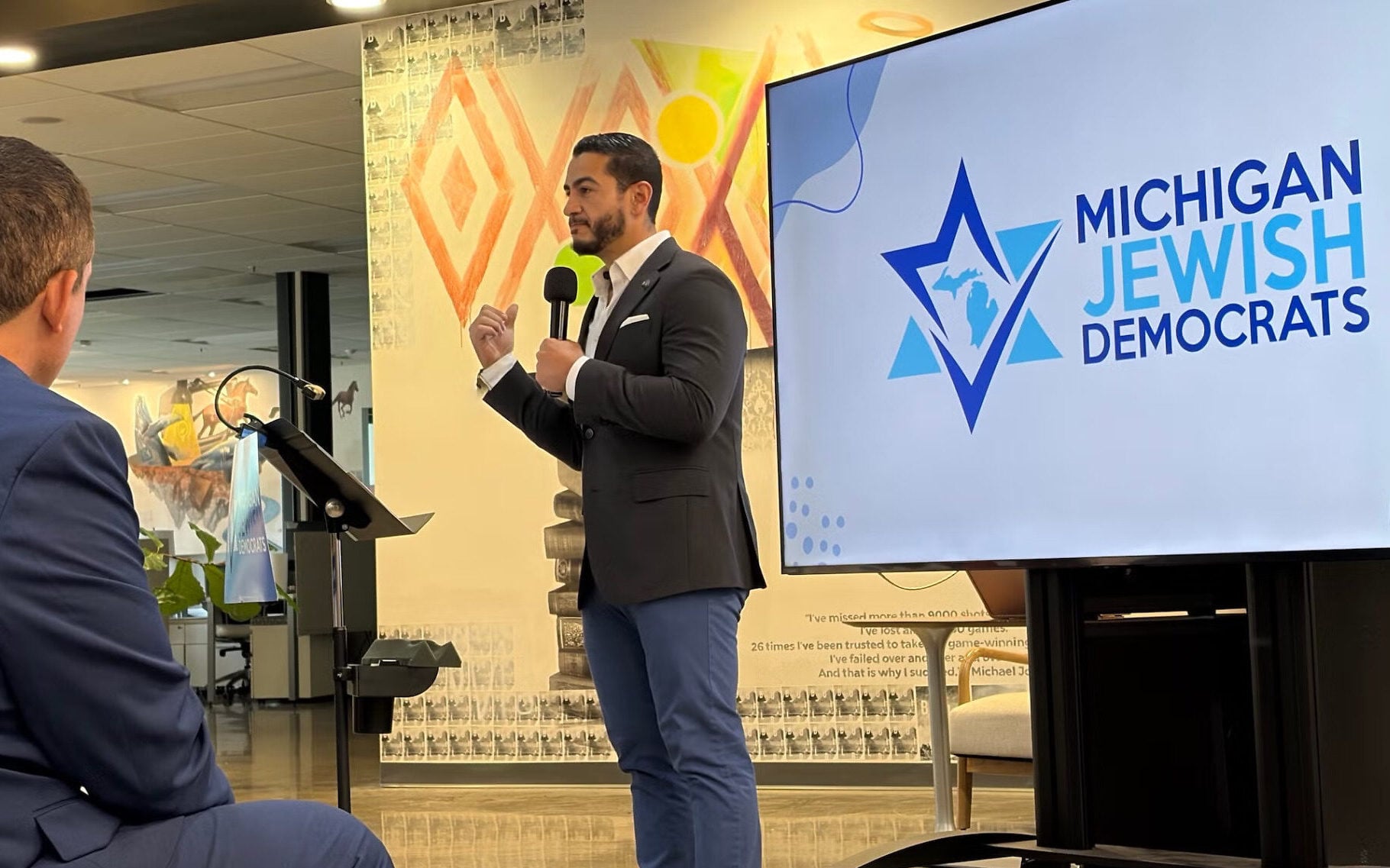
Meanwhile, some prominent Jewish Democrats in the state either avoided endorsing El-Sayed or did so with heavy reservations. Michigan’s Jewish Democratic Caucus, whose leadership has been deeply divided on El-Sayed, issued a statement Monday declaring the caucus would never vote for a Republican.
“Our commitment to the Democratic ticket remains resolute as we work to build a more inclusive coalition,” the caucus stated.
Throughout the campaign, El-Sayed has sought to reassure Jewish voters. He apologized for his Temple Israel comments; distanced himself from Piker; hired a Jewish outreach director; said in a recent “60 Minutes” interview that Israel has a right to exist; and sent mailers to Jewish households stating, “I am committed to protecting all Michigan Jews against hatred and injustice.” He told JTA in August that “the prerequisite of Jewish safety is never in question to me.”
More than 1,000 Michigan Jews have signed an open letter pledging to vote for El-Sayed, compared to 560 who have done the same for Rogers. Progressive Jewish figures of note have held salons throughout the state in a bid to convince on-the-fence Jews to back him.
Yet El-Sayed also has continued to stake out positions many Jews find alienating. He asserted in the campaign’s closing weeks that Israel was “not actually our friend” and declined during a debate to say whether Israel or Iran was the bigger danger to the US. His campaign also released an ad, designed to appeal to conservatives, that featured a brief clip of Tucker Carlson, the right-wing pundit who has promoted conspiracy theories about Israel. In addition, El-Sayed’s careful sidestepping of objectionable material about Jews and Israel from his ostensible allies, such as Piker and his uncle, left-wing anti-Israel pundit Cenk Uygur, has continued up to Election Day.
Ahead of Election Day, some liberal-leaning Zionist Jews tried to put pressure on El-Sayed to speak more directly to their concerns. A group of rabbis and other Jewish leaders launched Nonnegotiable Michigan in a bid to have him affirm what they called five core principles of Jewish participation in the Democratic Party, including “Jewish sovereignty in Israel.” After silence from the campaign, some of Nonnegotiable’s figureheads urged their followers to write in the 19th-century Jewish poet “Emma Lazarus” instead of voting for either candidate.
Michigan’s already small Jewish population, which numbers around 105,000 adults, has further splintered over El-Sayed’s candidacy. But it could prove pivotal to the outcome of a race that may determine control of the chamber. In 2024, the state’s Senate race was decided by fewer than 20,000 votes.
Either way, the race has crystallized the Democratic Party’s shifting fault lines over Israel — and many Jews’ growing uneasiness with their place in the liberal coalition.