El-Sayed and Vance call each other ‘evil,’ while both handling antisemitism the same way
The Republican US vice president and Democratic Senate candidate in Michigan each show reluctance to disavow inflammatory supporters, in sign of collapsing firewall between politicians and extremists
JD Vance and Abdul El-Sayed, it’s safe to say, do not like each other.
Vance, the Republican US vice president, recently said of El-Sayed, the Democratic US Senate nominee in Michigan, that there’s something about him “that is very, very evil.” El-Sayed responded to Vance, “Evil is dividing people for your own gain. Evil is selling out your morals for a little bit of power.”
But the two men have something in common: They’re both friends with mega-influential media personalities who have been accused of antisemitism.
Vance and El-Sayed have addressed — or, rather, tried to sidestep — those controversies in remarkably similar ways. Their responses show how quickly the discourse on antisemitism in America is changing, and highlight the collapsing firewall between politicians and extremists.
El-Sayed has close ties to Hasan Piker, the far-left, staunchly anti-Israel streamer. El-Sayed invited Piker to campaign for him in Michigan, delivering speeches promoting his candidacy. The two men have partied together and been photographed together.
Last month, Piker charged that Jews were “making antisemitism worse” by linking their identities to Israel, and warned that someone would “take action” against them as a result. Prominent Democrats condemned the comment as antisemitic.
El-Sayed put out a statement distancing himself from Piker’s remark. But he didn’t mention Piker by name in the statement, and has since rebuffed calls, over and over, to disavow his friend who has made multiple comments widely seen as antisemitic — in addition to a litany of harsh anti-Israel rhetoric. He has said the controversy has nothing to do with his Senate campaign — generally without acknowledging that Piker played a prominent role in that campaign.
“We’re in the state of Michigan. If you want to make this race about a streamer in California, I just think you’re missing the boat,” he said last week in response to a question about Piker’s comments.
Several days later, he said in another interview that the very demand to disavow people was unhealthy, and that he didn’t want to cut off Piker because he wanted to be able to speak to Piker’s audience of millions.
“The idea that you just categorically disavow an individual, that to me doesn’t make sense given that there are going to be things that people say that you deeply disagree with,” he said, adding a moment later, “There are 3 million people who listen to Hasan. And I want to offer them a pathway into an electoral movement.”
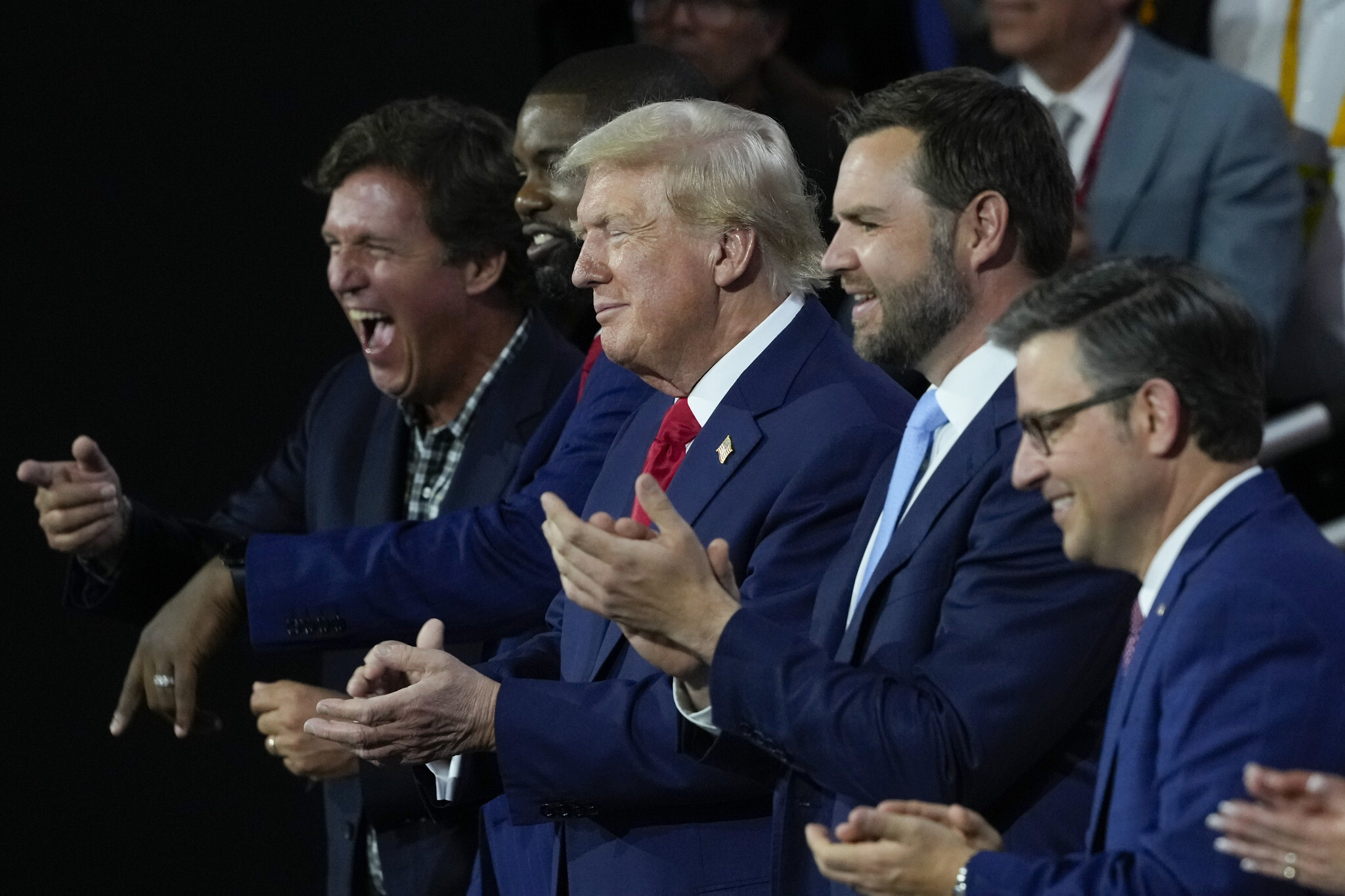
Carlson also has an audience of millions. He has made a litany of comments decried as antisemitic, while welcoming a series of Holocaust deniers and antisemites to his show for softball interviews. He is one of the most outspoken critics of Israel on the right.
Vance has described Carlson as a friend. Carlson pushed US President Donald Trump to make Vance his running mate in 2024. Carlson’s son used to work for Vance.
And like El-Sayed on Piker, Vance has declined, over and over, to disavow Carlson. He was asked about Carlson and other podcasters in a recent closed-door appearance at a Republican Jewish Coalition gathering, and avoided mentioning Carlson’s name.
Then, at a press conference this week, he addressed a question about Carlson directly — sounding very similar to El-Sayed. Notably, when listing statements of Carlson’s that he disagreed with, the vice president said nothing about Jews or Israel.
“Tucker is a friend of mine,” he said. “Tucker is a friend, despite the fact that we disagree on a number of things. And I’m not going to play the game where I throw friends under the bus because I have political disagreements with them.”
Part of this may be attributed to the horseshoe theory — the idea that people on the political extremes end up having similar ideas and using similar rhetoric. But El-Sayed and Vance are demonstrating that a key norm in US politics — disavowing extremists — is eroding.
Back in 2008, then-candidate Barack Obama was forced to denounce his pastor, Jeremiah Wright, who had criticized Israel, said “God damn America,” and said the US brought the September 11 attacks upon itself. The disavowal came after weeks when Obama had distanced himself from Wright’s rhetoric but also tried to put his remarks into context.
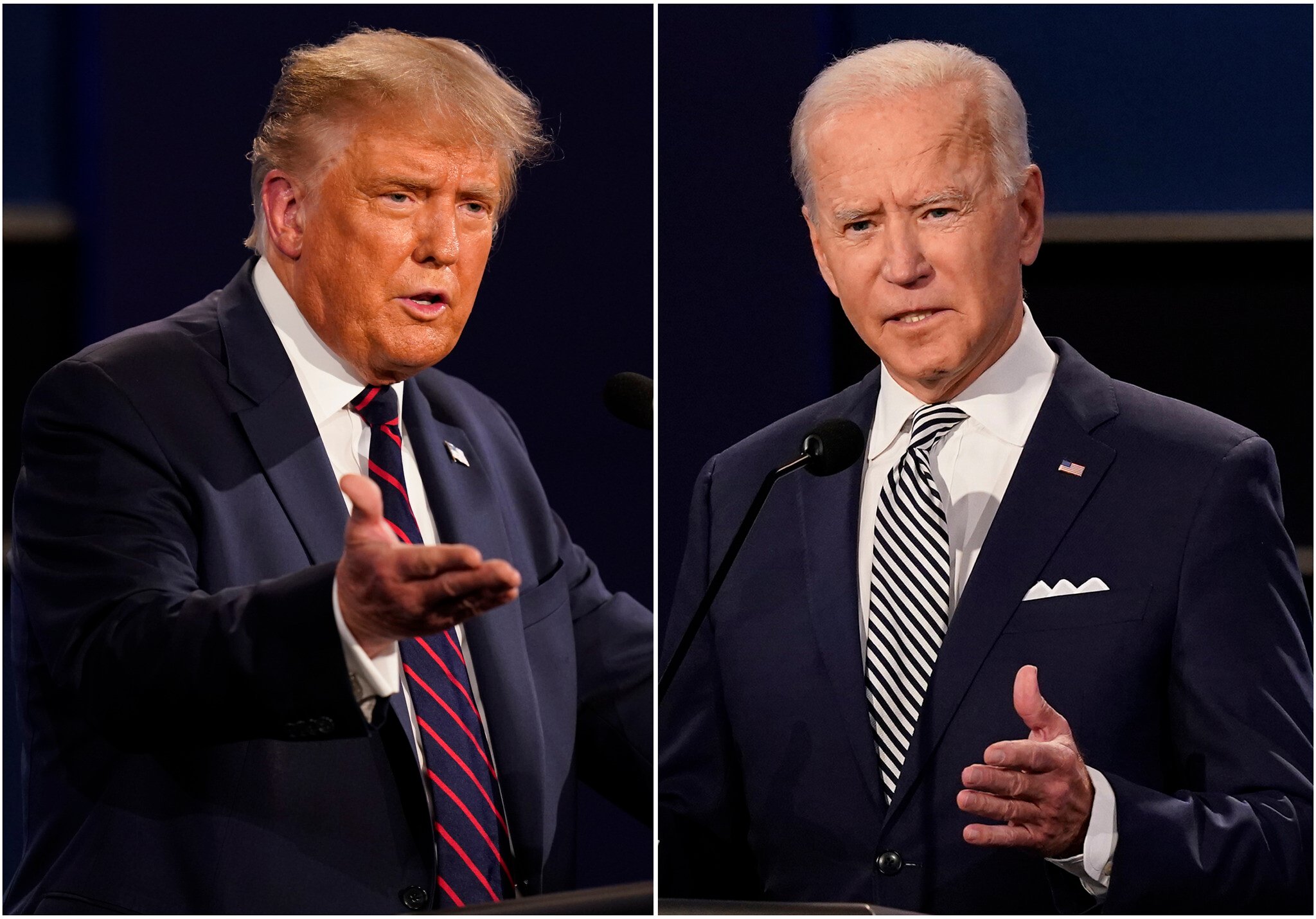
In 2016 and 2020, now-US President Donald Trump got into hot water multiple times for his hesitancy to denounce the KKK, its former leader David Duke and, later, the far-right group the Proud Boys. Trump’s remarks equivocating between neo-Nazis and their opponents at the 2017 far-right rally in Charlottesville, Virginia, spurred Joe Biden to run for president and, eventually, defeat him.
The phenomenon of prominent politicians rejecting the rhetoric of their extremist supporters even has a moniker in US parlance: the “Sister Souljah moment,” named after when Bill Clinton disavowed a rapper and activist of that name for inflammatory comments in 1992.
Those guardrails appear to be buckling. To be sure, the idea that democratic politics requires a big tent and a tolerance for uncomfortable views is widely shared. But in recent decades in the US, antisemitism was considered firmly out of bounds.
El-Sayed and Vance have both said they oppose antisemitism, and El-Sayed recently apologized for a remark that was seen as equivocating about an attack on a synagogue last year. But they have also demonstrated a reluctance to draw a line between themselves and supporters who peddle in extremist rhetoric. Last year, Vance went to bat for a government employee who resigned after he was discovered to be a self-proclaimed racist. The staffer was later rehired.
It’s important to note that Vance and El-Sayed are both in their early 40s, born less than three months apart, and came of age in a political culture markedly different from that of, say, Bill Clinton.
Their refusal to disavow inflammatory supporters comes after more than a decade of Trump insulting opponents and giving them derisive nicknames on social media. And it comes at a time when podcasters and pundits across the spectrum are gaining and retaining followers in a crowded media landscape by saying provocative, controversial things in episode after episode.
At a time when Israel has been at the center of international political discourse for nearly three years, a significant chunk of those provocative statements have taken aim at the Jewish state or even at Jews. Vance and El-Sayed (and Piker, 35) are members of a demographic, Americans under 50, that mostly feels unfavorably toward Israel. Carlson, at 57, isn’t that far out of that category.
And while El-Sayed and Piker, and Vance and Carlson, are on opposite ends of the political spectrum, there’s starting to be some crossover.
In a recent podcast episode, the far-right Carlson praised El-Sayed as “literally Trumpian” for his focus on domestic American concerns. But when it came to El-Sayed’s pro-Israel Republican opponent, Mike Rogers, his tone turned harsher.
“I wouldn’t vote for Mike Rogers at gunpoint,” Carson quipped. “He’s basically a tool of Israel and the intel agencies. How would you run someone like that? It doesn’t even make sense.”