Ex-FM slams PM’s ‘pogrom’ in Foreign Ministry
Yisrael Beytenu leader Liberman says Netanyahu 'weakened' office as country faces great 'diplomatic challenges'
Former foreign minister Avigdor Liberman on Saturday sharply criticized Prime Minister Benjamin Netanyahu over his handling of the Foreign Ministry in the recently appointed government, calling it a “pogrom.”
In a Facebook post Saturday, Liberman wrote that at his request, the Knesset’s Foreign Affairs and Defense Committee will convene on Monday to discuss the situation of the ministry.
“There is no need to expand on the ‘pogrom’ carried out by the prime minister in the Foreign Ministry over the last few months, moves that came one after the other and weakened, decentralized and scattered the [authority of] the Foreign Ministry into a body with no power or influence,” Liberman wrote.
He noted that “only recently” Israelis were made aware of the government’s intention to close seven Israeli missions around the world, including the US consulates in Philadelphia, Atlanta and San Francisco.
“With the struggle conducted by the State of Israel for American public opinion (through video speeches and other acts which only make it difficult for US Jewry to support the Israeli position)” on the upcoming Congress vote on the nuclear deal with Iran, “a questionable decision like this is made, and one can strongly suspect it stems from immaterial considerations by prime minister Netanyahu. In the past, when I served as foreign minister, I succeeded in preventing such a decision,” Liberman wrote.
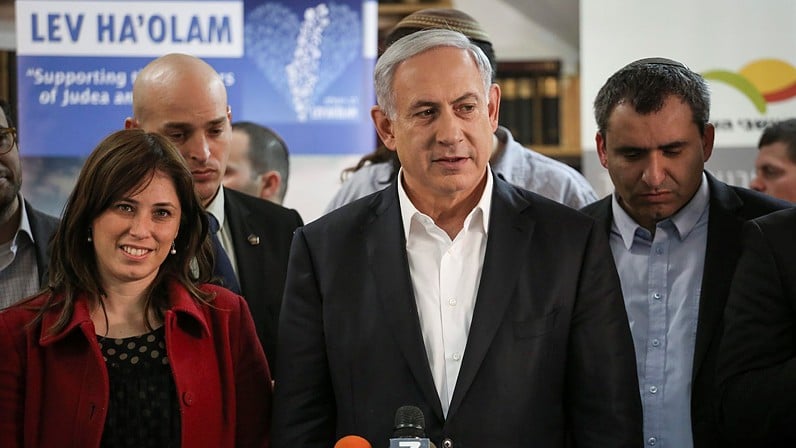
When he was in office, Liberman, unpopular in some mainstream circles for his hawkish views and unorthodox proposals to resolve the Israeli Palestinian conflict – including land swaps – was de facto a persona non grata in the United States. Netanyahu, who served as prime minister also in the previous government, was effectively in charge of ties with the US.
The Yisrael Beytenu leader, who after the March elections surprisingly withdrew his party from coalition talks just ahead of the legal deadline to announce a new government and left Netanyahu with a precarious 61-MK majority, also criticized a decision to fold the embassy from Cameroon “in the midst of a process of [the country] coming closer to Israel and on the eve of [UN] votes where every vote counts.” The decision, Liberman wrote, “raises great wonder regarding the judgment of the person making decisions on the Foreign Ministry today.”
Liberman cited the “harsh and unprecedented” statement by the UN’s secretary general against Israel following the terror attack in the Palestinian village of Duma last week, attributed to Jewish terrorists, and “the alarming passivity the US took regarding the condemning statement the UN Security Council issued against Israel on the matter,” and said they should “raise the red flag for anyone who understands the importance of Israel’s diplomatic standing [in the world] for the security and economy of our country.”
He added that “alarm bells should ring especially loudly” since in the coming month, Israel will face many challenges on the international front. Liberman noted the conference by the UN’s International Atomic Energy Agency, scheduled for mid-September, where a resolution calling for monitoring and inspection of Israel’s atomic facilities will be brought to a vote. The resolution is sponsored by several Arab and Muslim states spearheaded by Egypt. The Jewish state acknowledges the existence of such facilities but maintains a policy of ambiguity regarding nuclear weapons. Israel is not a signatory to the Nuclear Non-Proliferation Treaty, an international agreement banning the manufacturing and dissemination of nuclear weapons.

Arab countries regularly bring to the IAEA resolutions calling on Israel to reveal its nuclear activities. Israel has until now managed to block all such resolutions. “Last year we succeeded in winning [the IAEA vote] at a great margin. We did this through great effort that began long before the vote and [it took] the work of the entire top echelon of the Foreign Ministry and relevant Israeli diplomatic missions,” Liberman wrote.
“We worked to achieve this in close coordination with the US and with a series of countries in Africa, Asia and the former Soviet Union. Some of them voted with us, some we succeeded in convincing to abstain and others agreed to be absent, so as not to support the strong Arab bloc,” he added.
Liberman warned that if the “disintegrated” Foreign Ministry cannot work similarly this year and the “anti-Israeli resolution” is approved, “it will have severe and far-ranging implications for the security of Israel.”
Liberman then mentioned a General Assembly conference scheduled for the end of December, during which the UN Security Council will also convene. He mentioned “initiatives such the ones by France, New Zealand and the Palestinians, which may be accepted and force upon Israel difficult parameters for an arrangement with the Palestinians, or the Palestinians may receive recognition as a full member of the UN. There is great danger that this time an American veto will not be imposed and this scenario will become a reality.”
A French proposal for resolving the Israeli-Palestinian conflict, which was viewed aversely by Israel, was floated around earlier this year but has since been dropped. The proposal did not receive support by the US, which saw the French move as an attempt to overtake international sponsorship of the Israeli-Palestinian conflict from Washington.
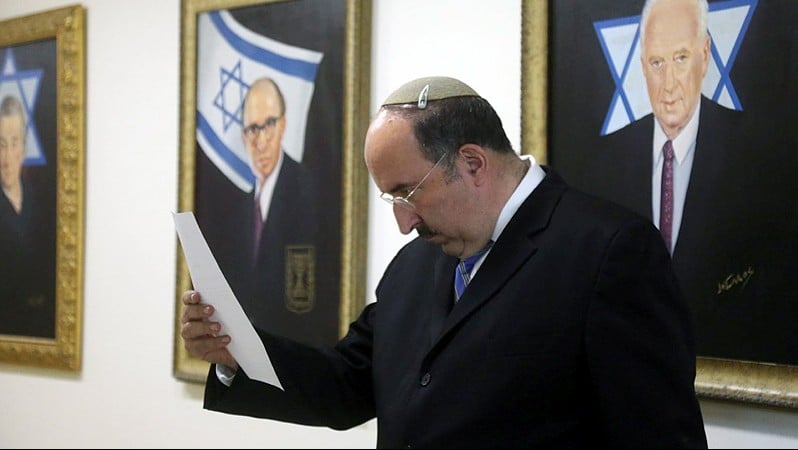
When Netanyahu announced his government make-up in late May, he appointed Likud’s Tzipi Hotovely as deputy foreign minister but did not appoint an overseeing minister, instead retaining the authority himself. He also appointed his close confidant Dore Gold as director-general of the ministry, instead of former director-general Nissim Ben Shitrit.
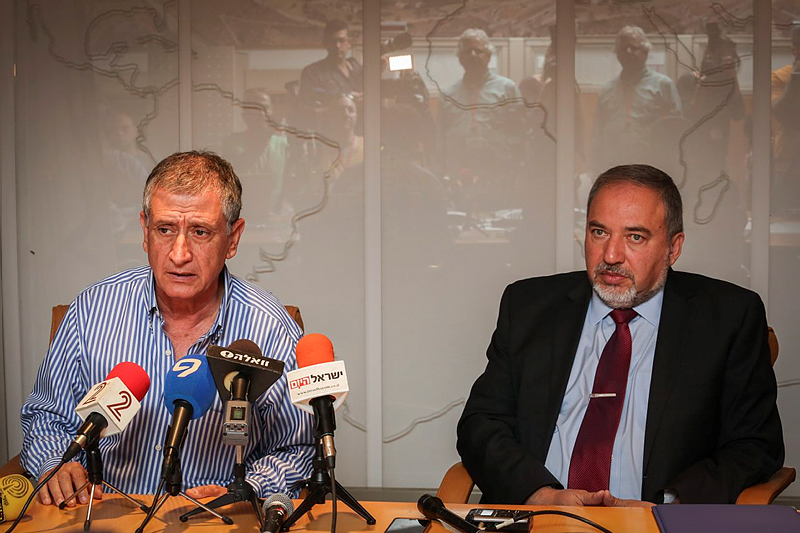
A senior official in the Foreign Ministry told Ynet in response to Liberman’s Facebook post: “There is no real reason to hold a superfluous mission in Minsk [Belarus], bizarrely opened during Liberman’s term as foreign minister, as there was no place to answer his demand to open a diplomatic mission in the Ural Mountains [in Russia]. The money saved will be used to strengthen missions in important places like China, India and Brazil.”
But according to Channel 2, some 30 ambassadors and senior staffers at the Foreign Ministry signed a letter sent to Netanyahu demanding that he work to cancel a planned cut of millions of shekels in the budget of the ministry.
“As voices calling to boycott Israel grow louder around the world,” they wrote, cutting the budget is “tragic news for the capability of Israeli diplomacy to continue and defend the State of Israel.”