Ex-Likud official warns party app could be used to illegally monitor polling stations
In a sworn affidavit to the High Court, a former campaign tech chief claims the ruling party’s new app can bypass the law and secretly transmit voter data in real time using AI
A former Likud campaign official warned in a sworn affidavit submitted on Sunday morning to the High Court of Justice and the attorney general that a new election day app developed by Likud, the ruling party, includes a feature that allows users to secretly listen in on and monitor activity at polling stations to collect specific information about voters’ identities. Such surveillance would violate both election law and a recent High Court ruling.
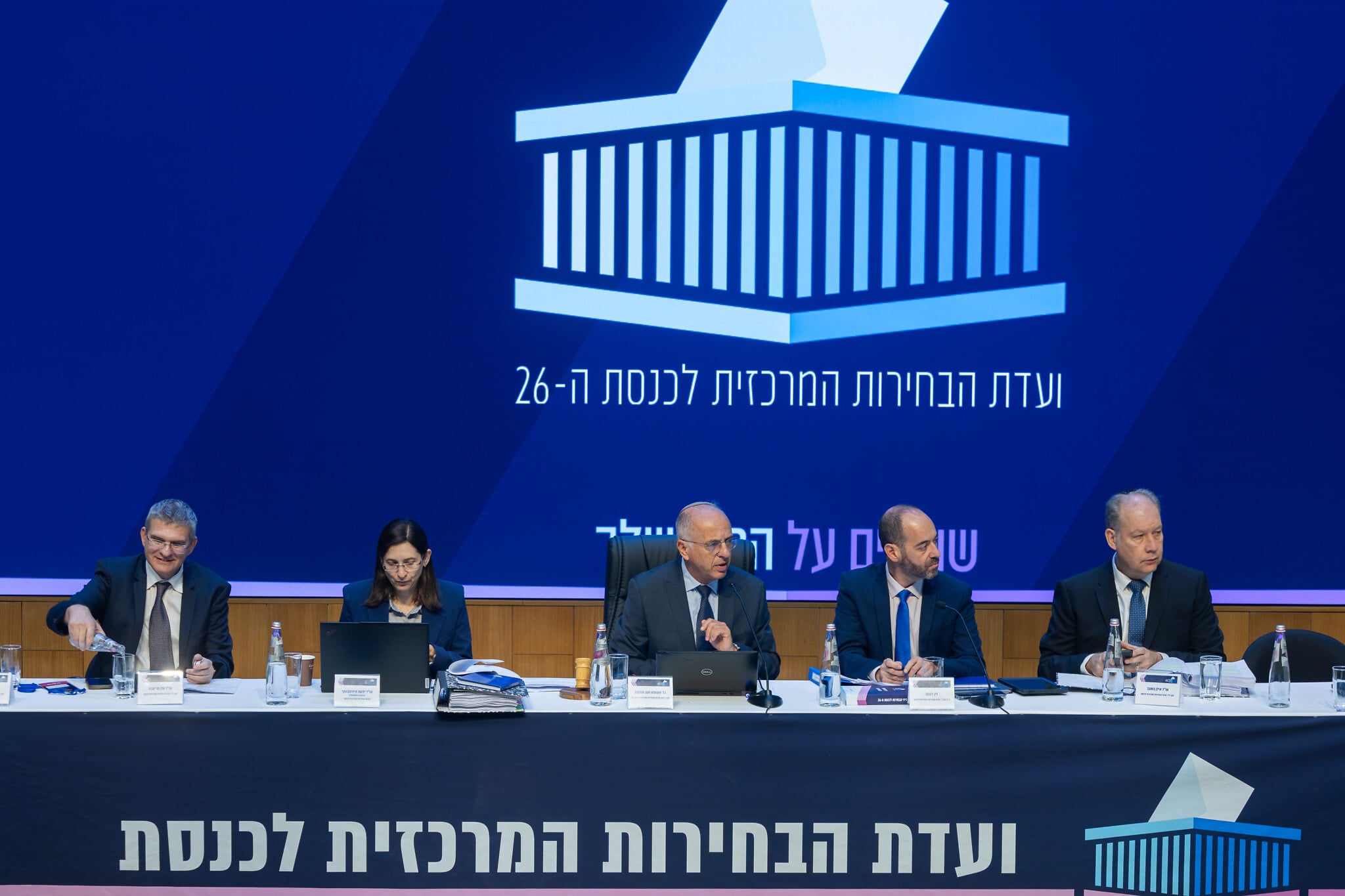
On September 17, the High Court of Justice ruled that specific information about voters’ identities and the exact times they arrive at polling stations may not be transmitted through any means or medium by party observers, upholding a decision by the chairman of the Central Elections Committee (CEC).
In Israel, the CEC is a statutory body chaired by a Supreme Court justice but composed of political delegates based on faction size. The committee plenum, which features a built-in majority of coalition representatives, had overturned the chairman’s decision, prompting the successful petition to the High Court.
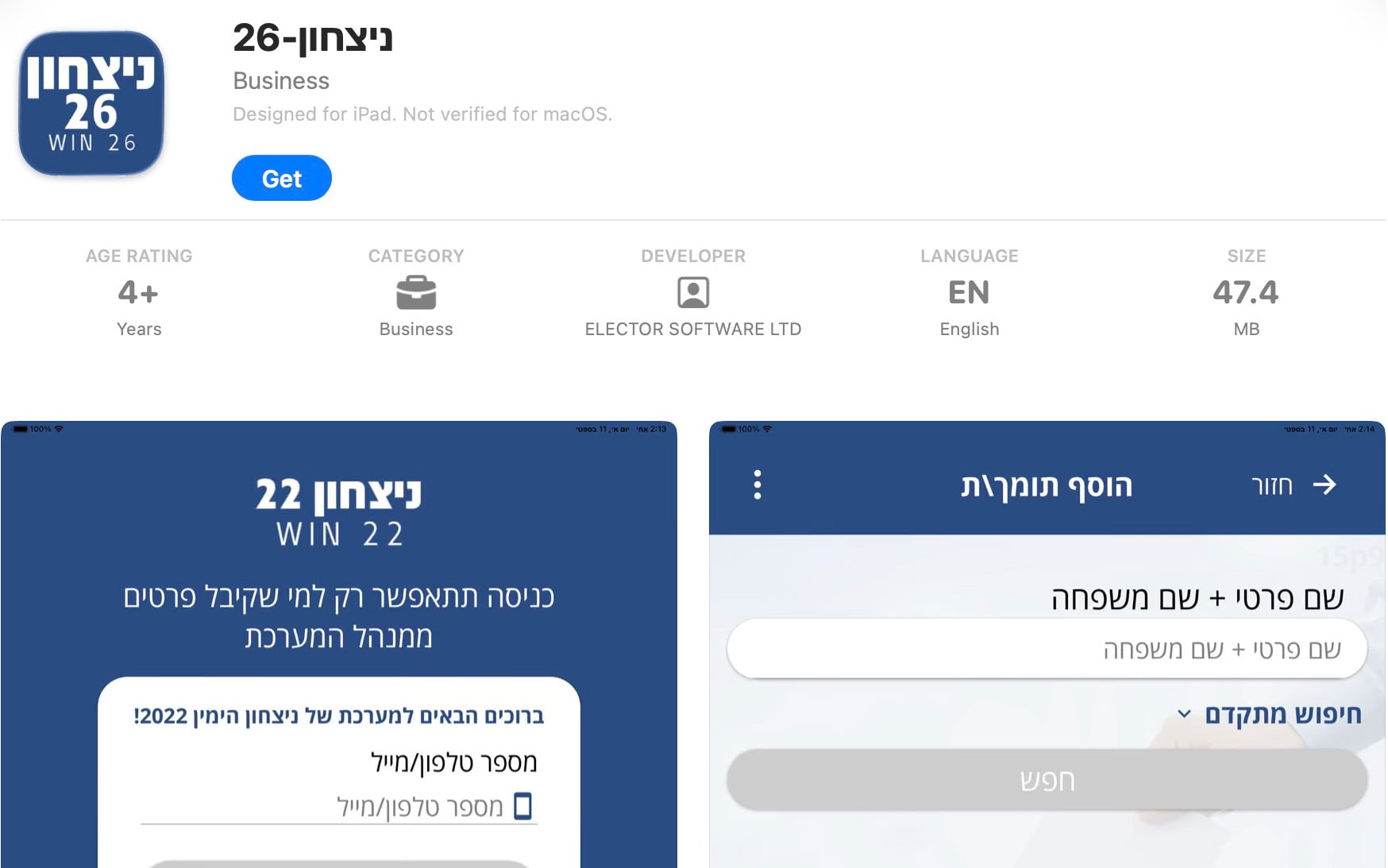
Five days after the High Court banned the practice, Likud sent a mass message to party activists announcing a new get-out-the-vote app called “Victory 26,” instructing them to install it on their phones and use it to identify potential supporters they know.
“In the previous election, you identified and brought supporters to the polls, and you decided the election,” read the message sent to Likud’s grassroots mobilization activists, which included a link to download the app.
“Now comes the real test: The left is expected to turn out in large numbers, and we cannot afford to remain complacent. We need you with us again — on the road to victory. Download the new app and identify your supporters now. Download, identify, win!” (Emphasis in original.)
David (Dudi) Rechter, who volunteered as the head of computing and voter mobilization at Likud’s campaign headquarters during the November 2022 general election, claimed in his new affidavit that the High Court’s ruling prohibiting the transmission of voter information can be easily bypassed using modern technology.
“The High Court ruling can easily be circumvented, whether by installing a dedicated app, opening a link, or simply exchanging ordinary WhatsApp messages, even without touching the cellphone,” Rechter wrote.
Polling stations in Israel are staffed by a bipartisan committee of political party representatives who cross-check voter rolls, overseen by a neutral chairman.
According to Rechter, the new app allows the circumvention of the High Court ruling “partly because the chairman of the polling station committee is legally required to read aloud the voter’s full name and serial number when verifying their identity at the polling station.”
“Since the party already knows the identity of its specific representative serving at that polling station and that representative’s cellphone number… the party can uniquely identify the voter and the exact time at which they voted,” Rechter wrote in his affidavit.

Rechter further described the current oversight situation at the ballot box as “an invitation to wrongdoing.”
“Given that the polling station committee chairman has neither the technical ability nor the legal authority to monitor the digital conduct of other committee members, and certainly is not permitted to search their personal cellphones, merely leaving a cellphone in a position where it remains accessible to its user while working at the polling station could easily turn it into an active listening device in the hands of polling station representatives, creating a wide opening for violations of the High Court ruling,” wrote Rechter.
A backup for the Elector app
The new “Victory 26” app replaced the controversial Elector app, which was used by several parties in previous elections and was heavily utilized by Likud.
In 2020, a security flaw in the Elector app leaked the personal data, including ID numbers and phone numbers, of the entire Israeli voter registry, exposing over 6.4 million people.
Speaking to The Times of Israel regarding his affidavit, Rechter revealed that in 2022 — when the Elector app was still legally permitted inside polling stations and specific voter information could be entered manually in real time, allowing parties to track whether their supporters had voted — Likud actually split its system between Elector and an internal app called “Victory 22.”
According to Rechter, in high-level campaign discussions he attended, the strategic possibility of preparing a technological backup in case Elector stopped working or was banned was raised several times.
“We were concerned that Elector would be targeted by Iranian cyberattacks on election day, so we prepared an alternative,” Rechter explained. “We said: What happens if Elector crashes? How do we report who voted? No app, no website. So we said: Fine, we’ll report it through WhatsApp.”
“Once someone is sitting at a polling station, we know their cellphone number and the exact polling station number. If they just send us the voter’s three-digit serial number [which identifies each voter at their polling station] over WhatsApp, that’s enough, because today there are automated engines, digital agents, running on WhatsApp Web at the other end that can instantly interpret what you’ve written as text and automatically update it in the central database.”
Rechter emphasized that this capability was ultimately never activated in 2022, both because there was no real need for it — as Elector was still legally permitted for use — and because artificial intelligence capabilities were much more limited at the time.
Today, however, the incentive to covertly use such methods is considerably greater, since the legal option of using Elector at polling stations has been eliminated by the court, while AI listening and transcription capabilities have advanced significantly.
Meticulously tracking turnout among a database of potential supporters is considered the most critical component of modern election-day preparations in Israel. If a party knows in real time that specific supporters have not yet voted, it can launch an aggressive get-out-the-vote operation in the final crucial hours before polls close, seeking to boost turnout in areas where it enjoys strong support.
Such operations include targeted phone calls, making house visits, dispatching transportation teams, and even enlisting neighbors to maximize voter turnout. Supporter lists combined with real-time polling station data are therefore considered invaluable tools for boosting a party’s total vote and significantly improving its electoral prospects.
As noted, the High Court’s September 17 ruling prohibited the transmission of specific information about individual voters. However, Likud formally asked the Central Elections Committee for permission to transmit basic numerical turnout data in real time — and that request was approved.
Crucially, this authorization allows electronic devices, including smartphones, to be brought into polling stations and left on the table.
Using those smartphones to “broadcast” voters’ names and identification numbers through automated bots or live recording would constitute a violation of election law and potentially illegal eavesdropping as well.
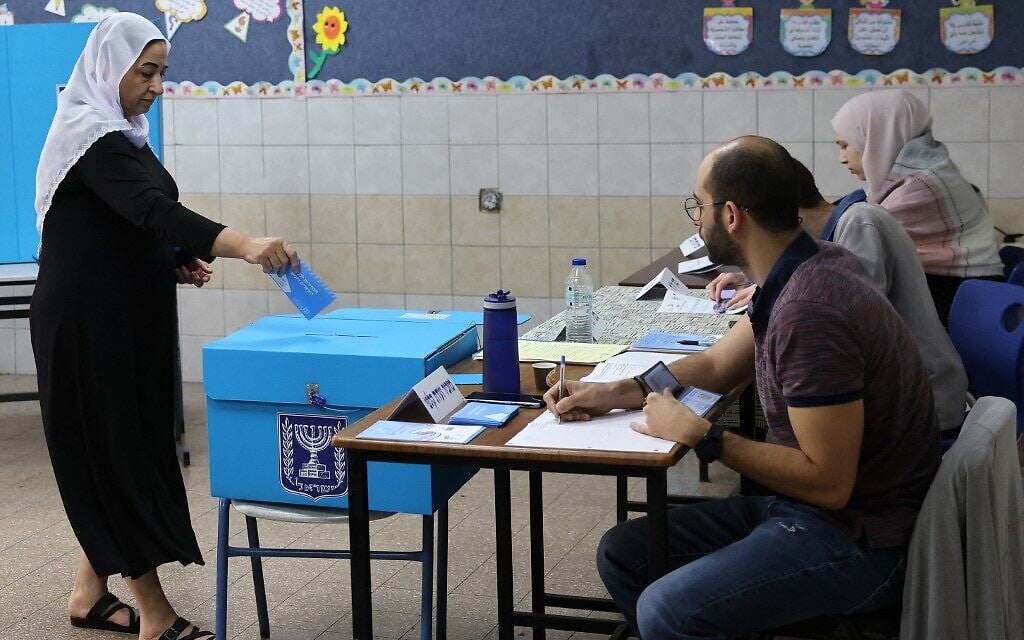
But if the information is transmitted passively through a phone’s open microphone, without any manual operation by the party observer, detecting the violation would be extremely difficult for election officials.
Phones on the table
Last Thursday, attorney Shachar Ben-Meir formally asked the Central Elections Committee to prohibit bringing cellphones into polling stations altogether to prevent this exact scenario.
His request was rejected by the committee’s legal adviser, Yifat Siminovsky, who determined that current regulations strictly prohibit only phone calls and the active use of communication devices while a voter is physically present at the polling station and during the final vote counting.
The committee ultimately permitted the use of phones for numerical turnout counting, subject to four strict conditions: The count must not allow specific individuals to be identified, must not involve recording specific events such as voting times, must not interfere with the voting process, and must not include photography or audio recording.
However, Likud’s insistence on allowing phones to remain on the tables at polling stations for basic data transmission raises questions for election integrity watchdogs.

First, the CEC itself already intends to publish official turnout figures for every polling station at regular intervals throughout election day. Furthermore, party observers possess the ability to manually count voters and report the basic numerical figures outside the polling room during breaks or at any other time. Using phones inside polling stations is not technically necessary for this stated purpose.
Second, concerns about the illicit use of apps, bots, or artificial intelligence software to transmit prohibited information could be addressed simply by legally requiring observers’ phones to be kept inside their bags, with their removal permitted only during official committee breaks throughout the day.
Nevertheless, according to internal legal correspondence, Likud fought to secure formal permission to keep phones active and visible at polling stations.
In her formal response to Ben-Meir, Siminovsky acknowledged that if software were to listen to and transcribe polling station conversations without the committee member’s explicit knowledge, this would constitute a criminal offense of illegal eavesdropping.
However, she determined that Ben-Meir’s request — which at the time was supported only by a confidential affidavit from an anonymous source — contained “unsubstantiated speculation” and therefore required “substantive details and a public affidavit” before the committee would ban phones entirely.
Such an affidavit now exists, formally signed by a former Likud campaign official. It was submitted on Sunday morning to the High Court and the attorney general by attorney Yuval Yoaz, chairman of the Democracy Guard NGO. Yoaz also serves as legal commentator for Zman Yisrael, The Times of Israel’s sister site in Hebrew.
The Times of Israel contacted the Likud party on Saturday night for official comment regarding the affidavit but has yet to receive a response.