Exhibit highlights art from area invaded on October 7
'Voices from the Gaza Border Communities,' showing in Jaffa, presents works by 75 artists from the Western Negev -- those who survived the Hamas-led attack, and those who didn't
The artworks exhibited at Jaffa’s Amiad Center range from amateur to expert.
What they have in common is the artists’ origins, with all from communities in the western Negev, the region attacked on October 7, 2023, by Hamas terrorists.
Seventy-five artists participated in the “Voices from the Gaza Border Communities” exhibit, curated by Iris Elhanani, and open to the public through October 8 at the community center.
The expansive, engaging exhibit includes pieces by artists who were murdered on October 7, 2023, or afterwards.
There are bucolic kibbutz scenes painted in miniature on pieces of machinery by Aviv Atzili, a member of the Kibbutz Nir Oz security team killed in battle on October 7, and the terrifying imagery of Hamas terrorists landing their paragliders at Kibbutz Kfar Aza, photographed by Roee Idan, a member of the kibbutz and photojournalist who was killed alongside his wife, Smadar Idan, on that day.
Longtime Nir Oz resident Chaim Peri, who was taken hostage and killed in captivity, is present in one of his sculptures, a lifelike bird formed from metal, placed near the colorful paper mache works created by Eliko Reichenstein, from Kfar Aza.
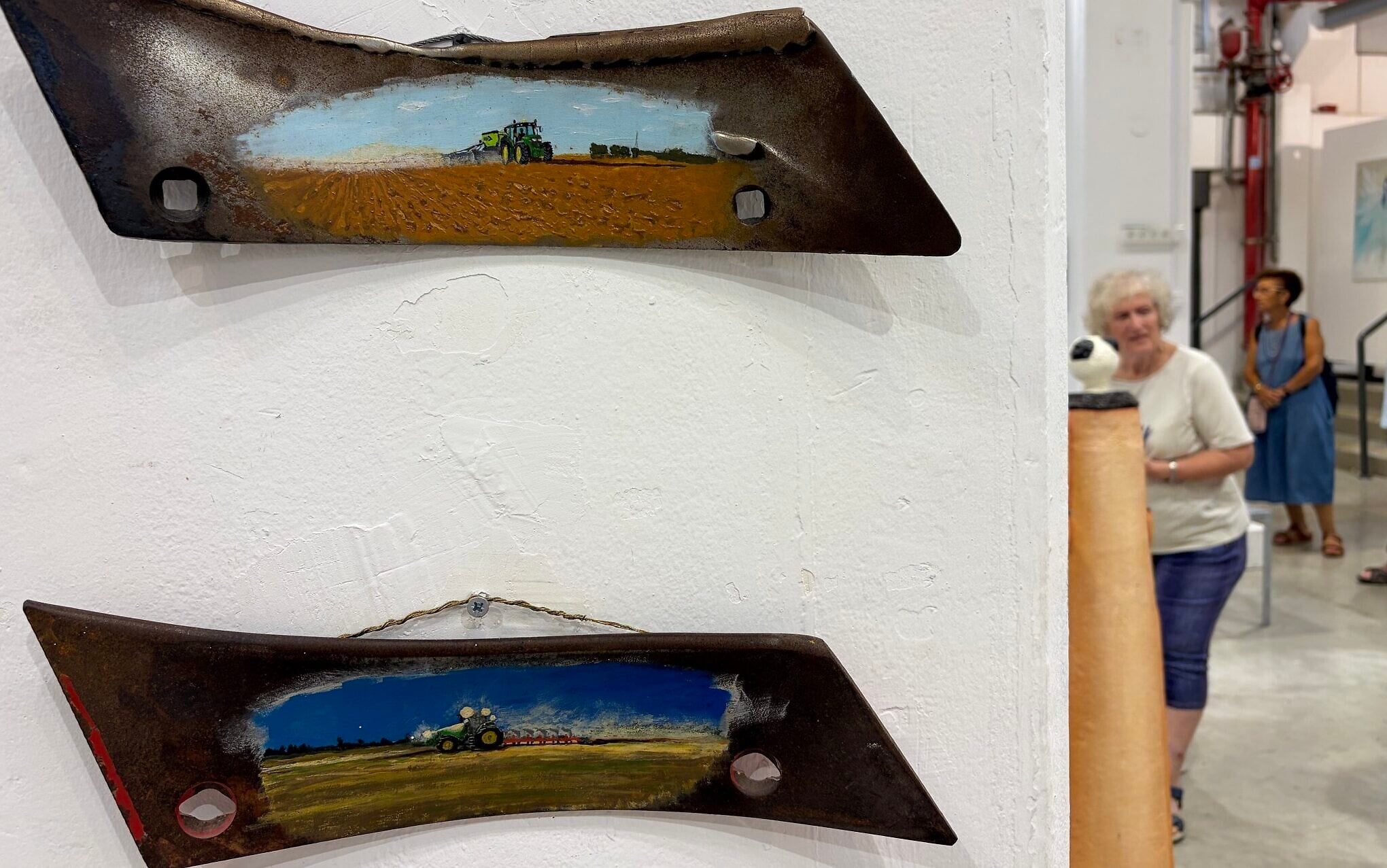
“The goal is to expose the artistic richness that exists in the Western Negev, to present the voices of artists who continue to create and those of artists who are no longer here,” said Elhanani. “The works are not only a testament to memory, but also an expression of the resilience, hope and continuity of a creative community in the south that continued to make art even in the last three years.”
Artists from the cities of Sderot and Ofakim, as well as 20 kibbutzim and moshavim, including Be’eri, Kfar Aza, Nir Oz, Nirim, Erez, Zikim, Netiv Ha’asara, Magen, Gvulot and Yakhini, participated in the exhibit.
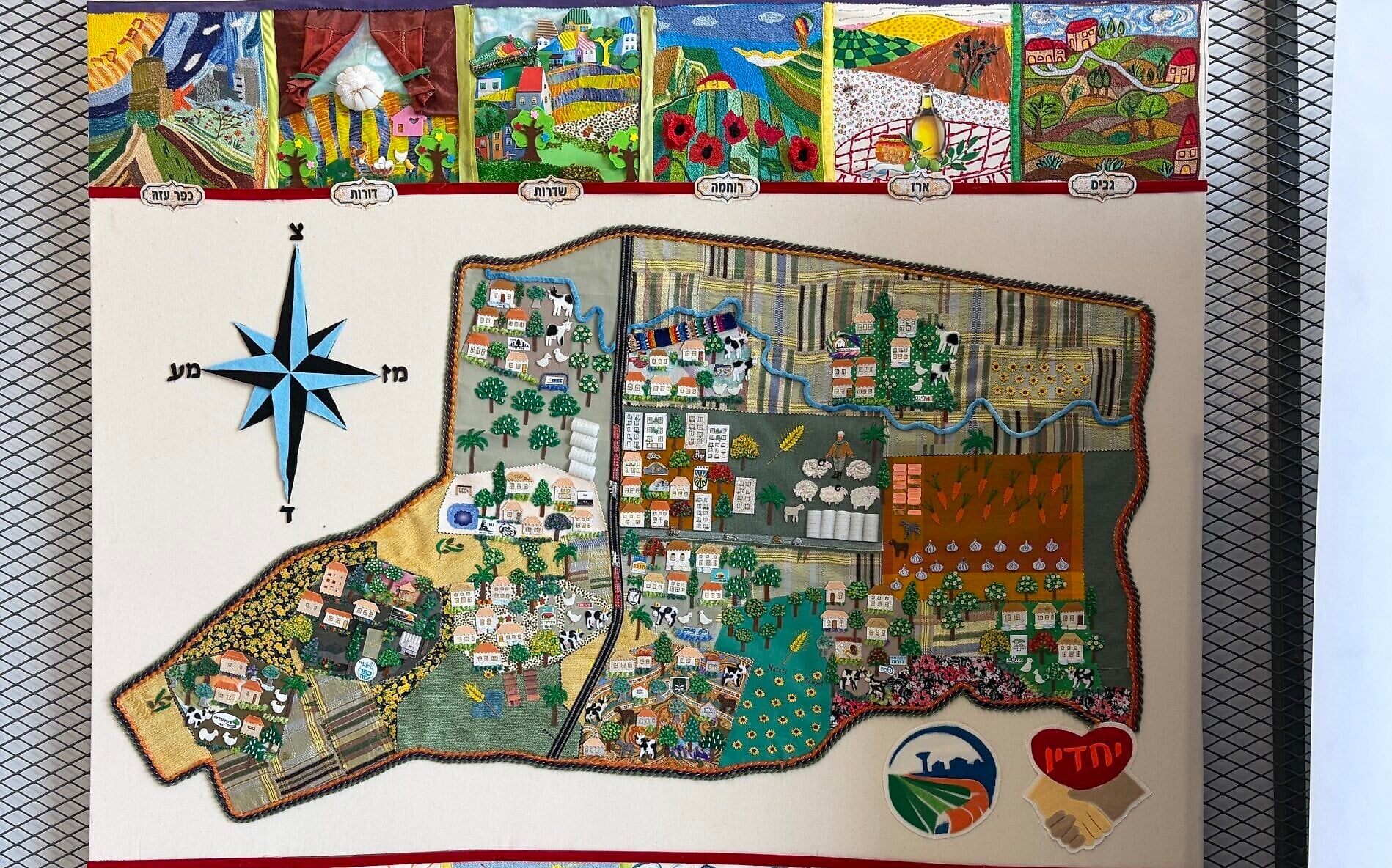
A consortium of older women from eight kibbutzim embroidered detailed squares of their kibbutz communities, forming a tapestry of the Negev, with its planted fields, red-roofed houses and sheathes of wheat.
A kibbutz landscape saturated in blue, by Ziva Jelin, a well-known artist from Kibbutz Be’eri, hangs prominently on a back wall, surrounded by other painted reminders of the south, including canvases of red anemones, the sharp painted lines of a plowed field, and the rays of a setting sun.