Clashes in synagogue as police make final push to evacuate Amona
After overnight negotiations to avoid forcible eviction apparently fail, police clear a home and enter the synagogue where dozens are barricaded
Clashes erupted between security forces and protesters as police breached the Amona outpost’s synagogue on Thursday afternoon, in an effort to wrap up the evacuation operation.
Just before 1 p.m., police officers entered the settlement’s synagogue, where the last of the protesters had barricaded themselves, as attempts to get the demonstrators to leave peacefully failed.
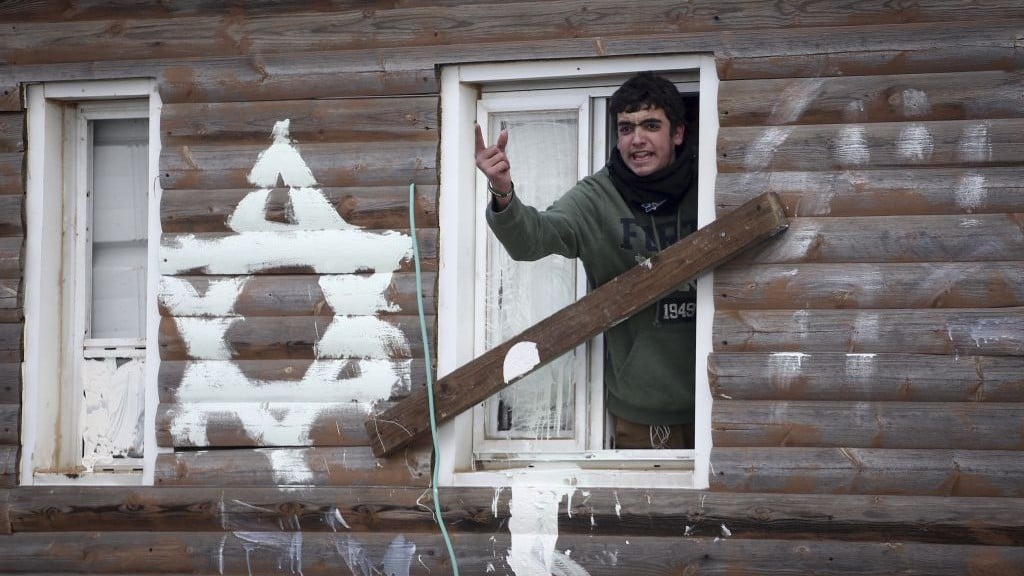
Demonstrators struck the police officers with metal rods, injuring several of them, according to initial reports from the scene. Police held up plastic shields over the synagogue’s windows as protesters threw bottles and debris at the officers.
The protesters also sprayed a fire extinguisher inside the building as police entered. Initial reports that a fire had broken out and that smoke was billowing out of the building were incorrect.
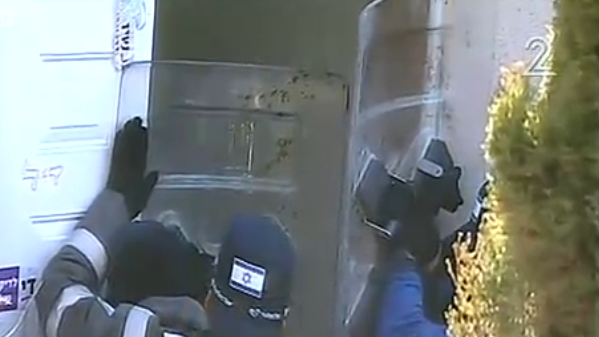
Police say 60 to 100 people may be inside the synagogue. These hold-outs were seen by police as some of the more extreme protesters.
Earlier, several dozen protesters were pulled out of a home where they had holed up during the night, following the evacuation of all of the illegal outposts’ 40 families, many of them being carried out as they showed passive resistance.
The came after a day that saw police evacuate nearly the entire outpost, pulling tearful settlers from homes and battling protesters in low-level clashes.
As night came and temperatures dipped to freezing, most protesters either had been forcibly removed from the outpost, left of their own volition or were inside the synagogue and one last mobile home, with only a few milling around.
Police said forces were making last efforts to convince the protesters to depart peacefully, but were getting ready to clear the synagogue by force if necessary, setting up a final showdown in the outpost which was the scene of a violent melee during a partial evacuation in 2006.
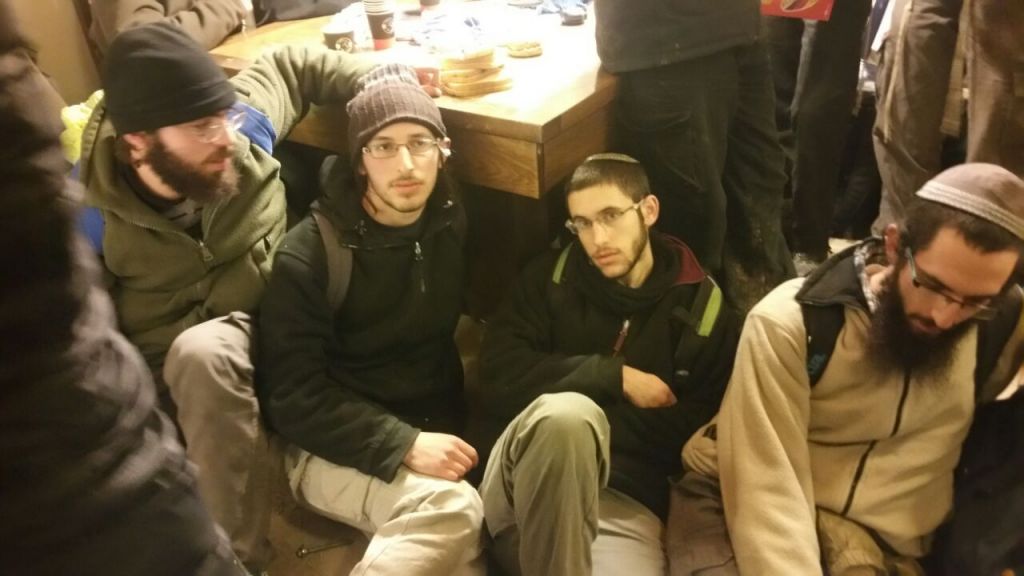
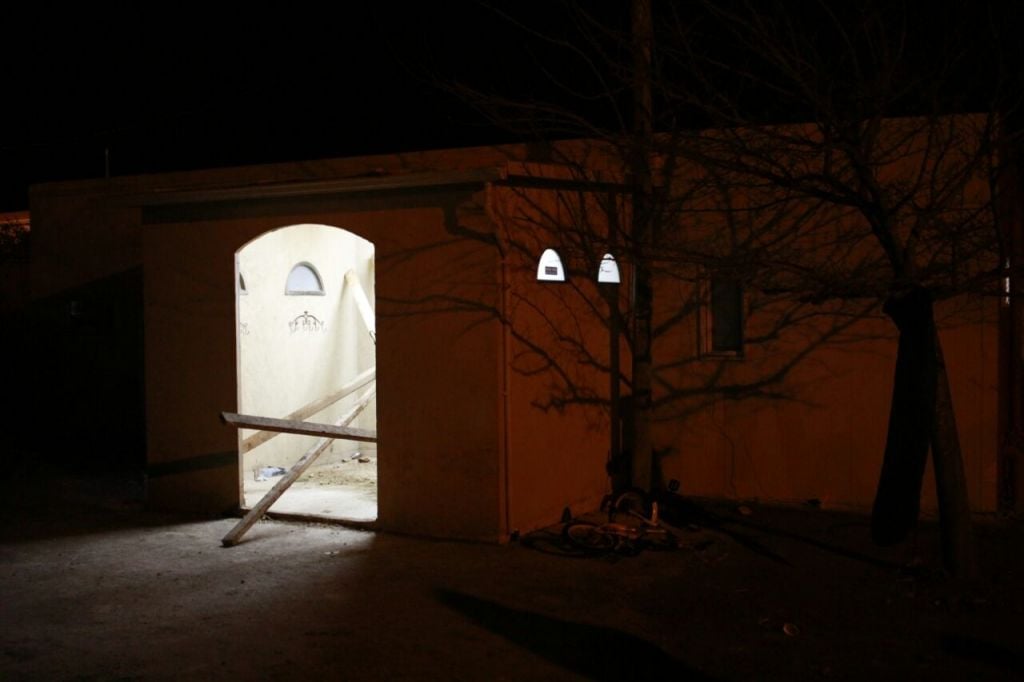
The synagogue is the largest permanent structure in the outpost, and a particularly sensitive site given its religious nature. Protesters barricaded the entrance to the building with wooden planks in an apparent effort to slow the security forces.
Wednesday’s day-long evacuation was marked by only scattered scuffles and some throwing of bricks and other materials as most protesters and settlers showed only passive resistance, but police raised fears the final evacuations could take a more violent turn.
With police surrounding the synagogue Thursday morning, protesters inside threw bottles with liquids at the cops, according to the Ynet news website. It was not clear what liquid was thrown, but a day earlier several officers needed to be treated after having bleach thrown at them.
“Whoever is still around is the hard core of lawbreakers who came to create a provocation, and we are preparing to evacuate the synagogue and the home next door,” police spokesperson Meirav Lapidot told the news site Thursday morning.
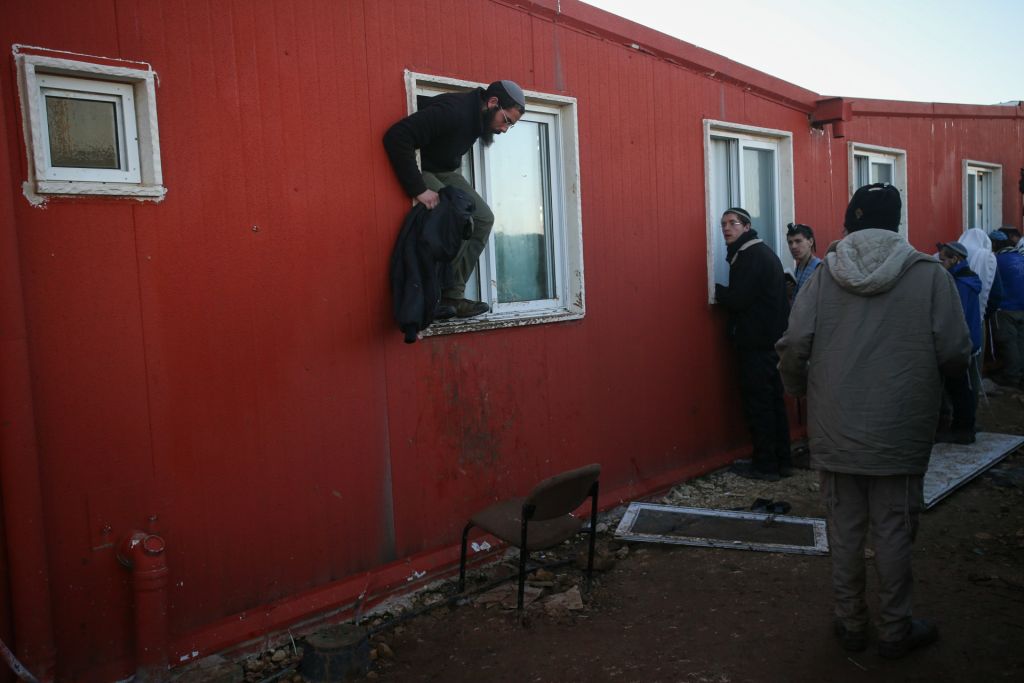
Police said Thursday they had removed by force some 800 protesters from the hilltop enclave, as they neared the end of the operations.
Twenty-four police personnel were taken to the hospital with light injuries, mostly from the fighting, but some from hypothermia. Several protesters were also hurt and taken to Jerusalem for medical care.
Thirteen people were arrested for disturbing the peace and obstructing police work, police said.
A police source told Ynet that they wanted the protesters to file out voluntarily “to prevent forcible evacuation and to preserve the holiness of the place. We hope that these efforts will bear fruit and that the evacuation ends peacefully.”
Videos taken inside at least one home and the synagogue showed police looking on as protesters, some of them chained to furniture, prayed and pleaded to be allowed to stay.
In one, a weeping community leader compares the court-ordered eviction of residents to the biblical story of the sacrifice of Isaac. There was “great blasphemy” in turning children out of their beds and forcing people to give up their life’s work, he said.
Another video shows a police officer asking the remaining protesters in a house to leave in a respectable manner that honors their community and sets an example.
On Wednesday, two Torah scrolls were seen being removed from the outpost along with a carful of women who had agreed to leave. The women were part of about a dozen families who chose not to resist the eviction notice during the afternoon. However, a police officer remarked that while they were leaving without force, “at this point, no one is leaving here willingly.”
The rabbi of the outpost, Yair Frank, told Army Radio that he had spent the night at the outpost after being allowed to briefly return to his home. However, no other settlers were seen attempting to return to their former homes, deemed built on private Palestinian land and ordered by Israel’s High Court to be razed by February 8.
Frank called for nonviolent resistance to continue, comparing the eviction operation to a woman being raped.
“One needs to express this protest, like a raped woman needs to cry out,” he said, repeating a comparison made a day earlier by MK Betzalel Smotrich (Jewish Home).
All the homes in the outpost but one were cleared as of midnight on Wednesday.
By the next morning, crews were seen entering the outpost to pack up belongings left behind by the settlers ahead of the eventual razing of the homes and other buildings.
The evacuation began Wednesday as unarmed police in blue sweatshirts and black baseball caps made their way up the hill around midday. On the hilltop, home to some 40 families, hundreds of nationalist youths erected makeshift barricades out of smashed tiles, rusty metal bars and large rocks, as well as burning tires and furniture, to slow their advance.
Protesters hurled stones, bottles and bleach at police and most others resisting the eviction order only passively. However, emotions ran sky-high, with protesters and evacuees yelling at officers or pleading with them to refuse the orders.
One border police officer at the scene said he would not take part in the evacuation. He was led away by a colleague as protesters ran alongside, praising him.
“This is a dark day for us, for Zionism, for the state and for the great vision of the Jewish people returning to its homeland,” Avichay Boaron, a spokesman for Amona, told Channel 2 TV.
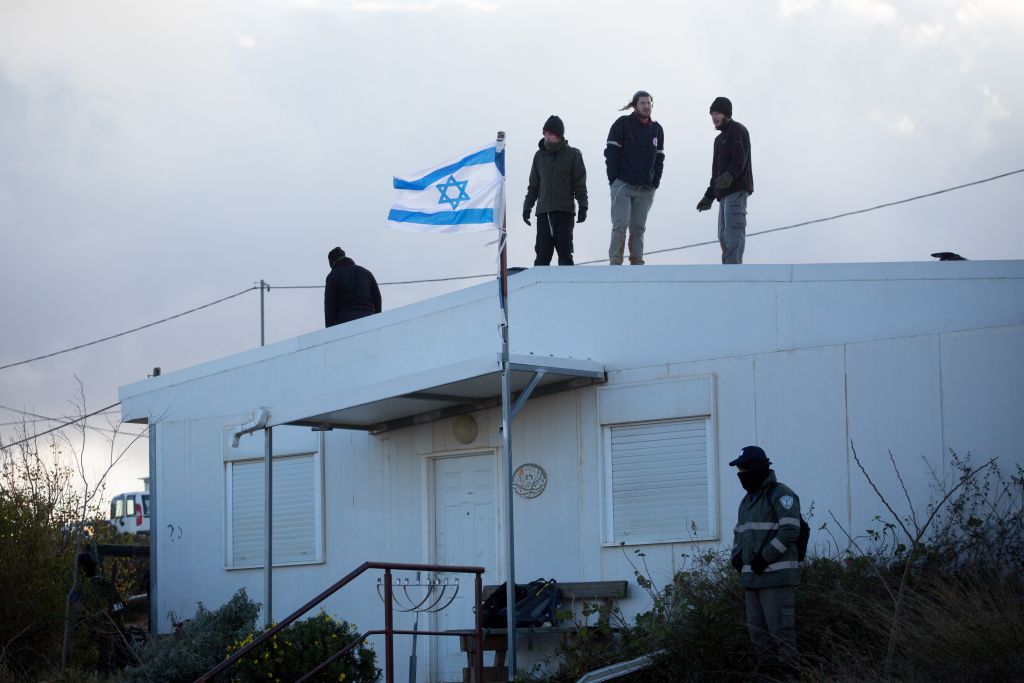
About 3,000 security personnel were deployed to the operation; about 1,000 people — residents and their supporters — were estimated to be at Amona when the evictions began.
Police said Wednesday they planned to work through the night to clear out the remaining homes and protesters.
“There’s no deadline for the evacuation. It’ll end when it needs to end. We don’t want to go into time pressures,” police spokesperson Meirav Lapidot told Channel 2 news.
Prime Minister Benjamin Netanyahu announced Wednesday night that he had ordered the creation of a new settlement to replace Amona, the first official new Israeli community in the West Bank in some 25 years.
The announcement came hours after the High Court shot down an agreement for most of the settlers to move to an adjacent plot of land, after the land’s owner came forward.
The deal, struck last month, staved off an earlier evacuation that had also threatened to be met by violence.
As the army began to prep for the evacuation operation Tuesday night, protest organizers had told supporters to make their job as difficult and long as possible, and that message was apparently taken to heart.
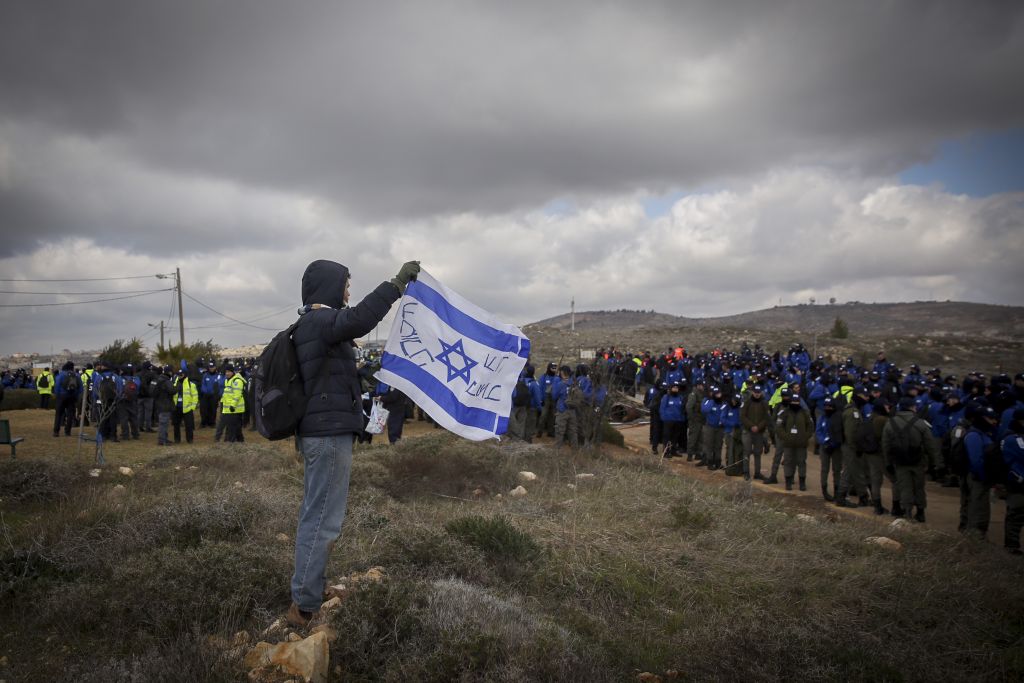
Hundreds of protesters, most of them religious teenage boys but also a number of right-wing lawmakers who had flocked to the outpost ahead of the evacuation, locked themselves inside houses and sheds. At one home, several dozen young residents and supporters linked arms, sat on the floor and sang songs, including the national anthem, when police came to remove them.
On Tuesday residents were given eviction notices, warning them to be out of their homes within 48 hours. The order allowed residents to file a new appeal to the IDF for a further 48-hour extension. Nevertheless, police began the evacuations a day later.
After over a decade of delays and legal wrangling, the High Court ruled in December 2014 that Amona, which lies east of Ramallah, was built on private Palestinian land and must be demolished. Nine homes in the adjacent Ofra settlement were also due to be demolished.
Residents of the neighboring Ofra settlement announced that Thursday would be a “public fast day.”
The fast — a Jewish sign of mourning — is being called “over the destruction of houses and communities in the Land of Israel, a merciless and unjust [High Court] ruling, and the wantonness of elected officials.”
The Associated Press contributed to this report.