Final goodbyes
Rosh Hashanah is upon us and the Hebrew press, in super-size holiday editions, focuses heavily on Shimon Peres's funeral
After dominating the headlines since his death on Wednesday, former president Shimon Peres is paid his last respects by the Hebrew press Sunday morning in its coverage of the elder statesman’s funeral that drew world leaders to Jerusalem on Friday. The Sunday editions, which are extra long and meant to tide readers over until after the Rosh Hashanah holiday on Wednesday, devote countless trees to covering the funeral, the various eulogies and the aftermath of the seminal event.
Of the many possible highlights to draw from — Prime Minister Benjamin Netanyahu, President Reuven Rivlin, US President Barack Obama and former US president Bill Clinton were among the speakers at the memorial — Haaretz opts for Obama’s comment that Peres “understood true security comes from peace with your neighbors.” But for the tabloids, like so many Israelis, Obama’s tribute in Hebrew to the former president — Toda raba, haver yakar, “Many thanks, dear friend” — which paid homage to Clinton’s 1995 eulogy to Yitzhak Rabin, grabs more attention. The quote runs across the front page of Yedioth Ahronoth, whose coverage also highlights the lighter moments from the funeral, such as Deputy Foreign Minister Tzipi Hotovely’s fangirl photo with Canadian prime minister and global heartthrob Justin Trudeau, or Obama’s exhortations to Clinton to quit yapping and get on the plane already. Somehow it seems unlikely that the American president’s Hebrew goodbye will have as lasting an impact on Israeli culture as Bill Clinton’s did.
Israel Hayom, by comparison, takes a more somber approach, with black tones and snippets of the various eulogies.
The blowback for Palestinian Authority President Mahmoud Abbas for coming to the funeral gets attention in the Hebrew press. One Hamas party official in Gaza, notes Yedioth Ahronoth in its reportage, said of the Fatah party leader that he “hopes Allah puts him in hell next to Shimon Peres.” Haaretz reports that Hamas and Fatah officials criticized the elder Palestinian leader, but on top of that the paper says that Abbas’s office and the Joint List of Arab parties in the Knesset got into an argument over the lack of coordination over whether or not Palestinians would boycott the wedding. The Joint List declined to attend.
Israel Hayom highlights the criticism of the Arab party from unnamed Arab Israelis, who said on Facebook that party leader Ayman Odeh’s decision was undignified. A professor from Ben-Gurion University wrote that the move by the Arab party chief “destroyed bridges with Jewish society.”
The fact that IDF Chief of Staff Gadi Eisenkot, the head of the Shin Bet security agency, the head of the Mossad and Police Chief Roni Alsheich were all stuck in the third row of the memorial service, behind Yair Netanyahu, the prime minister’s son, irks Yedioth Ahronoth. The paper explains that the pecking order gave preference to visiting world leaders and members of the top political echelon, but the security chiefs were punted to behind the prime minister’s offspring somehow. Culture and Sports Minister Miri Regev, who was tasked with arranging the funeral and had to sort out the seating arrangements, tells the paper that they were set “with complete cooperation with the family, the Foreign Ministry, and other officials according to a rational arrangement.”
What bugs Israel Hayom, but only minorly, is the White House’s brief inclusion, and rapid exclusion, of the words “Jerusalem, Israel” in the transcript of Obama’s speech at Mount Herzl. It’s the strikethrough of Israel that gets its goat.
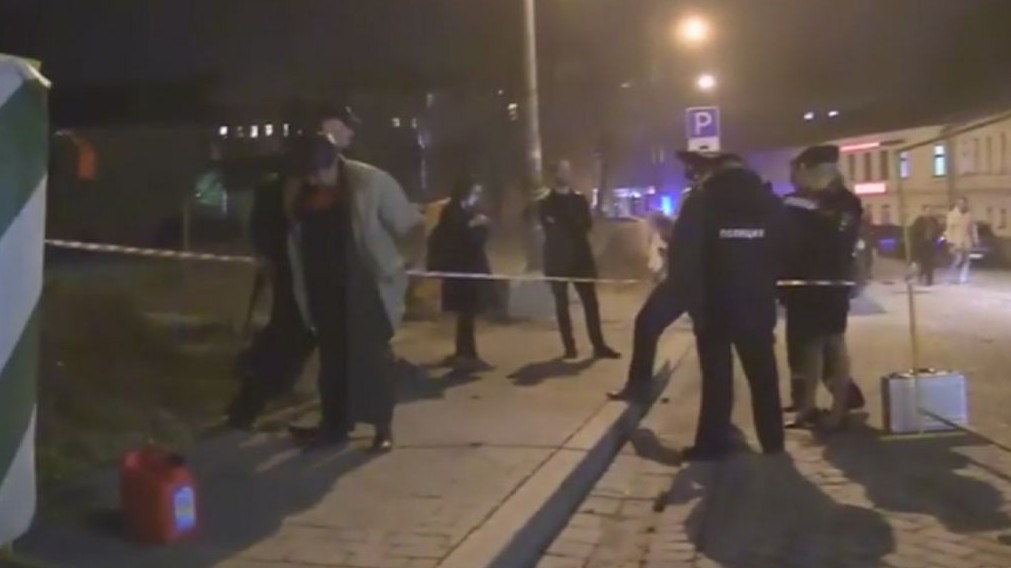
Somehow an attack on a security guard outside a Moscow synagogue barely causes a stir in the papers, with Yedioth Ahronoth and Israel Hayom shunting it to the very back of their news coverage along with the stabbing of an IDF soldier outside Jerusalem on Friday. Neither story gets much play in Haaretz, either.
With the Jewish Year 5777 quite nearly upon us, the print media has its usual saccharine holiday fare of toothy children with apples and honey and pomegranates. Only Haaretz breaks the mold remotely with its report on the impending battle between Israeli diplomats and protests by liberal American Jews over the government’s failure to implement a plan to allocate a place at the Western Wall for pluralistic prayer. The agreement, passed by the cabinet in January, as yet to be brought into fruition due to pressure from ultra-Orthodox Israelis. According to the paper, the Israeli Embassy in Washington and the country’s consulates across the continent were told to brace for possible Reform and Conservative protests over “discrimination by Israel toward the liberal Jewish public.”