Foreign Ministry chief quits, citing ‘personal reasons’
After 16 months on the job, Dore Gold reportedly frustrated Netanyahu kept him out of important foreign policy matters
Foreign Ministry director-general Dore Gold on Thursday announced his surprise resignation, citing “personal reasons.”
Hebrew media reports cited senior Israeli officials saying Gold quit mainly because he was frustrated over having been relegated to deal with Africa and left out of the country’s most important foreign policy matters.
However Gold later stressed that his reasons for leaving were entirely personal.
“I am proud of my work under the prime minister to open new horizons for Israel in the Sunni world and recently in the African continent. I completely identify with the political strategy of the prime minister and I acted accordingly.”
A native of Connecticut and longtime confidant of Prime Minister Benjamin Netanyahu, Gold is quitting the Foreign Ministry after 16 months during which he oversaw several diplomatic achievements.
“I thank the prime minister for the trust he has placed in me and will continue to make myself available for any mission imposed on me in the future,” Gold, 63, said in a statement. “The position of director-general of the Foreign Ministry was the personal and professional peak of the many years which I have served on the diplomatic front.”
Netanyahu thanked Gold for his “great contributions” to Israel’s diplomatic standing in the world, including in Africa and the Middle East. “Dore has been with me for 25 years and I am convinced he can be recruited to any mission, at any time of need,” he said.
Deputy Foreign Minister Tzipi Hotovely also expressed “sorrow” over Gold’s departure. He brought to the ministry his vast experience “in the American sphere as well as the Middle Eastern sphere,” she said in a statement. “I am sure his departure from the ministry’s management is not a departure from his continued service to the State of Israel.”
Since Netanyahu, who is also acting foreign minister, appointed Gold as the ministry’s director-general in June 2015, he has been involved in many diplomatic activities, to the extent that some called him Israel’s de facto foreign minister.
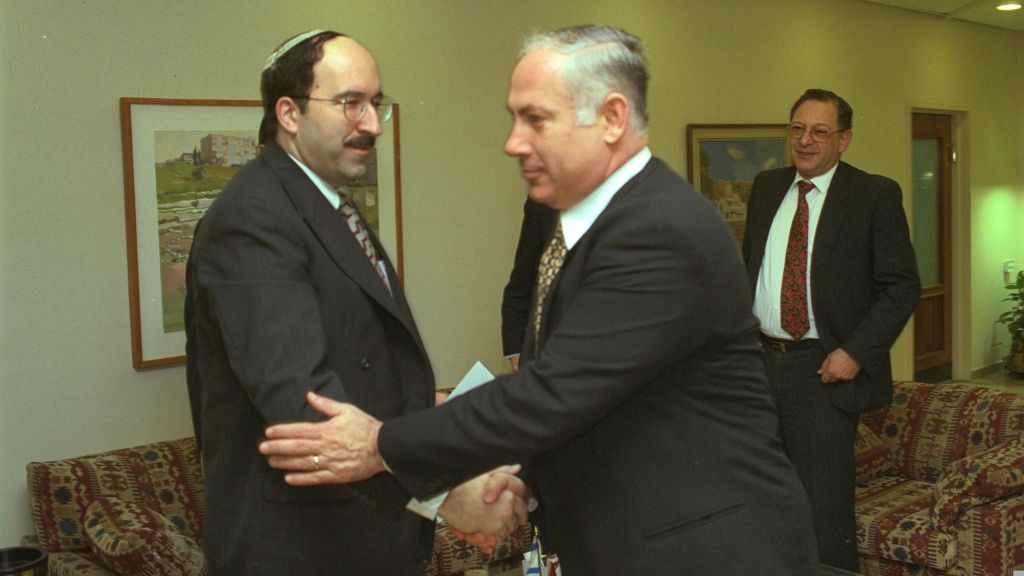
For instance, Gold oversaw the rapprochement with several African countries. He has also met Arab diplomats, including several top officials of states that do not have formal relations with Jerusalem. Especially memorable was a joint appearance, days before he entered office, with Anwar Eshki, a retired Saudi general (with whom he met again in July).
Soon after formally entering the post he flew to Cairo to meet with the deputy foreign minister of Egypt, which agreed to send its first ambassador to Israel since 2012, and he has also held strategic bilateral talks with his counterparts from India and Turkey. It was Gold who signed the reconciliation agreement with Ankara in June.
In July, he signed an agreement with Guinea over the reestablishment of diplomatic relations. A few days later he met the president of Chad, a Muslim-majority country that does not have diplomatic relations with Israel. He was also the first senior Israeli official to visit South Africa and in September met with the country’s foreign minister, a perennial critic of Israel.
And yet, Gold was reportedly unhappy about his role in Israel’s foreign policy apparatus. A senior diplomatic official was quoted Thursday saying that Gold quit due to a falling-out with Netanyahu. Specifically, Gold is frustrated that Netanyahu entrusts Israel’s most important foreign policy matters to his personal envoy, Isaac Molho.
That includes the recent rapprochement with Turkey but also bilateral ties with the United States, the official reportedly said. Gold was also bitter over Netanyahu’s appointment of MK Michael Oren as a deputy minister for diplomacy in the Prime Minister’s Office.
Gold could not immediately be reached for comment.
comments