Foreign Ministry workers threaten to disrupt Trump visit over wage dispute
Disgruntled members of diplomatic corps say Finance Ministry is not following through on agreement to raise salaries
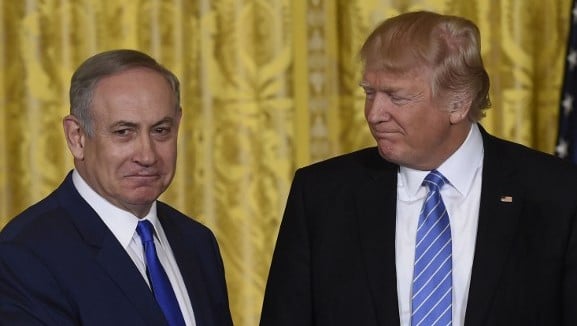
Foreign Ministry workers have threatened to disrupt the expected Jerusalem visit later this month by US President Donald Trump over a wage dispute with the Finance Ministry.
The fight between the diplomatic service and the Finance Ministry over low pay has been ongoing for several years. The diplomats argue that past agreements are not being honored and budgets are not being approved.
Jerusalem and Washington are in talks to arrange for Trump to visit Israel around the last week of May.
Representatives of the Foreign Ministry’s workers union sent a letter to the ministry’s director-general Wednesday declaring that, due to delays by Treasury officials in implementing a recent wage agreement, they have no choice but to upset the upcoming presidential visit, Army Radio reported.
The parties reached a verbal agreement on salaries two months ago, but since then the treasury has not drawn up a formal agreement and as a result, there has been no change in their employment conditions, diplomats say.
Among the changes workers expect from the deal are salary increases based on the cost of living in countries where they serve and incentives to work in less attractive countries.
Head of the workers’ union Hanan Goder, who is also Israel’s ambassador to South Sudan, told Army Radio in a Thursday interview “we will take all measures,” vowing that the US president’s visit will be seen as “embarrassing,” while declining to reveal what actions they will take.
In the past, workers have refused to process diplomatic paperwork and visas, bringing many foreign relations projects to a halt.
“We shook hands three years ago and also two months ago, they promised, and promised, and promised,” he said, stressing that the workers are frustrated by the Finance Ministry’s foot-dragging.
“If you signed on something, if you made a commitment, then you should give [what is due],” Goder continued. “Don’t say in two hours, or another two days, or another three years.”
Goder said each year fewer people were joining the diplomatic corps because of the poor labor conditions.
“These days people don’t come to work for the foreign service, they don’t take up the mission, because it isn’t worth it,” he said.
The Finance Ministry told Army Radio the details of the agreement were undergoing legal formulation, which was causing the delay.
In July 2013, Foreign Ministry workers called a labor dispute that disrupted foreign appointments. At the time, Israel’s newly appointed ambassador to the US, Ron Dermer, was caught up in delays that prevented him receiving his diplomatic passport and other paperwork.
The diplomatic corps staged a general strike for similar reasons in 2014. The two-week strike, which shuttered Israel’s embassies and consulates worldwide, ended with an agreement with Finance Ministry officials to increase the pay and improve the conditions of Israeli diplomats.
In 2015, Israeli diplomats threatened to disrupt arrangements surrounding the meeting between Prime Minister Benjamin Netanyahu and then-US president Barack Obama in Washington, over the ongoing labor dispute.
Times of Israel of staff contributed to this report.