Former IDF commander Wajdi Sarhan launches first Druze political party in decades
'Brotherhood Alliance' aims for Knesset seats and kingmaker role as Druze frustration with major parties grows; no clarity yet on alignment with coalition or opposition blocs
Former IDF Druze Battalion commander Col. (res.) Wajdi Sarhan announced the launch of a new Druze political party called Brit Achim, or “Brothers’ Alliance” on Monday, the first independent party representing Israel’s Druze minority in decades.
“No more settling for crumbs. This time, we are asking for everything,” said Sarhan, unveiling the party in the northern Druze-majority town of Maghar before an audience of hundreds of community leaders, religious figures, and reserve officers.
“We are taking responsibility for our future, our land, and our families. For years, we waited for others to take care of us, but today we understand it depends only on us,” he added, explaining that the initiative departs from the longstanding model of Druze politicians running within major parties, which he argued has failed to serve the community’s interests.
The Druze religion was founded in the 10th century as a divergent branch of Islam. About one million Druze are living mostly in Syria and Lebanon, and an estimated 150,000 in Israel.
There are currently only three Druze members of the Knesset: Likud MK Afif Abed, Yisrael Beytenu’s Hamad Amar, and Akram Hasson of Gideon Sa’ar’s New Hope faction, which joined Likud last year.
Yashar party leader Gadi Eisenkot has pledged to place a Druze candidate in a “realistic spot” on his party’s list.
“This is not another attempt to merge with an existing list in exchange for a seat — this is a declaration of an independent political force,” Sarhan said. But he added that the party’s goal is to win around two Knesset seats, indicating he is looking to run jointly with another faction, since the minimum number of seats a party can win in elections is four.
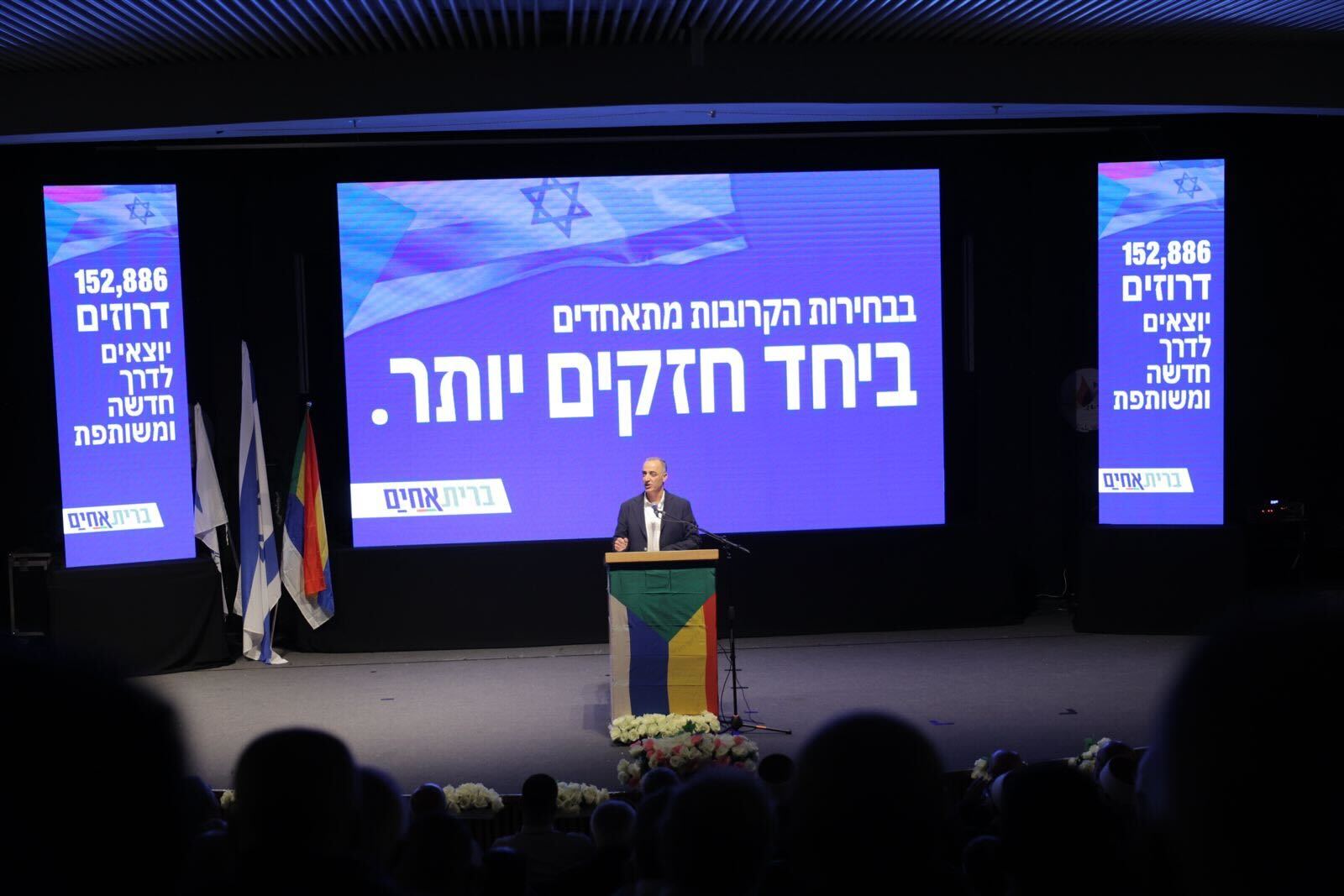
Another aspiration of the party is to serve as a kingmaker in the October elections. Sarhan will head the party, though details of the slate have yet to be announced. The party has not indicated whether it would align with Prime Minister Benjamin Netanyahu’s bloc, the opposition, or if it is open to both.
The party said it is already in talks with other political actors about possible alliances, but stressed it will maintain its independence to ensure Druze interests are represented in the next Knesset.
The party’s name invokes the concept of “brit damim,” or “covenant of blood” – a term commonly used in Israel to describe the longstanding alliance between Israel and its Druze citizens. Unlike other Arab populations, Druze men are subject to mandatory conscription into the IDF, and the community has long been overrepresented in military service: though Druze make up roughly 2% of the population, they account for about 3% of career soldiers, according to the military.
Sarhan, a well-known officer who fought in the Second Lebanon War, has worked for more than two years to establish an independent Druze party, amid longstanding frustration that the community remains politically underrepresented and its needs sidelined, despite its deep contributions to the state.
“Our contribution to the state is a foundational asset, yet our needs have been pushed aside. Time and again, we were given promises that evaporated the day after elections, and representatives became rubber stamps in the name of party discipline, all at the expense of our children and their future,” Sarhan said, adding that after years of “waiting for others to take care of us, now we understand it depends only on us.”
The move reflects broader anger within the Druze community that its outsized contribution has not translated into equal treatment.
At protests in recent years, Druze demonstrators have increasingly invoked the slogan “a covenant of life, not just a covenant of blood,” arguing that the state’s longstanding expectation of loyalty and sacrifice must be matched by full civic equality.
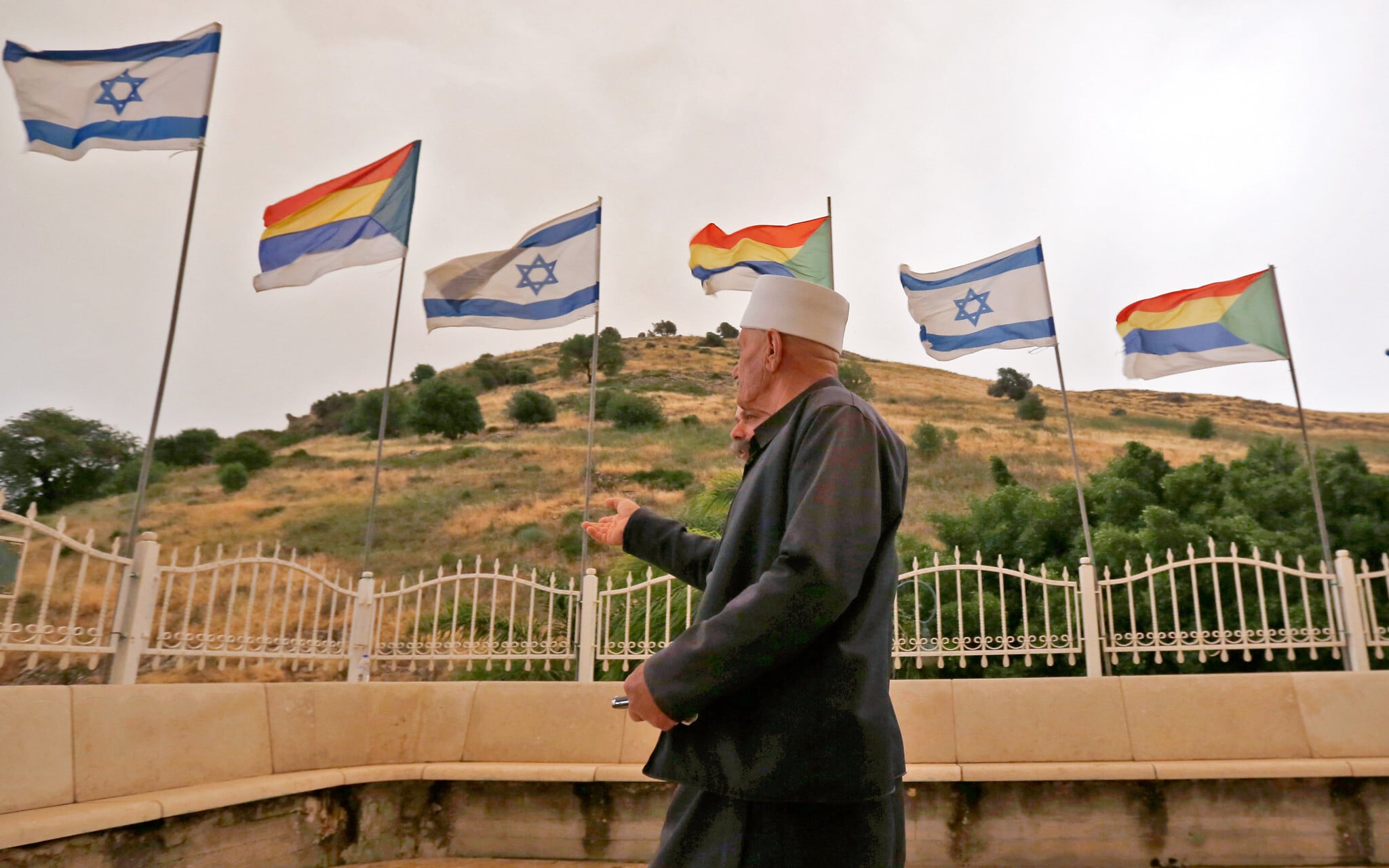
Anger has focused in particular on the controversial 2018 Nation-State Law, which enshrined Israel as a Jewish state, and minority groups have said effectively defines them as “second-class citizens.”
It has also centered on the 2017 Kaminitz Law to fast-track action against illegal construction without going through the courts, which is widely understood to target Arab communities, where building permits are almost impossible to secure, with the result that Arabs build illegally and are then fined or threatened with demolition by the government.
Sarhan also spoke to the sense of abandonment that the Druze community, which primarily resides in Israel’s north, amid the ongoing fighting along the northern border, where residents have faced relentless Hezbollah missiles and rockets since the terror group started firing at Israel on March 2 as part of the Iran war.
Municipal leaders across the north have voiced similar frustration and protested a US-brokered ceasefire announced last month, which appears to be falling apart after renewed Hezbollah attacks last week.
“We, the residents of the north, will not endure another round and another round. We will demand a decisive outcome. It is time for the north – the most beautiful region – to flourish with real security,” Sarhan said.
“We have the strongest army and the most determined soldiers, and now it is time for decision-makers to be worthy of them,” he added.
TOI Staff and Diana Bletter contributed to this report.