

Gantz: Time is not right for Iran concessions
In Washington, outgoing IDF chief says Tehran under major pressure, Israel should ‘try and try’ for deal with Palestinians
Rebecca Shimoni Stoil is the Times of Israel's Washington correspondent.
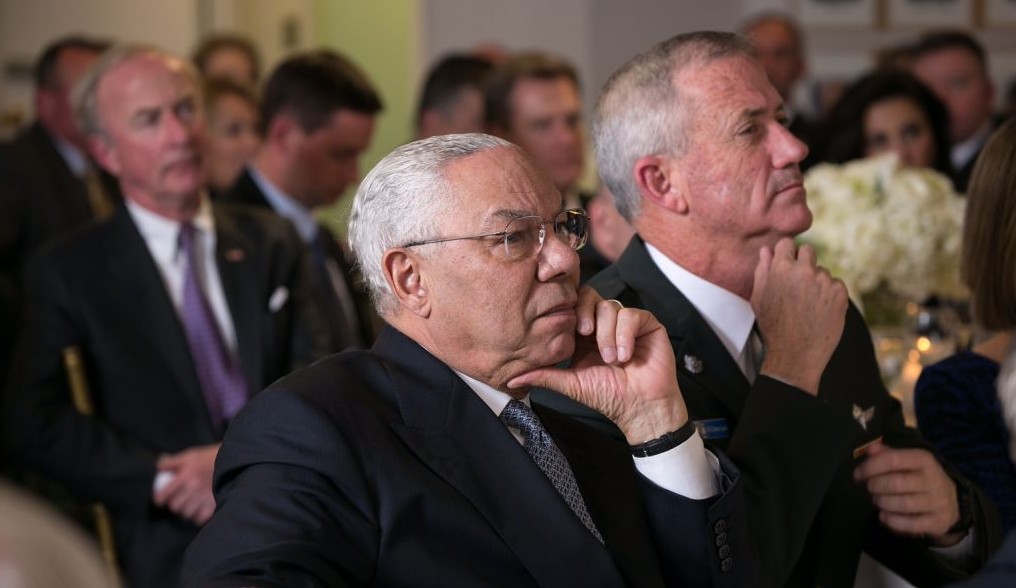
WASHINGTON — The IDF’s top officer warned leading US lawmakers and defense strategists against making concessions to Iran in exchange for a nuclear deal. Lt-Gen. Benny Gantz, IDF chief of general staff, came to Washington for a farewell visit in advance of leaving his position, and delivered a wide overview of his opinions on Israel’s security position.
“Iran is currently under major pressure,” Gantz said at an event at the Israeli Embassy here Wednesday, warning that “it is not time for concessions for them.” The general said he hoped that an agreement would be achieved without the use of force, but “the results should be the right ones.”
During an evening mostly dedicated to mutual assertions of the closeness of US-Israel relations, Gantz’s comment alluded to tense differences between Jerusalem and Washington in assessing the terms of any final agreement with Tehran.
In the ongoing talks between the P5+1 states and Iran, the United States has maintained that Iran could continue to enrich low-grade uranium, and could cease plutonium production without necessarily entirely dismantling the heavy water plant at Arak. Israel has maintained that Iran must be stripped of its capacity to enrich uranium altogether.
On attempts to strike a peace deal between Israel and the Palestinians, Gantz said he “think[s] and believe[s] Israel will try and try and try. I think we should try as much as possible for the benefit of the region and the benefit for both nations.”
“If we do not succeed, we will at least be able to say that we tried as much as we could,” he added. Israel cannot “compromise our security considerations,” particularly, he argued, given the instability of the regional situation.
Gantz spoke about a number of these problems, particularly reflecting on the impact of the Syrian civil car, which he said turned Israel’s most stable border into an active security challenge. The Sykes-Picot line, he bemoaned – a border recognized for nearly a century – had become little more than a recommendation.
Gantz’s farewell to the Washington establishment was well-attended, despite the subzero weather in the nation’s capital.
Michele Flournoy, the former undersecretary of defense for policy – the third-ranking official in the Department of Defense – and likely nominee to lead the Pentagon if the next administration is a Democratic one – spoke Gantz’s praises while reaffirming American support for Israel’s quantitative military edge.
“He knew more people in the US defense establishment than I did at the period,” she said, describing Gantz as a patriot.
“At the heart of the very special relationship is the United States unshakeable commitment to the security of the state of Israel,” she continued, emphasizing the bipartisan commitment in Washington to maintaining Israel’s security.
“I am most proud that we have been able to put our heads together on the tough problems that we are facing,” she said, noting consultations on both the response to the Iranian nuclear development program and the Syrian civil war.
Along with a number of senators and representatives, former secretary of state and joint-chief-of-staff Colin Powell attended the dinner, sitting at Gantz’s table and chatting with him – according to Gantz – about the Israeli general’s intentions to spend his newfound free time riding his motorcycle.
Gantz is leaving his post on February 15, handing the reins over to Maj. Gen. Gadi Eisenkot, who is said to firmly oppose Israeli military intervention to thwart Iran’s nuclear program unless Iran poses an immediate existential threat to Israel. Eisenkot holds to the view that Israel should not strike at Iran “unless the sword is at our throat,” Channel 10 reported in November.





The Times of Israel Community.