Large rise in Palestinian support for armed struggle against Israel
Poll shows over 42% now back violence, compared to 31% before the summer war; 70% of Palestinians believe Hamas was victorious and most think the conflict achieved Palestinian goals
Support for Hamas and for armed struggle against Israel is gaining popularity in the Palestinian territories, a new survey showed Tuesday, despite languishing rehabilitation efforts in the war-battered Gaza Strip.
The survey, carried out by the Jerusalem Media and Communications Center, shows that as far as local public opinion is concerned, the latest war in Gaza was a victory for Hamas.
Some 57 percent of those polled claimed that Hamas was victorious — a strong majority, albeit far short of the 70% who thought Hamas had won after 2012’s Operation Pillar of Defense in Gaza. Only 8% thought that Israel had won.
Some 53% claimed the recent war achieved the interests of the Palestinian people, while a little more than 21% said that the war damaged those interests.
At the same time Fatah, Hamas’s rival, has weakened while Hamas is getting stronger. Before the conflict began, 41.7% of Palestinians said they trusted Fatah but by the end of the fighting that percentage had slipped to 35.1. On the eve of the war nearly 17% said Hamas was the organization they believed in most, while in the current survey 26% said they believed in Hamas.
Support for the military struggle against Israel rose dramatically — from 31.5% on the eve of Israel’s Operation Protective Edge, launched in early July, to 42.7% in the new survey.
Palestinian Authority President Mahmoud Abbas is still considered the most popular leader, with 23.3% of Palestinians supporting him, more than any other potential leader. However, that support seems to be wavering as in April the figure was 25.2% while those backing former Hamas prime minister head Ismail Haniyeh grew from 13.5% just before the war to 17.9% in the current survey.
In general, on all questions and matters of current affairs, the residents of the West Bank showed a more extreme point of view compared to those in Gaza.
The survey comes as Gazans are still waiting for reconstruction efforts to begin in earnest in the Strip, over two months after bombs stopped falling during the 50-day war with Israel.
The reconstruction of 17,000 homes that were completely destroyed during Protective Edge has not yet begun, delayed by internal political wrangling.
Two weeks ago, building material was, for the first time, transferred into the Gaza Strip, within the framework of an ambitious rehabilitation plan agreed on by Israel, the UN, and the PA (and indirectly, also Hamas). However, according to reports from Gaza, those materials are mostly still sitting in warehouses in Gaza.
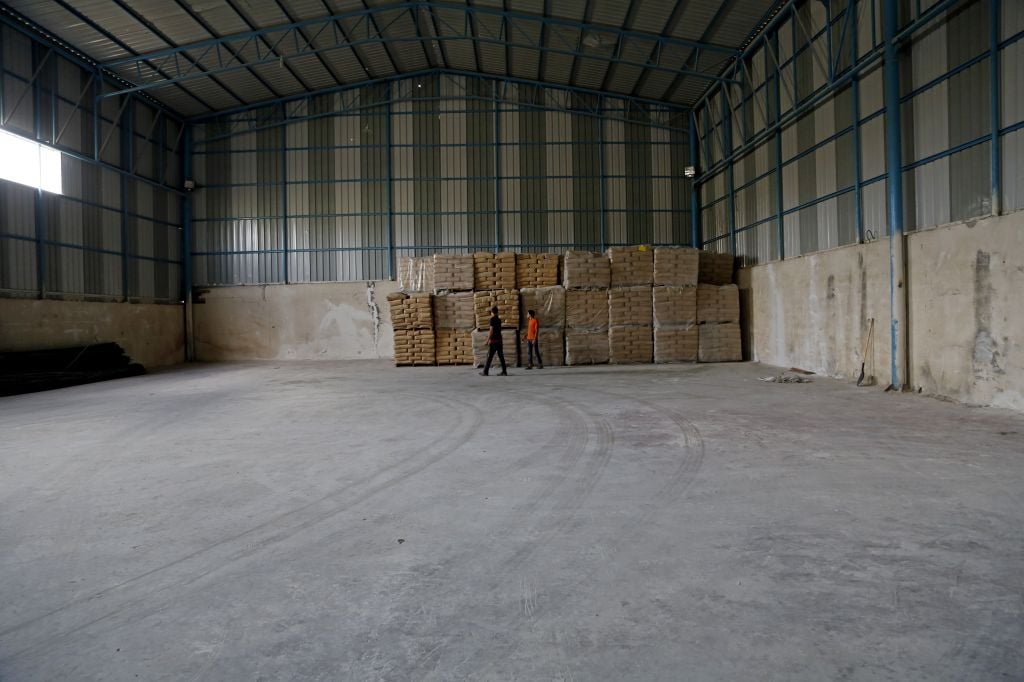
According to the agreement, the materials are being monitored with security cameras to make sure that Hamas or other terror groups don’t take them. Thousands of families who were left without homes after the war are still looking for a solution to their distress.
And even though it appeared that a solution was on the way, it seems that a variety of political power struggles are delaying the rehabilitation of Gaza. According to some estimates, 11 United Nations Relief and Works Agency schools are currently housing 40,000 people who lost their homes. Schools that can still be used for studies are hosting pupils from schools that are occupied and are in use for three shifts a day.
Also, the matter of the wages for Hamas government officials has not seen a dramatic change and only a small number of the salaries, delayed since April, have been paid.
The supply of electricity remains intermittent. Gaza residents told The Times of Israel that their homes have electricity for six hours, and after that there is a blackout for 12 hours and then another period of power.